Sign up with Google
 Sign in with Zoho

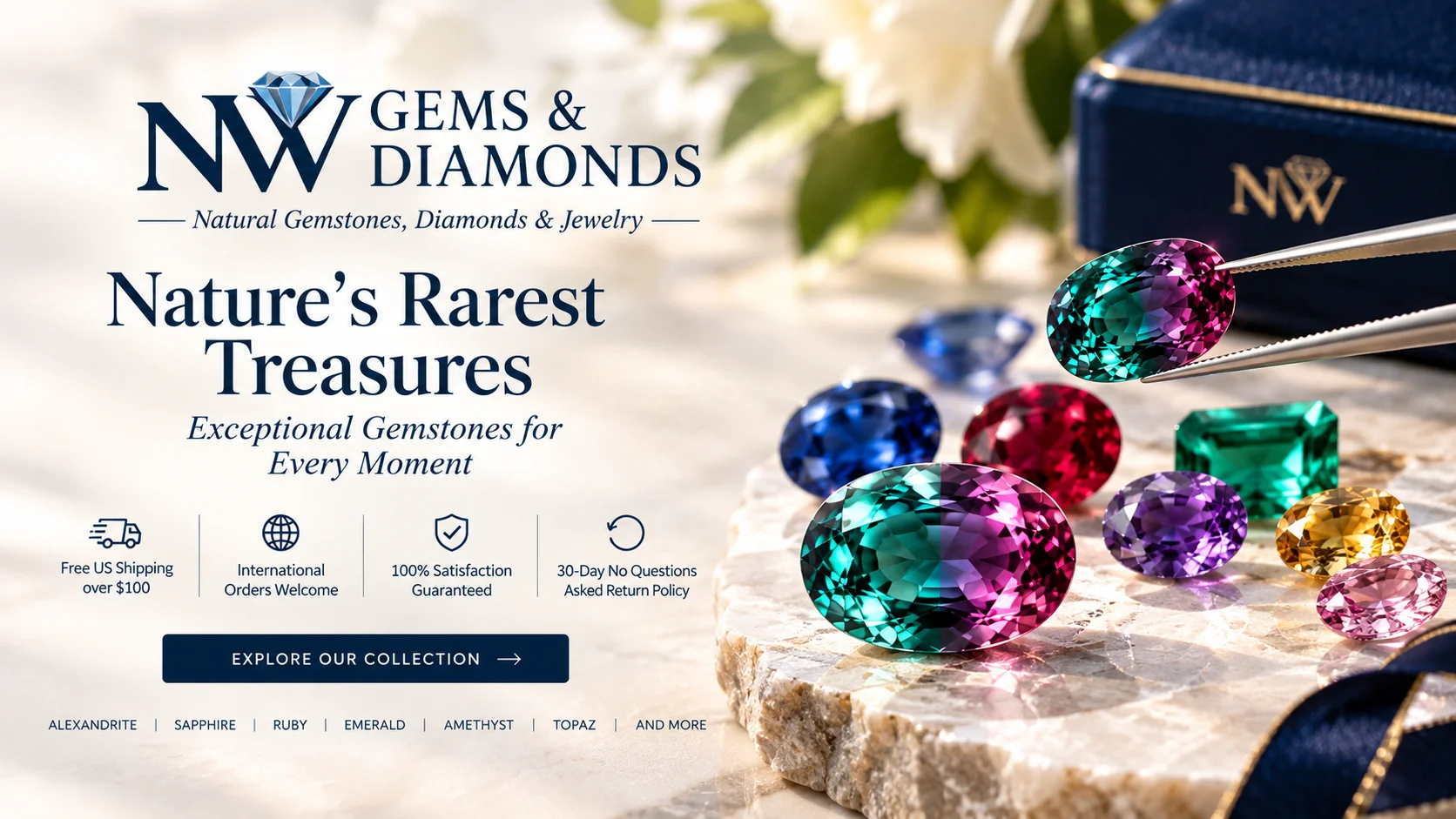
Buying an alexandrite gemstone can be very different from buying a conventional colored gemstone. Alexandrite is famous for its color-changing effect, but not every stone displays the same strength, colors, clarity, or overall quality.
If you are shopping for a natural alexandrite gemstone, understanding the major quality factors can help you compare stones more intelligently and avoid focusing on size alone.
The most important characteristics include color change, color quality, clarity, cut, carat weight, and origin. Treatment and laboratory documentation can also become important when purchasing a valuable stone.
1. Start With the Color Change
The first characteristic to examine when choosing alexandrite is its color change.
Fine alexandrite can appear green or bluish green in daylight and shift toward red or purplish red under incandescent lighting. The strength of this transformation can vary considerably.
A weak change may be noticeable but subtle. A strong change can be much more dramatic.
GIA identifies color change as the most important quality factor for alexandrite.
When comparing gemstones, ask:
- What color does the stone show in daylight?
- What color does it show under warm artificial light?
- How strong is the transition?
- Are the colors saturated?
- Does the stone remain attractive in both environments?
A gemstone should ideally be examined under more than one light source.
2. Look at the Daylight Color
The daylight appearance is particularly important.
High-quality alexandrite is commonly associated with green to bluish-green hues. However, natural stones can show a range of colors depending on their origin and individual characteristics.
Do not judge a gemstone solely by whether it is "green."
Two stones may both be described as green alexandrite but look very different in person. One may be vivid and bright, while another may appear grayish, brownish, or less saturated.
Color photographs can also be affected by cameras and screens, so viewing the stone under controlled lighting is valuable.
3. Examine the Evening or Incandescent Color
The second half of alexandrite's appeal is its appearance under warm artificial lighting.
Fine examples may shift toward red or purplish red.
The contrast between the daylight and artificial-light colors is what creates the famous alexandrite effect.
If possible, compare photographs or videos of the same gemstone under different lighting conditions instead of relying on a single product image.
4. Consider Color Saturation
Hue tells you what basic color you are seeing. Saturation describes how strong or intense that color appears.
For alexandrite, attractive saturation can make both sides of the color change more visually impressive.
A gemstone with a strong change but dull or heavily grayish colors may look less appealing than a stone with attractive, saturated colors.
This is why "strong color change" should not be considered the only factor.
The quality of both colors matters.
5. Check Alexandrite Clarity
Natural alexandrite may contain inclusions.
The importance of clarity depends partly on the size, cut, and overall appearance of the gemstone.
If inclusions are obvious enough to interfere with transparency or beauty, they can negatively affect desirability.
However, natural gemstones should not automatically be expected to look like flawless synthetic material.
When buying natural alexandrite, examine the gemstone at normal viewing distance and, for expensive purchases, under magnification.
A qualified gemologist can also help interpret inclusions and identify whether they are consistent with natural material.
6. Pay Attention to Cut
Cut determines how effectively the gemstone interacts with light.
Alexandrite can be challenging to cut because the cutter must consider its optical properties and color-change behavior.
The cutter may orient the stone to maximize the visible color change through the crown.
Common shapes include round, oval, cushion, and other faceted designs.
When choosing between two stones, do not assume that the most complicated cut is automatically the best.
Instead, look at:
- Face-up brightness
- Symmetry
- Proportions
- Color visibility
- Color-change strength
- Overall visual appeal
7. Don't Choose Alexandrite by Carat Weight Alone
A common mistake when shopping for gemstones is to compare stones primarily by carat weight.
With alexandrite, this can be misleading.
Fine natural alexandrite is rare, and larger stones with strong color change can be particularly difficult to obtain.
A smaller gemstone with excellent color change may be much more desirable than a larger stone with weak color.
Therefore, compare the complete quality profile rather than asking only, "How many carats is it?"
8. Does Alexandrite Origin Matter?
Origin can be an important consideration for collectors.
Historical Russian alexandrite is particularly famous because the gemstone was originally discovered in Russia's Ural Mountains.
Modern alexandrite sources include Brazil, Sri Lanka, India, Tanzania, and other locations.
However, geographic origin should not be determined from color alone.
Professional laboratories use a combination of gemological characteristics and analytical data when determining origin.
If origin is an important part of your purchase, look for a reputable laboratory report rather than relying solely on a seller's description.
9. Natural vs Laboratory-Grown Alexandrite
Before purchasing, establish whether the gemstone is natural or laboratory-grown.
Natural alexandrite formed naturally underground and is rare.
Laboratory-grown alexandrite is manufactured using controlled processes and can reproduce the color-change phenomenon.
Both can be visually attractive, but they should not be represented as the same material.
If a listing says "created alexandrite," "lab-grown alexandrite," or similar terminology, read the product description carefully.
For a significant purchase, consider obtaining an independent gemological report.
10. Ask About Treatments
Alexandrite is not commonly treated compared with some other colored gemstones, but buyers should still ask about treatment status.
Treatment information should be clearly disclosed by a reputable seller.
If a gemstone has been fracture-filled, oiled, dyed, or otherwise treated, the treatment can affect how the stone should be cleaned and maintained.
For valuable natural alexandrite, treatment disclosure is an important part of an informed purchase.
11. Consider the Jewelry Setting
If you are buying loose alexandrite for a ring, pendant, or earrings, think about the final setting before purchasing.
A ring receives more everyday impact than a pendant.
An oval or cushion alexandrite can create a classic appearance in a ring, while a round gemstone may work well for earrings or smaller accent designs.
The setting should also allow enough light to interact with the gemstone while providing appropriate protection.
12. Alexandrite for an Engagement Ring
Alexandrite can be an unusual alternative to traditional engagement-ring gemstones.
Its hardness of around 8.5 on the Mohs scale provides good durability for jewelry.
The color-changing effect also means the ring can look different throughout the day.
However, because natural fine alexandrite can be expensive, buyers should carefully consider the stone's quality and obtain professional documentation for higher-value purchases.
13. Buying Alexandrite Online
Online shopping gives buyers access to a much wider selection, but it also creates a few challenges.
Before purchasing, check:
- Exact carat weight
- Measurements
- Natural or laboratory-grown status
- Treatment information
- Color-change photographs
- Return policy
- Seller reputation
- Gemological documentation
- Product photographs under multiple lighting conditions
A trustworthy seller should provide enough information for you to understand what you are buying.
Final Alexandrite Buying Checklist
Before purchasing an alexandrite gemstone, ask yourself:
- Does it show a noticeable color change?
- Are both colors attractive?
- Is the gemstone natural?
- Is treatment disclosed?
- Is the clarity acceptable for its size?
- Is the cut symmetrical and attractive?
- Is the price appropriate for the quality?
- Is origin important to you?
- Is there an independent laboratory report?
- Does the gemstone fit the jewelry design you have in mind?
Final Thoughts
Choosing alexandrite requires more than comparing carat weights or photographs.
The strongest starting point is the gemstone's color-changing behavior, followed by color quality, clarity, cut, size, origin, and documentation.
If you are searching for a natural loose alexandrite gemstone, explore the NW Gems Alexandrite collection and compare individual stones based on their complete quality characteristics rather than price or size alone.

.webp)