
 Sign up with Google
 Sign in with Zoho
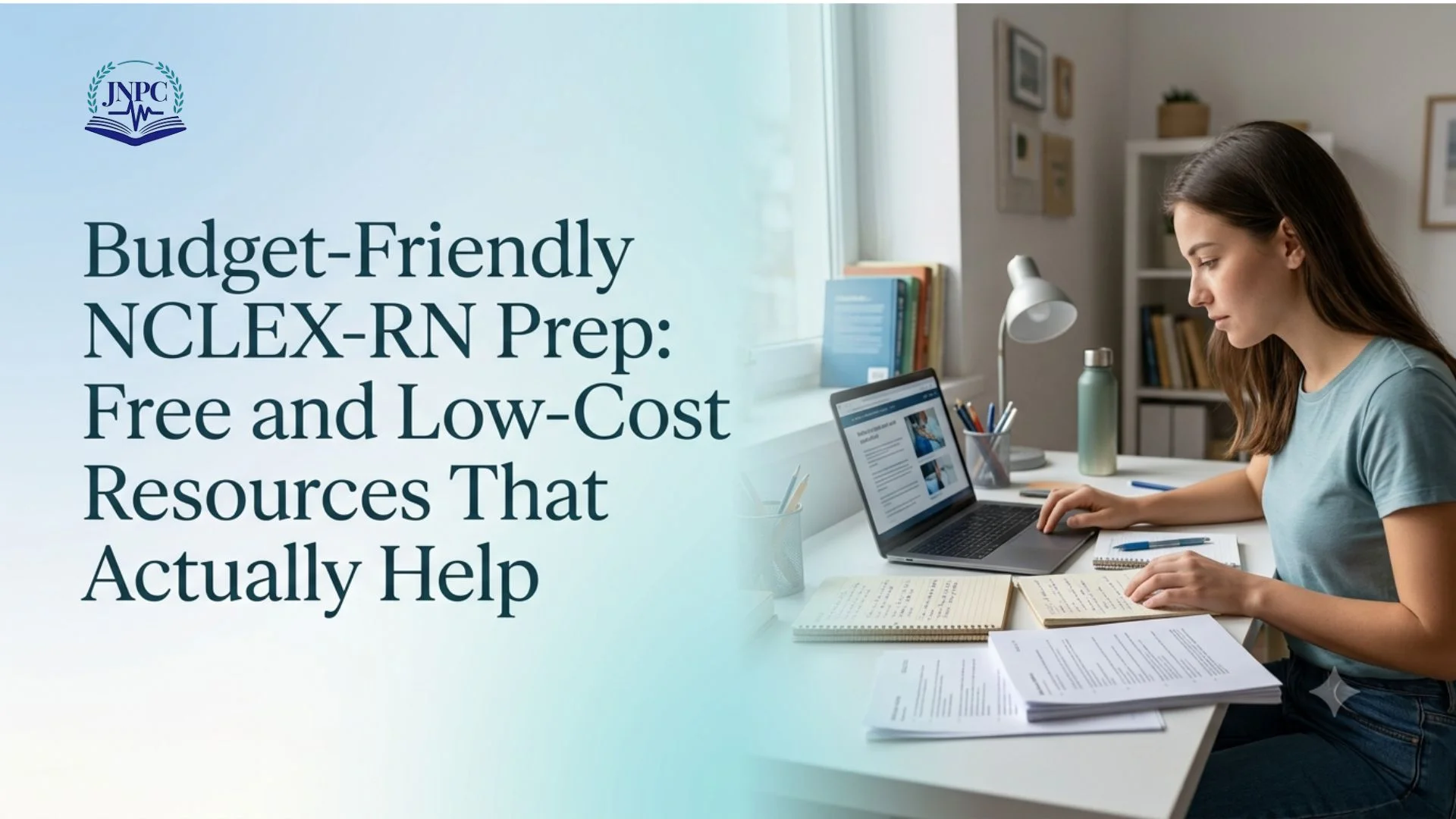
I still remember sitting at my kitchen table with three tabs open - one for a $1,800 review course I couldn't afford, one for my rent due date, and one for a forum thread titled "Failed NCLEX twice, out of money, what now." That's a rough place to study from. If you're there too, or close to it, this is for you.
Here's the truth nobody selling a course wants you to hear: passing the NCLEX-RN comes down to how you use your time with the content, not how much you spent getting it. I've watched candidates burn through expensive packages and still walk out shaky, and I've watched people study almost entirely with library books and free question banks and pass clean on the first try. Money buys convenience. It doesn't buy discipline.
Start With What NCSBN Already Gives You
The National Council of State Boards of Nursing publishes the actual test plan for free, and almost nobody reads it properly. It tells you exactly what percentage of the exam covers each category - Safe and Effective Care Environment, Health Promotion and Maintenance, Psychosocial Integrity, Physiological Integrity. Print it. Tape it above your desk. Every time you sit down to study, ask which category you're weakest in and go there first. This one habit alone reorganizes how efficiently you use limited study hours.
NCSBN also runs the free NGN (Next Generation NCLEX) practice questions on their site, which matter more now than ever since the exam shifted heavily toward clinical judgment-based items rather than simple recall. If you're prepping without touching these, you're studying for an older version of the test.
The Free Resources Worth Your Actual Time
A few things kept coming up in my own prep and in conversations with candidates I've mentored since:
- YouTube channels run by working nurses — not polished corporate content, the ones filmed in someone's spare bedroom explaining acid-base balance with a whiteboard. Search for specific weak topics rather than binge-watching general review videos; targeted beats broad.
- Quizlet's public flashcard decks — search "NCLEX" and you'll find thousands made by nursing students who just took the exam. Recency matters here; decks from the last year or two reflect current question style better than older ones.
- Your local public library — this sounds almost too simple, but most library systems carry Saunders or Lippincott NCLEX review books, and some give free access to UWorld-style databases through their digital resource portals. Ask a librarian directly; most people never do.
- NCSBN's own free sample items — a small set, but genuinely representative of current test difficulty.
- Reddit's r/NCLEX community — messy, but full of recent test-takers describing exactly what tripped them up, which is more useful than any marketing page.
Where Spending a Little Goes a Long Way
Free only gets you so far, and pretending otherwise sets people up to fail. If your budget allows even $30–50, a month of UWorld or Archer Review access gives you adaptive testing that mimics the real CAT format - something free banks can't replicate well. Buy it for one focused month rather than stretching a subscription thin across six unfocused ones. Intensity beats duration here.
Used textbook marketplaces are another underused move. A three-year-old edition of Saunders costs a fraction of a new one, and the core content - pathophysiology, pharmacology, prioritization frameworks - hasn't changed enough to matter for exam prep.
Structure Matters More Than Resources
I've seen candidates with access to every paid tool available still fail because they had no plan, just scattered studying whenever motivation hit. A rough six-week structure that's worked for people I've coached: weeks one and two on content review by category, weeks three and four on timed practice questions with rationale review (read why wrong answers are wrong, not just right ones), and the final two weeks almost entirely on full-length practice exams under real time pressure. Adjust the timeline to your life, but keep that sequence - content, then application, then simulation.
When a Structured Course Actually Makes Sense
There's a point where free resources stop being enough - usually when someone has failed once already, or when English isn't their first language and they need help translating clinical reasoning into exam logic, not just memorizing facts. This is common among internationally educated nurses navigating both the exam and an unfamiliar licensing system at the same time. In those cases, structured nclex rn preparation classes with an instructor who can walk through your specific weak areas tend to close gaps that self-study alone can't. Jeet Nursing Prep Center works specifically with internationally educated nurses on this exact bridge — pairing nclex rn test prep with guidance on Canadian registration pathways, which matters if you're not just studying content but also figuring out an unfamiliar system at the same time.
Whether that means an affordable nclex rn prep course, a single tutoring session on your weakest content area, or one of the many nclex rn test prep courses that offer payment plans, the goal is the same: don't let cost be the reason you walk into that exam underprepared. There's a wide gap between "expensive" and "effective," and most of what actually helps sits closer to free than people assume.
If you're staring at your own kitchen table right now, tabs open, budget tight - start with the test plan, find your weak category, and go from there. That's how most of us actually did it.









.webp)