Sign up with Google
 Sign in with Zoho

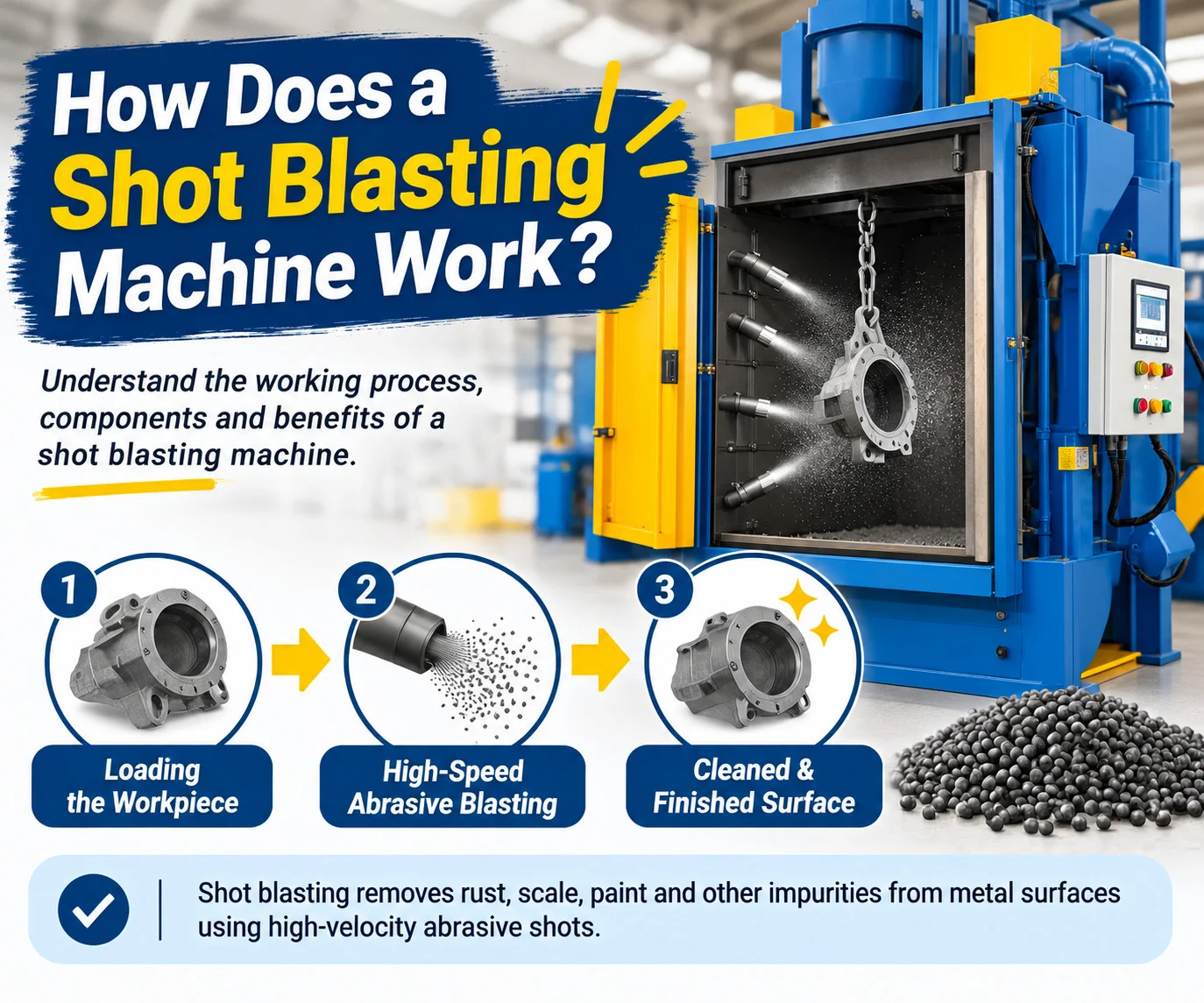
With the use of a shot blasting machine, metal manufacturing and metalworking companies can clean their metal products with amazing efficiency. The shot blasting machine basically spits tiny projectiles at high speed on the surface of the metal. This enables it to remove any rust, dirt or other undesirable materials present on the surface. The shot blasting machine serves additional purposes like preparing the metal for moving forward, for instance painting or welding process. The final outcome in terms of cleaning will depend on the type of abrasives used, the intensity and duration of blasting and the condition of the metal itself.
Machining via CNC and shot blasting machinery are some of the main components for any plant. Understanding the specifics of their operations can greatly help maintain the high quality level of the product. In addition, these machines are able to ensure uniform cleaning of parts of any size and shape. Finally, blasting is a wonderful alternative to hand cleaning both in terms of efficiency and reproducibility.
What Is the Working Principle of Shot Blasting?
At its core, shot blasting uses mechanical force to speed up abrasive media and fire it at a workpiece. The particles hit the surface again and again, and each impact chips away contaminants and unwanted layers.
A few key elements make this happen:
- Abrasive media: Steel shot, steel grit, or another suitable material, chosen based on the surface condition and the finish you need.
- Acceleration system: Usually a centrifugal wheel, though other mechanisms can do the job too.
- Workpiece handling: Parts are positioned, moved, or rotated so every required surface gets exposed.
- Dust collection: A collector pulls out the dust and fine particles created during cleaning.
- Abrasive recovery: Media that can still be used is collected, separated from the debris, and sent back into the system.
Put together, these parts let the machine clean efficiently while keeping working conditions under control.
Step-by-Step Explanation of the Shot Blasting Process
The shot blasting process runs in a clear sequence, from loading the part to collecting and reusing the abrasive. Every stage affects the quality and consistency of the final surface.
1. Loading the workpiece
Depending on how the system is designed, the metallic piece will go into the machine or onto other equipment such as a conveyor, a hanger, a table, or a spinning drum. The positioning is important since it determines whether all the surfaces in need of treatment will actually be processed.
2. Accelerating the abrasive media
A blast wheel having a centrifugal design has a fast-moving impeller with blades which throw abrasive matter at the surface of the workpiece. The kinetic energy caused by impact removes dirt into the air.
3. Cleaning the surface
As the particles keep striking the material, the unwanted layers wear away. How aggressive the cleaning is depends on the abrasive size, hardness, speed, and how long the blasting runs. Operators set these according to the component’s material and the finish they’re after.
4. Recovering and separating abrasives
After impact, the usable abrasive and the removed contaminants fall and get collected together. A recovery system carries the mixture to a separator, which filters out dust, broken particles, and other waste. The good abrasive then goes back into the blasting cycle.
5. Unloading and inspecting
The treatment is completed, and the component is taken out and examined. The surface is evaluated for its cleanliness, uniformity, as well as any defects. Should it be determined that the item requires further processing, the settings and exposure duration can be modified.
Types of Shot Blasting Systems
Different industries use different machines, depending on the size of the components, production volume, and the surface preparation required.
- Tumble belt machines: Good for batches of small, tough components that can tumble against each other.
- Hanger-type machines: Used for larger or oddly shaped parts that hang from hooks or hangers.
- Roller conveyor machines: Common for steel plates, structural sections, and other long or flat components.
- Rotary table machines: Suited to single components or batches that need controlled positioning.
- Portable blasting systems: Used where fixed equipment isn’t practical and surface preparation has to happen on site.
Picking the right system gets you the finish you want without hitting components harder than necessary.
Understanding Shot Blasting Machine Operation
Using a shot blasting unit correctly requires more than just push a button. The operator has to constantly check the abrasive material, the performance of the wheels, the passing of the component, and the dust extraction system during the whole process.
Some practices that matter:
- Check the equipment before use: Look over the blast wheels, liners, belts, seals, and other parts that wear out quickly for any damage.
- Maintain abrasive quality: Clear out excess dust and broken particles so cleaning stays consistent.
- Use suitable settings: Adjust blasting intensity and exposure time to suit the workpiece and the finish required.
- Monitor dust extraction: Make sure the dust collector and ventilation are working as they should.
- Follow safety procedures: Wear proper protective equipment and keep machine guards and interlocks in place.
Regular inspections catch wear early, prevent unexpected downtime, and keep production quality steady.
Common Factors That Affect Blasting Results
Several operating conditions decide how the finished surface turns out.
- Abrasive selection: The size, shape, hardness, and material of the media all change how intense the cleaning is and what surface profile you get.
- Blasting duration: Too little exposure leaves contaminants behind, while too much can damage delicate parts.
- Impact coverage: If some areas get hit more than others, the cleaning will be uneven across the workpiece.
- Machine condition: Worn blades, damaged liners, or wrong wheel settings all pull performance down.
- Material properties: Thin, soft, or delicate components need more careful control than heavy steel parts.
Keeping track of these factors helps operators reach the required surface condition while cutting abrasive waste and avoiding rework.
Conclusion
By comprehending the blasting equipment, the workings of the equipment and how everything works together allows me to apply the best approach for preparing the pieces prior to manufacturing. I treat blasting not as just a piece of equipment, but rather as a system because details of even the smallest element are important. Regardless of whether the blasting equipment is utilized for increasing the speed of blasting stream, recovering the abrasive material or inspecting the finished product, the blasting process must be treated properly. All the equipment settings and maintenance contribute to the accurate results of blasting operation. If I feel like I want to know more about abrasive blasting, I can always read the publications related to this topic at mpmebrasives.
FAQs
1. What is the main purpose of shot blasting?
Shot blasting is mainly used to clean metal surfaces, remove rust and scale, prepare components for coating, and give them a suitable finish for further processing.
2. Which abrasive materials are used in shot blasting?
Steel shot and steel grit are the most common. Which one you use depends on the workpiece material, how contaminated it is, the surface profile you want, and the application.
3. How does shot blasting differ from sandblasting?
Shot blasting usually throws the abrasive mechanically, often with a centrifugal wheel. Sandblasting generally means blasting with compressed air, although these days it often uses abrasives other than sand.
4. Can shot blasting damage metal components?
Yes, it can. Too much impact, the wrong abrasive, or incorrect settings can damage thin or delicate parts. Good process control keeps that risk low.
5. How often should blasting equipment be maintained?
The time interval between maintenance services is influenced by the number of hours that the equipment has been operating, working conditions during production processes, and recommendations of manufacturer. If the components that should be monitored frequently, then they should be cleaned, lubricated, or replaced according to the maintenance program.



.webp)