Sign up with Google
 Sign in with Zoho
Introduction
There's a reason surgeons are particular about their tools. A needle driver that slips, a clamp that doesn't hold, a scissor blade that's a fraction of a millimeter off — these aren't abstract quality concerns. They play out in operating rooms, on real patients, in situations where there's no margin to course-correct. Surgical instrument manufacturers carry that weight whether they think about it explicitly or not.
ISO 13485 exists precisely because of that weight. It's a quality management standard built for the medical device world — not adapted from a generic business framework, but written with the specific demands of healthcare manufacturing in mind. For companies making surgical instruments, it offers something genuinely useful: a structured way to run operations that keeps quality embedded in the process rather than bolted on at the end.
What ISO 13485 Actually Requires
At its core, ISO 13485 is about documented control. It asks manufacturers to define how things are done, assign clear responsibility for each activity, and create records that show the system is actually working — not just described on paper.
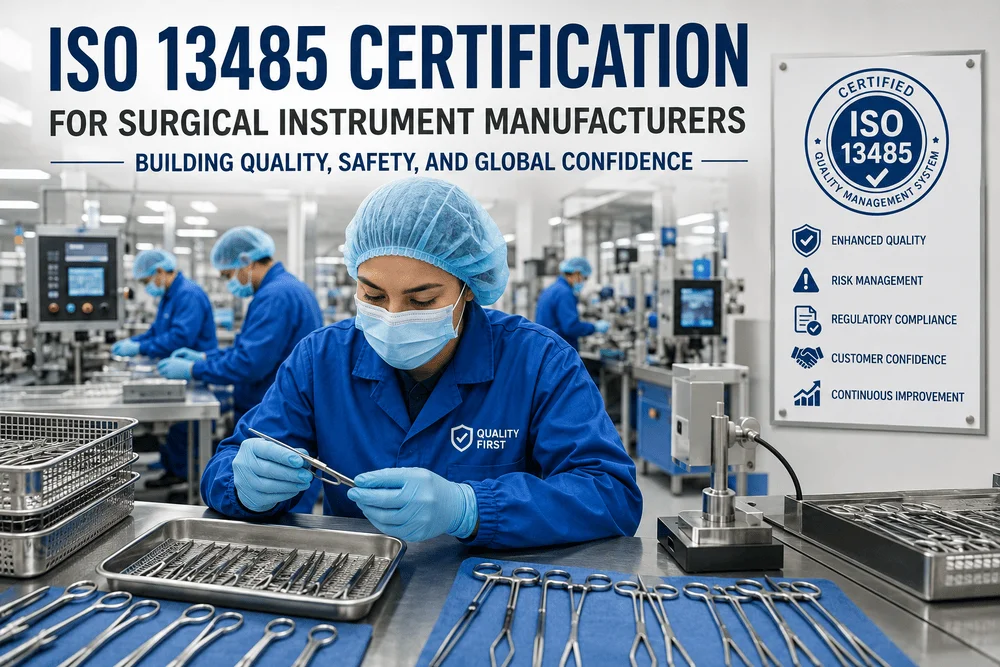
For a surgical instrument manufacturer, that means procedures governing material sourcing, machining tolerances, cleaning and sterilization validation, packaging integrity, and final inspection. It means knowing who approved a production batch and why, being able to trace a finished instrument back to the raw stock it came from, and having a clear process for what happens when something doesn't meet specification.
None of this is especially complicated in concept. The difficulty is in building systems that hold up consistently — across shifts, across employees, across the gradual organizational changes that happen as a company grows.
The Practical Value for Manufacturers
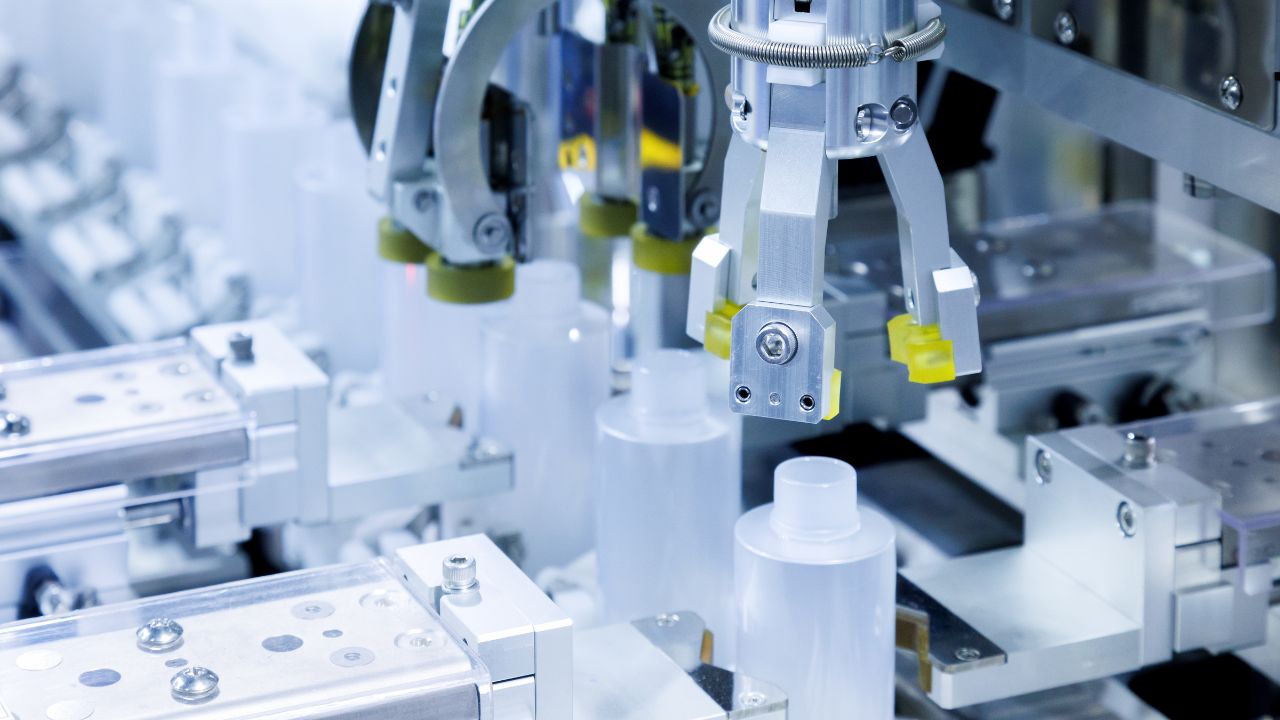
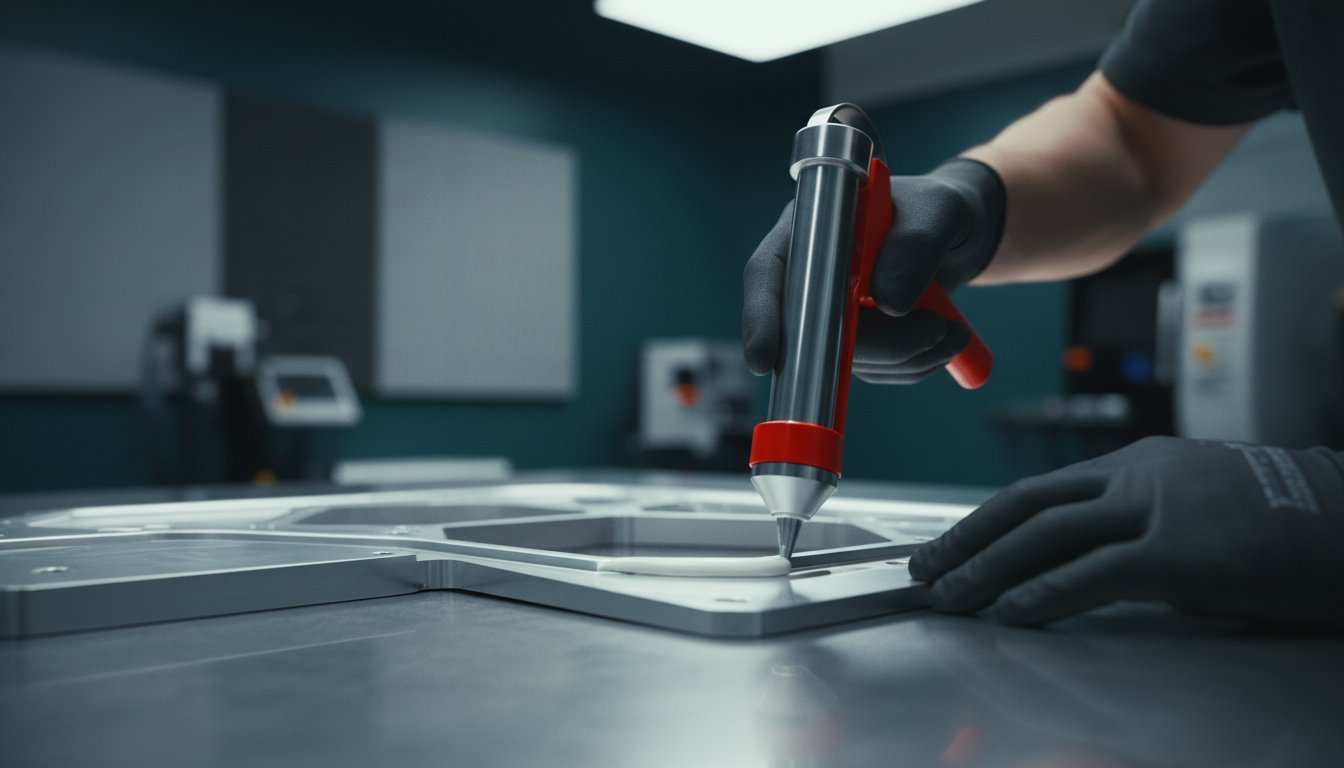
Surgical instrument production is rarely a single-step process. Raw material arrives, gets machined into components, assembled, finished, cleaned, inspected, and packaged — often across different workstations or even different facilities. Each handoff is an opportunity for variation to creep in.
ISO 13485 addresses this by requiring organizations to document their procedures and measure whether those procedures are being followed. The effect is cumulative. When everyone understands the process and deviations are caught early, production becomes more predictable. Scrap rates fall. Rework becomes less frequent. Training new staff gets easier because the process is written down rather than existing only in someone's head.
That operational discipline matters beyond internal efficiency. Customers — hospitals, distributors, procurement departments — use ISO 13485 certification as a baseline filter when evaluating suppliers. It signals that a company isn't just capable of producing quality instruments once, but has the infrastructure to do it reliably at scale.
Risk Management and Traceability
Medical device manufacturing requires a different relationship with risk than most industries. The standard asks manufacturers to systematically identify where things could go wrong — in design, in production, in storage, in use — and put controls in place before problems reach the customer.
For surgical instruments, that proactive mindset is particularly valuable. A sterilization process that wasn't validated properly, a surface finish that doesn't meet biocompatibility requirements, a component sourced from a supplier without adequate quality controls — these aren't hypothetical scenarios. They're the kinds of issues that generate FDA warning letters, recalls, and worse.
Traceability requirements reinforce this. When a manufacturer can trace a finished instrument back through every stage of production — materials, processes, inspection records, personnel — they have the ability to investigate quality concerns quickly and limit the scope of any corrective action. That level of accountability isn't just regulatory compliance. It's the kind of operational transparency that builds genuine confidence, internally and externally.
What Certification Signals to the Market
Healthcare procurement has become more rigorous over the past decade. Hospitals and group purchasing organizations increasingly require documented evidence of quality management capability before adding a supplier to an approved vendor list. ISO 13485 certification is frequently part of that requirement.
Beyond the checkbox, though, certification carries a more substantive message: this company has had its quality system independently audited and found to meet an internationally recognized standard. That's meaningful to customers who are ultimately responsible for what goes into their operating rooms.
For manufacturers competing in global markets, the signal matters even more. ISO 13485 is recognized in major medical device markets worldwide, and certification can simplify market access in regions where regulatory alignment with the standard is expected.
Conclusion
Surgical instruments are one of those product categories where quality isn't a differentiator — it's the baseline. The question for manufacturers isn't whether to take quality seriously, but how to build systems that make quality consistent and provable.
ISO 13485 provides a practical framework for doing exactly that. It brings structure to complex production processes, creates accountability through documentation and traceability, and gives customers a credible basis for trust. For manufacturers committed to operating at a high standard over the long term, it's less a certification to acquire and more a way of running a serious business.