Sign up with Google
 Sign in with Zoho

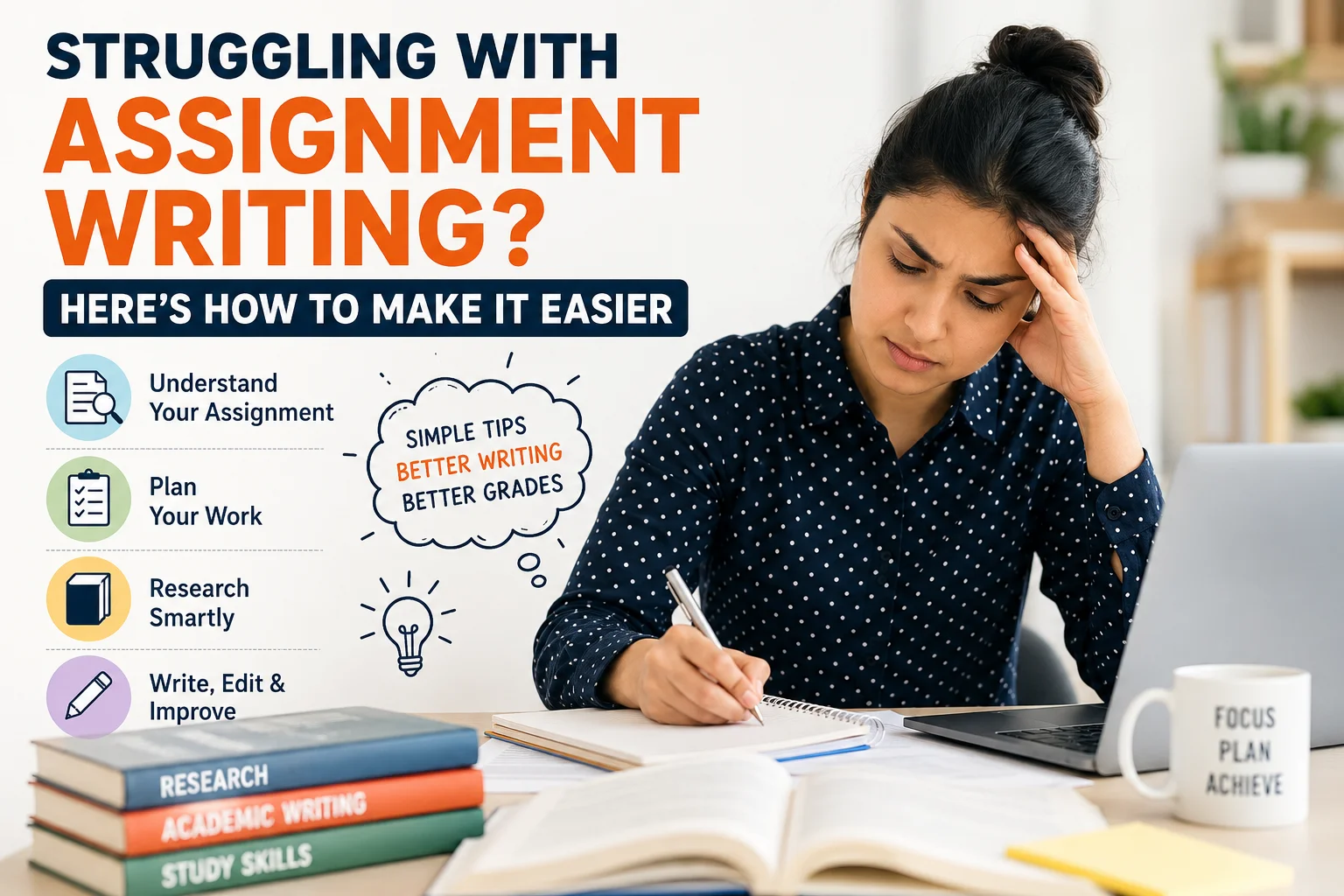
Assignment writing is an essential part of college and university education, but many students find it challenging. From understanding complex topics to organizing ideas and meeting deadlines, assignments can often feel overwhelming. Students commonly struggle with where to start, how to conduct research, how to structure their work, and how to present strong arguments.
The good news is that assignment writing is a skill that can be improved with the right approach. A clear plan, effective research methods, proper organization, and consistent editing can make the entire process easier and more manageable.
Whether you are writing an essay, research paper, case study, or coursework assignment, following practical assignment writing techniques can help you work more efficiently and produce better-quality academic work.
This guide explains the common challenges students face and provides simple strategies to make assignment writing easier, faster, and less stressful.
Why Do Students Struggle With Assignment Writing?
Many students experience difficulties with assignments, not because they lack knowledge, but because they do not have an effective writing process. Understanding the reasons behind these challenges is the first step toward improvement.
Lack of Understanding of the Assignment Topic
One of the biggest challenges students face is misunderstanding what an assignment question is asking. Some students begin writing immediately without analyzing the topic, which can lead to irrelevant information and weak arguments.
Before starting, carefully examine:
- The main question
- Important keywords
- Assignment objectives
- Required outcomes
Understanding the purpose of your assignment helps you focus your research and create a stronger response.
Poor Planning and Organization
Starting an assignment without a plan often makes the writing process confusing. Without a clear structure, students may repeat ideas, miss important points, or struggle to connect their arguments.
A simple outline helps you organize your thoughts and creates a clear path for writing.
Weak Research Skills
Good assignments require reliable evidence. Many students struggle because they either collect too much unnecessary information or rely on sources that are not academically reliable.
Effective research involves:
- Finding relevant sources
- Taking organized notes
- Evaluating information quality
- Recording references properly
Strong research makes writing easier because you have enough evidence to support your ideas.
Time Management Problems
Many students delay starting assignments until the deadline approaches. This creates unnecessary pressure and reduces the time available for research, writing, and editing.
Breaking the assignment into smaller tasks makes the workload easier to manage.
Understand Your Assignment Requirements Before Writing
The first step in successful assignment writing is understanding exactly what your instructor expects.
Before you begin, review:
- Assignment instructions
- Word count requirements
- Formatting guidelines
- Referencing style
- Submission deadline
- Grading criteria
Many students lose marks because they do not follow instructions carefully. Even a well-written assignment can receive lower grades if it does not answer the question properly.
A useful technique is to create a checklist based on the assignment requirements. This helps ensure that every important element is included before submission.
Break the Assignment Into Smaller Tasks
Large assignments often feel difficult because students see them as one huge task. Instead, divide the writing process into smaller, manageable steps.
Step 1: Analyze the Question
Identify what the assignment requires. Look for keywords such as:
- Analyze
- Compare
- Discuss
- Evaluate
- Explain
These words indicate the type of response expected.
Step 2: Conduct Research
Collect relevant information from reliable academic sources. Focus on quality rather than collecting excessive amounts of information.
Step 3: Create an Outline
Plan your assignment structure before writing. Decide what information will be included in each section.
Step 4: Write the First Draft
Focus on developing your ideas instead of trying to create a perfect version immediately.
Step 5: Edit and Improve
Review your work carefully to improve clarity, grammar, and organization.
Breaking assignments into steps makes the writing process less stressful and more achievable.
Create a Simple Assignment Structure
A clear structure helps readers understand your ideas and improves the overall quality of your assignment.
Most academic assignments follow three main sections:
Introduction
The introduction provides background information and introduces your topic.
A strong introduction should include:
- Context of the topic
- Purpose of the assignment
- Main argument or thesis statement
- Overview of key points
Avoid including too many details in the introduction. Save detailed explanations for the main body.
Main Body
The body is where you present your arguments and supporting evidence.
Each paragraph should include:
A Main Point
Introduce the key idea of the paragraph.
Supporting Evidence
Use research, examples, or academic sources.
Explanation
Explain why the evidence supports your argument.
Connection
Link the paragraph back to your overall assignment topic.
Well-organized paragraphs make your assignment easier to read and understand.
Conclusion
The conclusion summarizes your main points and provides a final perspective.
A good conclusion should:
- Restate the main argument
- Summarize important findings
- Provide a final observation
Avoid introducing completely new ideas in the conclusion.
Improve Your Research Process
Research plays a major role in successful assignment writing. Strong research provides the foundation for convincing arguments.
Use Reliable Academic Sources
Good sources include:
- Academic journals
- Books
- Research papers
- University publications
- Government reports
Avoid relying only on general websites or unsupported information.
Organize Your Research Notes
Create categories for your notes, such as:
- Background information
- Main arguments
- Supporting evidence
- Opposing viewpoints
- References
Organized notes save time when you begin writing.
Record References Immediately
Keep track of every source you use. This makes referencing easier and helps prevent accidental plagiarism.
Use Simple Assignment Writing Techniques
Many students make writing difficult by trying to create perfect content immediately. A better approach is to focus on developing ideas first and improving them later.
Start With a Rough Draft
Your first draft does not need to be perfect. The goal is to organize your ideas and create a foundation for improvement.
Write One Section at a Time
Instead of thinking about the entire assignment, focus on completing one part:
- Introduction
- First body paragraph
- Second body paragraph
- Conclusion
Small progress keeps the process manageable.
Use Clear Language
Academic writing should be professional but easy to understand. Avoid unnecessary complicated words and focus on explaining ideas clearly.
Support Your Arguments
Strong assignments are based on evidence. Whenever you make an important claim, support it with research, examples, or academic references.
Overcome Writer’s Block When Writing Assignments
Feeling stuck is common during assignment writing. Several techniques can help you start again.
Begin With Simple Ideas
Write down basic points related to your topic. These ideas can later be developed into detailed arguments.
Use Brainstorming Methods
Helpful techniques include:
- Mind maps
- Bullet-point lists
- Question-based thinking
- Quick notes
These methods help organize thoughts before writing.
Set Small Writing Goals
Instead of aiming to complete the entire assignment at once, set smaller goals:
- Write one paragraph
- Complete one section
- Review one source
Small achievements create momentum.
Manage Your Time and Reduce Assignment Stress
Effective time management makes assignment writing easier and improves the quality of your work.
Create a realistic schedule:
Avoid leaving assignments until the last minute. Starting early gives you enough time to improve your work.
Common Assignment Writing Mistakes and How to Avoid Them
Writing Without Understanding the Question
Problem: The assignment may become unrelated to the topic.
Solution: Analyze the question carefully before researching.
Weak Arguments
Problem: Providing information without explanation.
Solution: Focus on analysis and explain why your evidence matters.
Poor Organization
Problem: Ideas become difficult to follow.
Solution: Create an outline and use clear sections.
Incorrect Referencing
Problem: Missing citations can affect academic credibility.
Solution: Record sources and follow the required referencing style.
Skipping Proofreading
Problem: Grammar mistakes and unclear sentences reduce quality.
Solution: Always review your assignment before submission.
Helpful Habits That Make Assignment Writing Easier
Developing good academic habits can improve your writing over time.
Useful habits include:
- Reading academic articles regularly
- Keeping organized notes
- Creating writing schedules
- Reviewing feedback from instructors
- Practicing critical thinking
- Improving vocabulary gradually
The more you practice, the more confident and efficient you become at assignment writing.
Final Assignment Writing Checklist
Before submitting your assignment, check:
- Did I answer the assignment question?
- Did I follow all instructions?
- Is my assignment clearly structured?
- Are my arguments supported by evidence?
- Did I use reliable sources?
- Are my references formatted correctly?
- Did I proofread my final draft?
Conclusion
Assignment writing can feel difficult, especially when you do not have a clear process. However, using the right techniques can make the experience much easier and more manageable.
Understanding requirements, planning your work, conducting effective research, organizing ideas, and reviewing your final draft are essential steps for producing better assignments.
By improving your assignment writing skills and developing consistent writing habits, you can reduce stress, save time, and achieve stronger academic results. Successful assignment writing is not about perfection from the beginning it is about following a structured process and continuously improving your skills.