Sign up with Google
 Sign in with Zoho

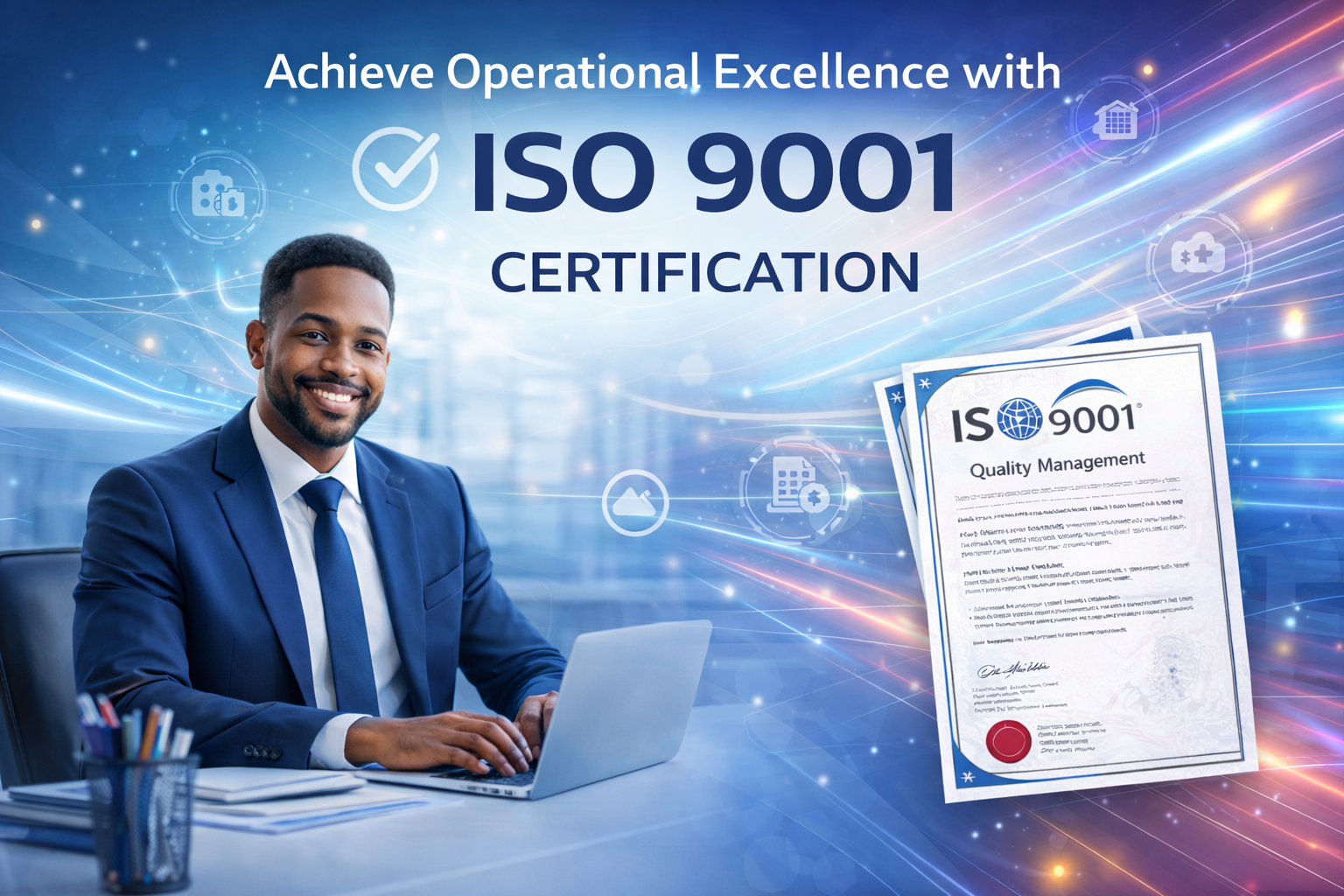

In today’s competitive global market, businesses are evaluated not only by the quality of their products or services but by how consistently they deliver results. Customers expect reliability, structured processes, and accountability. This is where ISO 9001 Certification plays a crucial role. It is an internationally recognized framework that helps organizations implement a structured Quality Management System (QMS) to ensure consistency, efficiency, and customer satisfaction.
Unlike marketing claims, ISO 9001 is built on documented systems and measurable performance standards. It emphasizes clearly defined processes, risk identification, performance monitoring, and continuous improvement across departments. This structured approach ensures that quality is maintained not occasionally, but consistently.
What Is ISO 9001 Certification?
ISO 9001 is a globally accepted standard for Quality Management Systems. It provides organizations with a systematic method to manage operations efficiently and meet customer requirements. The framework helps businesses improve operational efficiency, reduce errors and rework, enhance customer satisfaction, maintain effective documentation control, and align with international compliance practices. Certification confirms that an independent audit body has verified the organization’s management system against ISO 9001 requirements.
Why Businesses Choose ISO 9001
Organizations across industries adopt ISO 9001 for both strategic and operational benefits. First, it strengthens business credibility, as clients and partners prefer companies that follow internationally recognized standards. Second, it improves process control by defining responsibilities and reducing operational confusion. Third, ISO 9001 promotes risk-based thinking, enabling businesses to identify potential issues early and take preventive action. Additionally, many government tenders and international contracts require ISO certification as a qualifying criterion.
How the Certification Process Works
The ISO certification process follows a structured approach: conducting a gap analysis, implementing and documenting the QMS, performing internal audits and management reviews, and completing the external certification audit in two stages. Once approved, the certificate is issued for three years, subject to annual surveillance audits. For most small and medium enterprises, implementation typically takes one to three months.
Long-Term Value
When implemented effectively, ISO 9001 enhances operational efficiency, reduces waste, improves accountability, and builds long-term trust in domestic and international markets. It is not merely a certificate but a foundation for sustainable and structured business growth.
ISO 9001 Certification helps businesses build structured systems, improve process control, and enhance customer satisfaction. It ensures consistent quality delivery through documented procedures and continuous improvement. By implementing ISO 9001, organizations strengthen credibility, reduce operational risks, and create a strong foundation for long-term sustainable growth.


 (1) (3).webp)