Sign up with Google
 Sign in with Zoho


Delhi never slows down, and neither do its expenses. A sudden medical bill, a rent deposit in a new neighbourhood, a wedding in the family, school fees, or a home repair before the monsoon: these things rarely wait for payday. If you are a salaried professional in the capital, an instant personal loan can bridge that gap without forcing you to break a fixed deposit or borrow from friends.
This guide explains how to apply for an instant personal loan online in Delhi, with amounts of up to ₹4.8 lakh for eligible borrowers. It covers who can apply, which documents you need, what an EMI really looks like, and how to avoid the mistakes that cost borrowers money. It is written to help you decide, not to push you into a loan you do not need.
What Is an Instant Personal Loan?
An instant personal loan is an unsecured loan you apply for entirely online. "Unsecured" means you do not have to pledge a house, gold or a vehicle. The lender decides based on your income, employment and credit history. You repay the amount in fixed monthly instalments (EMIs) over an agreed tenure.
The word "instant" refers to the speed of the process, not a guarantee of approval. Digital KYC, automated income checks and online agreements remove most of the paperwork and branch visits. For many salaried applicants, that cuts the wait from days to hours, and sometimes minutes.
Why Delhi Borrowers Choose Online Personal Loans
Delhi and the wider NCR have one of the largest salaried workforces in India, spread across Connaught Place, Nehru Place, Saket, Okhla, Gurugram and Noida. Long commutes and tight work hours make a bank visit a real cost in time. Applying online solves that.
• No branch visit. You can apply from your phone during a metro ride or a lunch break.
• Minimal paperwork. Most of the process uses PAN, Aadhaar and bank statements you already have.
• Quick decisions. Eligible applicants can often see a decision the same day.
• No collateral. You are not asked to put up property or gold.
• Flexible repayment. You choose a tenure that suits your monthly budget.
How Much Can You Borrow? Understanding the ₹4.8 Lakh Limit
The headline figure of ₹4.8 lakh is the upper end of what is available to eligible applicants. It is a ceiling, not a promise. Your own offer might be lower, and that is normal. Lenders usually look at:
• Monthly income. Higher, stable income supports a larger loan.
• Existing obligations. If a large share of your salary already goes to EMIs or credit card dues, your capacity shrinks. Many lenders prefer total obligations to stay within roughly 40 to 50 percent of take-home pay.
• Credit score and history. A score of 700 or above generally helps, and a clean repayment record matters more than the number alone.
• Job stability. Longer service and a reputed employer make you look more stable.
• Tenure chosen. A longer tenure lowers the EMI but raises total interest.
A practical rule: borrow what you need, not the maximum you can get. Every extra rupee you borrow is a rupee you repay with interest.
Who Is Eligible?
Criteria differ between lenders, but the common ones for salaried applicants in Delhi look like this:
If you do not meet every point, you may still get an offer, perhaps with a smaller amount or a different rate. If you do not qualify, that is useful information too, and it is better than a surprise after you have already applied several times.
Documents Required
Keeping documents ready is the single easiest way to speed things up. Most salaried applicants need:
• Identity proof: PAN card.
• Address proof: Aadhaar, or another officially valid document such as passport or voter ID.
• Income proof: Latest 2 to 3 salary slips, or an employer letter.
• Bank statements: 3 to 6 months of statements for the account where your salary is credited.
• Photo or selfie: A recent photograph or a selfie / video KYC, as asked during the application.
Make sure names, dates of birth and addresses match across documents. Small mismatches are one of the most common reasons for delays.
Step-by-Step: How to Apply Online
Step 1: Check your eligibility
Before filling anything, confirm that your age, employment and income fit the basic criteria. If you know your credit score, note it. If you are not sure, you can request a free report from a credit bureau, which you are entitled to once a year.
Step 2: Decide the amount and tenure
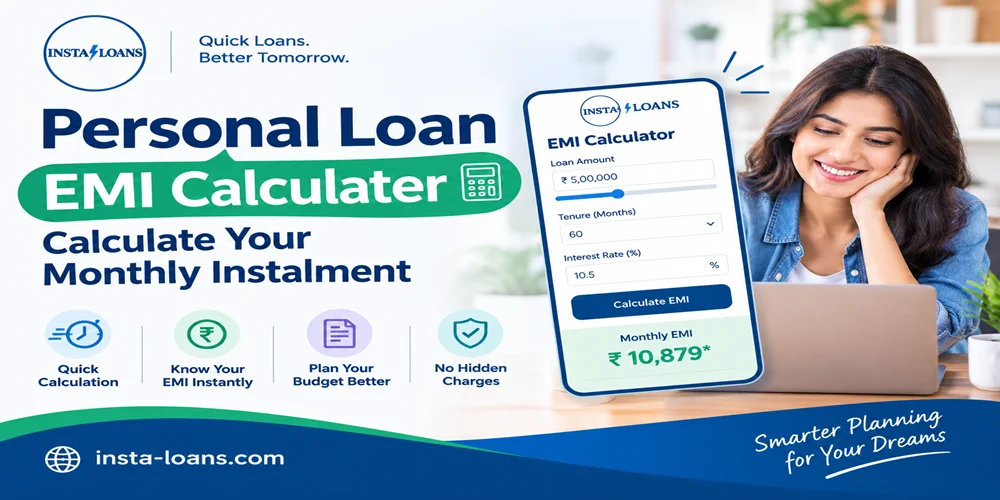
Work out the EMI you can comfortably pay without cutting into essentials. An EMI calculator helps. As a guide, keep your EMI to a modest share of your take-home salary, and leave room for rent, food and savings.
Step 3: Fill in the online application
Enter your personal details, employer name, designation and monthly income. Accuracy matters. Overstated income can lead to rejection or, later, to problems.
Step 4: Complete KYC and upload documents
Verify your identity using PAN and Aadhaar, and upload salary slips and bank statements. Some platforms use secure account-aggregator or e-statement routes so you do not have to upload PDFs manually.
Step 5: Review the offer carefully
If approved, you will see an offer with the amount, interest rate, tenure, EMI and fees. Read the Key Fact Statement (KFS) closely. It should clearly show the annual percentage rate (APR), the processing fee, the total amount payable and the repayment schedule.
Step 6: Accept and receive the funds
Accept the offer with an e-sign or OTP. The amount is credited to your bank account once the process is complete. Under RBI digital lending norms, disbursal should go directly into the borrower's own bank account.
What Will It Cost? A Realistic EMI Example
Numbers help more than adjectives. The table below shows illustrative EMIs for a ₹4,80,000 loan at different rates and tenures. These are examples for planning and are not a quote from Insta Loans or any lender. Your actual rate depends on your profile.
Notice the trade-off. Stretching 16% over 60 months drops the EMI to about ₹11,673, but you pay over ₹2.2 lakh in interest, compared with about ₹1.28 lakh over 36 months. A lower EMI feels comfortable today but costs more overall. Processing fees and GST are extra, so ask for the full cost before you accept.
Fees and Charges to Look For
The interest rate is only part of the cost. Before accepting, check each of these:
• Processing fee: Often a percentage of the loan amount, plus GST.
• APR: The rate that includes fees, which lets you compare offers fairly.
• Late-payment charges: What you pay if an EMI is delayed.
• Prepayment or foreclosure terms: Whether you can close early, and at what cost.
• Other fees: Any other recurring or one-time charges.
A trustworthy lender states all of these upfront. If something is unclear, ask before you proceed. If it is still unclear, that is your answer.
Tips to Improve Your Chances of Approval
• Fix small issues first. Pay credit card bills and EMIs on time for at least a few months before applying.
• Keep card usage low. High utilisation on credit cards can pull your score down.
• Do not apply everywhere at once. Each formal application can trigger a hard enquiry. Too many in a short time can look risky.
• Use a clear salary account. Salary should reach the same account each month, which makes income easy to verify.
• Be accurate. Make sure the details on your form match your documents.
• Ask for a realistic amount. If you need ₹2 lakh, apply for ₹2 lakh. A smaller, well-supported request often goes through more easily.
Common Uses for a Personal Loan in Delhi
Personal loans are flexible, which is their appeal. Typical reasons include medical expenses, wedding costs, home renovation, relocation, education fees, travel, and consolidating several high-interest dues into one EMI. A loan makes the most sense when the purpose is important and the repayment fits your budget. It makes much less sense for discretionary spending you could postpone.
Personal Loan vs Other Ways to Raise Money
A personal loan is not always the cheapest option, so it helps to compare before you commit.
• Credit card: Convenient for small purchases, but revolving balances can carry very high interest. A fixed-tenure personal loan is often cheaper for larger, planned expenses.
• Gold loan: Usually lower rates because you pledge gold, but it requires a branch visit and carries the risk of losing the asset if you default.
• Employer advance: Some employers offer salary advances at little or no interest. If yours does, it can be the best first option for small amounts.
• Breaking a fixed deposit: You may pay less interest on your own money, but you lose the growth and may face penalties for early withdrawal.
• Family or friends: Cost-free, but think about how it may affect the relationship if repayment gets difficult.
For a larger amount, such as ₹2 lakh to ₹4.8 lakh, with no collateral and a need for speed, an online personal loan is often the most practical fit, as long as you have done the EMI math first.
How RBI Digital Lending Rules Protect You
India's central bank has set rules for digital lending that apply to banks and NBFCs and the platforms that work with them. In plain terms, they are meant to make online borrowing more transparent. You should expect a clear Key Fact Statement before you accept, with the APR and all charges listed. Loan disbursal and repayments should flow directly between your bank account and the regulated lender, not through a third party's personal account. You should also be able to find out who the lender is, and there should be a defined route to raise a complaint. If a platform cannot tell you these basics, walk away.
Five Mistakes Delhi Borrowers Should Avoid
• Borrowing the maximum amount. The ceiling is not the target. A smaller loan is easier to repay and cheaper overall.
• Ignoring total cost. The EMI is only one number. Total payable and APR show the real cost.
• Applying to many lenders together. Several hard enquiries within days can lower your score and reduce your chances.
• Skipping the fine print. The agreement tells you what happens if you pay late or want to close early.
• Having no repayment buffer. If your EMI uses up too much of your salary, one unexpected expense can push you into a missed payment.
A Simple Budget Check Before You Apply
Here is a quick way to test whether a loan is affordable. Suppose your monthly take-home pay is ₹60,000. Rent, food, transport and bills take ₹35,000, and you already pay a ₹5,000 EMI. That leaves about ₹20,000. If the new EMI is ₹16,875, you would be left with only ₹3,125 for everything else, which is thin. A longer tenure or a smaller amount may fit better. Doing this sum honestly takes five minutes and can save you months of stress.
Staying Safe: How to Avoid Loan Scams
Fast money attracts fraudsters. A few firm rules protect you:
• Never pay an advance fee to get approved. A genuine lender deducts fees from the disbursed amount or shows them in the agreement. Anyone demanding money to "release" a loan is a red flag.
• Know who the lender is. It should be clear who is lending to you, and the lender should be a bank or an RBI-regulated NBFC.
• Do not share OTPs or banking passwords. OTPs, PINs and passwords are for you alone.
• Check the platform. Official sites use secure HTTPS and publish clear contact and grievance details.
• Review app permissions. Be cautious of apps asking for access to your contacts, photos or messages that has nothing to do with the loan.
RBI's digital lending rules also require clear disclosure of costs, a Key Fact Statement, and a grievance process. If you are treated unfairly, you can complain to the lender first and then escalate to the RBI Ombudsman.
Smart Repayment: Keep Your Credit Healthy
A personal loan can build your credit history if you manage it well. Set up auto-debit or a calendar reminder so you never miss an EMI. Keep a small buffer in your account around the due date. If you get extra money, such as a bonus, consider prepaying part of the loan if the terms allow it, since this reduces total interest. And if your finances change, talk to your lender early rather than going silent. Lenders generally respond better to a heads-up than to a missed payment.
Is an Instant Personal Loan Right for You?
Ask yourself three questions. First, do I truly need this money now? Second, can I repay the EMI comfortably every month, even if expenses rise? Third, have I compared the total cost, not just the monthly figure? If the answer to all three is yes, an online personal loan can be a sensible, fast way to cover a genuine need.
If not, it may be worth waiting, borrowing less, or exploring alternatives such as an employer salary advance or a smaller loan.
Ready to Apply?
If you are a salaried professional in Delhi or NCR and you have checked that the numbers work for you, you can start your application online with Insta Loans. The process is digital, the documentation is minimal, and the terms should be shown to you clearly before you commit. Check your eligibility, choose an amount and tenure that fit your budget, and read the offer carefully before you accept.
Disclaimer: Loan approval, amount, interest rate and tenure are subject to the lender's eligibility criteria, credit assessment and policies. The ₹4.8 lakh figure is a maximum, not a guaranteed offer. EMI figures in this article are illustrative. Please read the loan agreement and Key Fact Statement carefully before accepting any loan.
3. FAQ (for the landing page)
Can I really get an instant personal loan online in Delhi up to ₹4.8 lakh?
Yes, if you qualify. Loan amounts up to ₹4.8 lakh are available to eligible salaried applicants in Delhi and Delhi NCR. The amount you are actually offered depends on your income, existing EMIs, employer profile and credit history, so not every applicant will receive the maximum.
How long does approval take?
Online application takes only a few minutes. Once your KYC and income details are verified, a decision can come the same day, and for straightforward cases it can be within minutes. Disbursal timing depends on your bank and on how quickly verification is completed.
What documents do I need to apply?
Typically your PAN card, Aadhaar (or another officially valid ID and address proof), recent salary slips, and 3 to 6 months of bank statements showing your salary credits. A selfie or video KYC may be asked for. Additional papers can be requested in some cases.
Who is eligible for a personal loan in Delhi?
Generally salaried individuals who are Indian residents, aged roughly 21 to 58 years, with a stable job and a regular monthly income. Lenders also look at your credit score, your debt-to-income ratio and how long you have been in your current job.
Do I need a high credit score?
A good credit score (commonly 700 or above) improves your chances and can get you a better rate. A lower or limited score does not always mean rejection, but it may reduce the loan amount or increase the interest rate.
Is any collateral or guarantor required?
No. A personal loan is unsecured, so you do not pledge any property, gold or vehicle. Approval rests on your income and credit profile.
What interest rate and charges will I pay?
Rates and fees differ by lender and by borrower profile. Look for the annual percentage rate (APR), the processing fee, GST, late-payment charges and prepayment terms. All of these must be shown in the Key Fact Statement before you accept the loan.
What would the EMI be on ₹4.8 lakh?
As an illustration only, ₹4.8 lakh at 16% a year for 36 months works out to an EMI of about ₹16,875. Your actual EMI will depend on the rate and tenure you are offered.
Can I repay the loan early?
Often yes. Prepayment or foreclosure rules and any charges are set out in your loan agreement, so read them before you sign. Early repayment can reduce the total interest you pay.