Sign up with Google
 Sign in with Zoho

Homeowners weighing their options for a new build or major renovation often run into a term that sounds more industrial than residential: insulated concrete forms, or ICF. It's a building method that's been around for decades but has picked up renewed interest as people look for ways to build homes that hold their temperature better and cost less to heat and cool. The question worth asking isn't whether ICF is trendy—it's whether it actually delivers on efficiency, and under what conditions.
What ICF Construction Actually Is
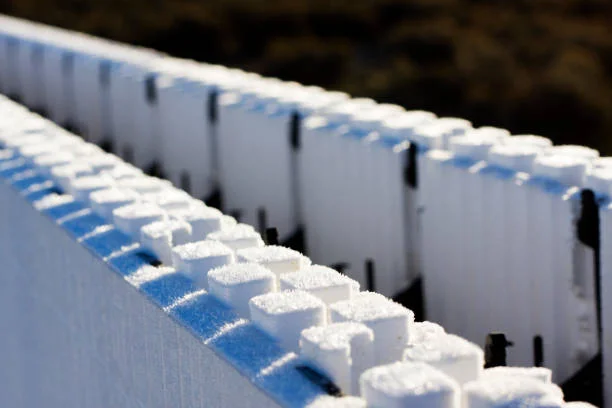
Insulated concrete forms are hollow blocks or panels, usually made of expanded polystyrene foam, that get stacked into the shape of a wall and then filled with concrete. Once the concrete cures, the foam stays in place permanently on both the interior and exterior sides of the wall. The result is a sandwich: foam, concrete, foam. Unlike traditional construction, where insulation is added after the structural frame goes up, ICF combines the structure and the insulation into a single step.
This matters because it changes how the wall behaves as a system rather than as separate parts. A wood-framed wall relies on insulation stuffed between studs, and those studs themselves conduct heat, creating what builders call thermal bridging. An ICF wall doesn't have that same weak point because the insulating foam runs continuously along the entire wall surface, broken only by window and door openings.
How the Wall Assembly Affects Energy Performance
The building envelope—the boundary between conditioned indoor space and the outdoors—is where most homes gain or lose energy. Walls, windows, doors, and the roof all play a part, but walls typically make up the largest surface area. Fewer gaps and consistent insulation from top to bottom mean the wall resists heat transfer more evenly. There's no weak spot every sixteen inches like you'd find with stud framing.
ICF walls tend to perform well here, mostly because of that unbroken layer of foam. But there's a second factor at play: the concrete core itself. Concrete has thermal mass, so instead of reacting quickly to whatever's happening outside, the wall absorbs heat and releases it gradually. Homeowners in ICF houses sometimes describe this as a kind of steadiness—fewer swings in indoor temperature, and an HVAC system that isn't constantly playing catch-up. How noticeable this effect is depends a lot on where you live. A place with big swings between day and night temperatures will show it off more than a region with mild, steady weather.
Why Air Sealing Deserves More Attention Than It Gets
Insulation tends to steal the spotlight, but air sealing does just as much heavy lifting. You can have a wall rated highly on paper and still end up with a drafty, inefficient house if air is slipping through unsealed seams, gaps around penetrations, or poorly fitted joints. This is one area where ICF has a built-in advantage—since the wall is essentially a solid pour of concrete wrapped in foam, there simply aren't as many seams and joints for air to sneak through, especially compared to a wood-framed wall with its studs, plates, and countless connection points.
That doesn't mean an ICF home is airtight by default, though. Windows, doors, the spot where the roof meets the wall, and every mechanical penetration still require careful work. A solid ICF shell can still lose its advantage if the windows are installed poorly or the attic is leaking air. The walls are one part of the envelope, not the whole story.
How Location and Climate Shape the Results
Climate has a lot to say about whether an insulation upgrade like ICF actually pays off in daily comfort. Homes in places with hot summers and cold winters tend to notice the benefits of reduced thermal bridging more than homes in milder climates. This is where local context matters—for homeowners looking into ICF concrete construction Kansas builders now have more experience with than they did a decade ago, the calculation isn't just about energy. Kansas brings humid summers, cold snaps in winter, and a real risk of tornadoes and hail, so efficiency and storm resilience tend to get weighed together rather than treated as separate decisions.
Strength and Durability Beyond the Energy Question
ICF walls also bring something to the table that has nothing to do with utility bills: strength. A reinforced concrete wall can handle wind loads and impacts that would damage typical wood framing, which explains why ICF shows up so often in storm-prone areas. None of that translates directly into lower energy costs, but it does factor into maintenance over the years and can affect insurance premiums—something many homeowners end up weighing right alongside efficiency when they're comparing their options.
ICF Versus Standard Wood Framing
Wood framing still wins on upfront cost in most markets, and it's the method most local contractors already know inside and out, which tends to make permitting and scheduling more straightforward.
ICF construction typically carries a higher initial cost due to materials and specialized labor, though the gap varies by region and project size. Whether that upfront difference pays off over time depends on energy prices, how long the homeowner plans to stay in the house, and how the rest of the home—windows, roofing, HVAC sizing—is designed to work with the wall system.
What Homeowners Should Weigh Before Choosing ICF
Anyone considering ICF should look beyond the walls alone. Window quality, HVAC design, attic insulation, and even workmanship during installation all influence how a finished home actually performs. Getting quotes from contractors experienced specifically in ICF work, rather than assuming any framing crew can adapt, is worth the extra time. Asking for examples of completed ICF projects and talking to previous clients can offer more grounded insight than manufacturer literature alone.
So, Does It Actually Make Homes More Efficient?
The honest answer is that ICF construction has real, measurable advantages in reducing thermal bridging and air infiltration compared to many conventional wall systems, but it isn't a single fix for a home's overall energy performance. Results depend heavily on design choices, climate, and execution. For homeowners willing to invest the time in understanding the full building system—not just the walls—ICF is a legitimate option worth serious consideration rather than a guaranteed shortcut to lower bills.