Sign up with Google
 Sign in with Zoho

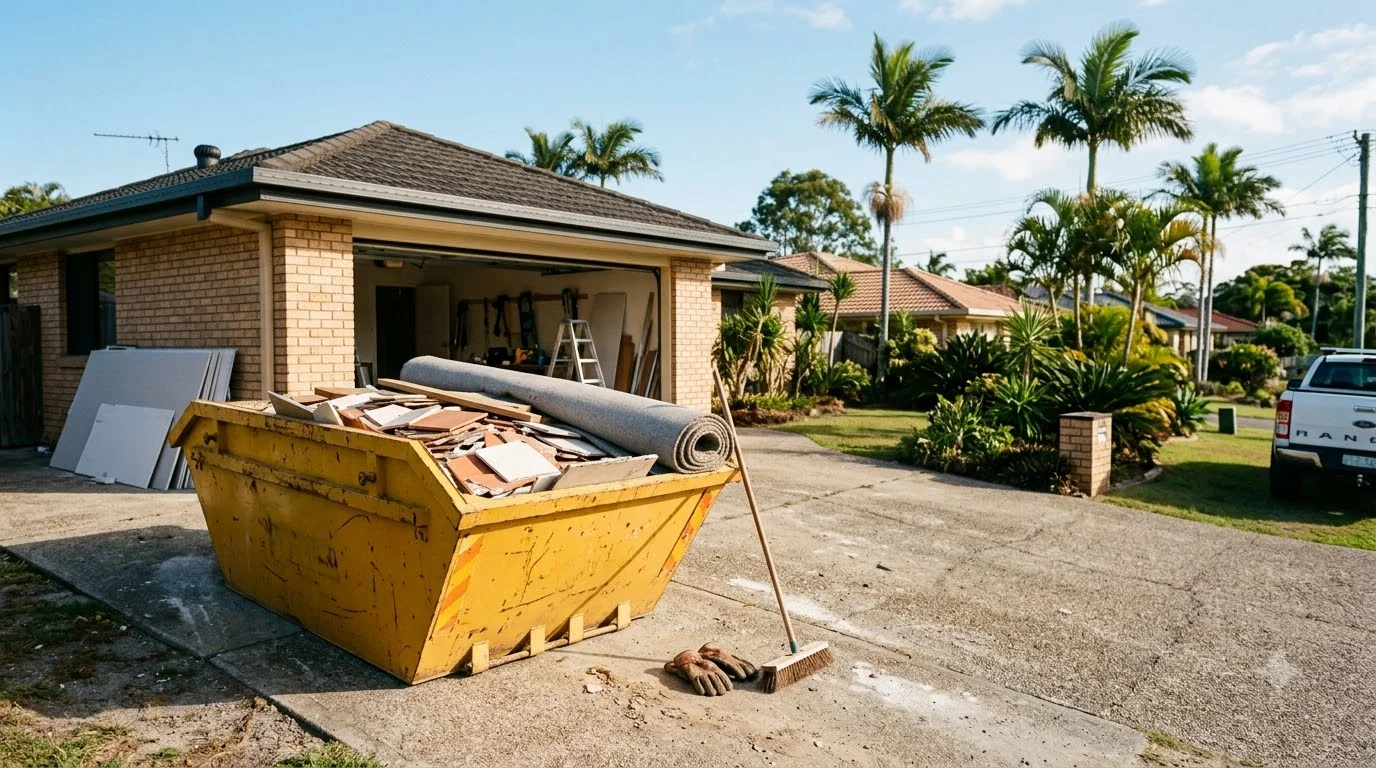
Most people use a skip bin just twice in their lives; the first time is while doing renovations and the second time when clearing out a relative’s home. In both situations, they think it will be a very straightforward process; select a bin size, get it delivered, fill it up. Once the bin arrives at your place, all of a sudden you realize that the driveway is too narrow for the truck, your “medium” bin is already overflowing after filling up just one room and mattresses have a different pile.
After many years of delivering skip bins at various locations around Burleigh to Coomera, there are a number of common mistakes that emerge. Once you learn about these mistakes, they are not difficult to understand but hardly anyone knows about them.
People almost always undersize the bin
Asking people about the amount of rubbish created by a bathroom renovation will give very underestimated numbers. The tiles, old bathrooms, and plasterboards are bulky and heavy materials that will only be seen when they create a big pile in your front yard. Four cubic meters of rubbish bin looks pretty decent in a photograph, but when you start putting the garbage inside, it will quickly become filled.
General guideline that works: if you are getting rid of the rubbish from a single room (garage, single bedroom, small kitchen), 4-6 cubic meters of bin will do just fine. A complete declutter of an entire house or a renovation of two rooms will require 8-10 cubic meters. Bigger construction jobs will need even bigger bins. Better to err on the safe side and choose a bigger bin – a half-filled bin is cheaper than having the second bin delivered.
Weight matters more than volume
This is another one that often trips people up. The skip bin has a maximum weight capacity, as well as a maximum volume capacity, and any material which is heavy and dense like concrete, bricks, soil, and tiles will reach the weight maximum far before the volume maximum is reached. People can load a 6m³ bin to two-thirds of its capacity with crushed pavers and exceed the weight limit despite having spare room visible in the bin. Any job involving the disposal of heavy items such as concrete pathways, roof tiles, or soil will benefit from prior knowledge of the weight limit.
Access is the thing that actually decides your price
Everyone seems to focus on the size of the bin, but accessibility to your property does the real work in terms of both cost and logistical issues. The bin that requires maneuvering into an access point such as a tight side drive, a corner access, or an access from a nature strip under power lines will take more time and possibly require another truck configuration. Another potential issue could be a steep driveway access, since a loaded bin can weigh quite a bit more than anticipated and cannot be moved easily on some trucks.
Before you book a bin, it’s always a good idea to check the width of the access point and mention anything else that could be of concern, such as low hanging branches, shared driveways, or strata restrictions on placement of bins.
Not everything can go in
It’s the one thing which stumps everyone who does it for the first time. Mattresses, car tyres, batteries, paint cans, asbestos, and all electronic products cannot simply be put with normal garbage; some are banned while others need special handling for their disposal. Sometimes green waste (i.e. tree branches, grass, dirt etc.) also requires its own bin because the waste is processed by the councils or tips separately.
The solution to this problem is pretty simple but tedious – walk the property and identify anything which may come under the category of “special” waste prior to the arrival of your bins.
Timing it around the actual job, not the calendar
A lot of people book a skip bin for the first day of a job and then realise the bin sits mostly empty until the demolition or clear-out actually starts, meanwhile the hire clock is running. For renovations especially, it's usually smarter to book the bin for when the mess actually starts happening (day of demo, not day of planning) and to build in a couple of buffer days at the end, because jobs almost always run a little longer than expected.
The short version
Skip bin hire isn't complicated, but it rewards a bit of upfront thinking: size for weight as much as volume, measure your access before you book, sort out anything hazardous ahead of time, and time the delivery to the mess rather than the project start date. Get those four things right, and the bin becomes the easiest part of the job, which, honestly, is how it should be.
For anyone tackling a cleanup or reno on the Gold Coast, GenieBins Gold Coast hires out skip bins in a range of sizes for home, renovation, and commercial jobs, with straightforward pricing and flexible hire periods.