Sign up with Google
 Sign in with Zoho

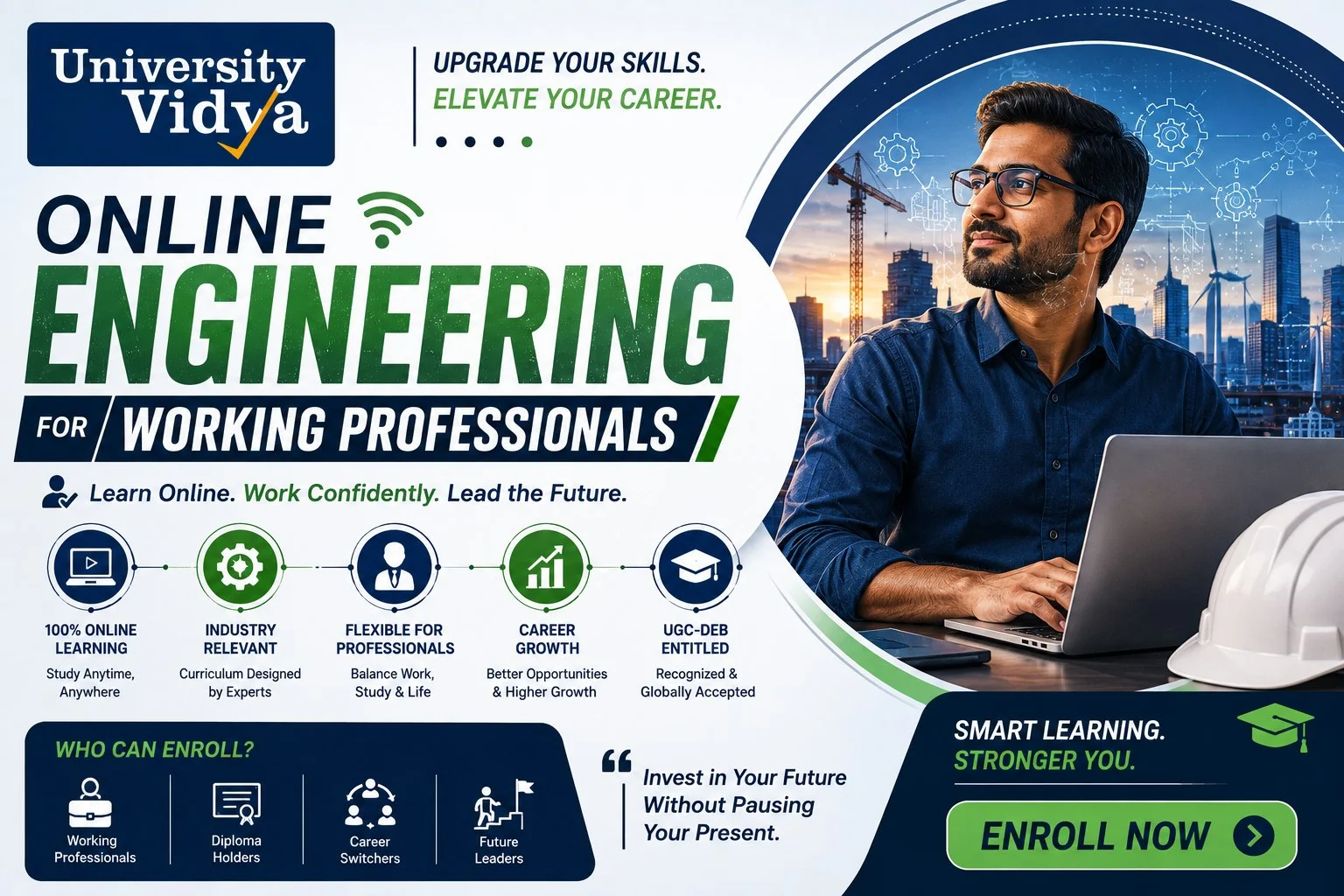
Moving from a technical or mid-level position into a senior technology role requires more than years of experience. Professionals increasingly need stronger technical foundations, leadership capabilities, specialized skills, and evidence that they can solve complex business problems.
This is why Online Engineering for Working Professionals attracts attention from people who want to continue learning while maintaining their careers. However, professionals must distinguish between online engineering education, individual technical courses, and formally recognized engineering degrees. In India, AICTE's current Approval Process Handbook states that Open and Distance Learning/Online Learning is not allowed for diploma, degree, or postgraduate-degree programmes in Engineering and Technology.
The right approach is therefore to build a career roadmap around recognized education, practical skills, professional experience, and continuous upskilling.
Why Do Working Professionals Need a Career Roadmap?
Career progression rarely happens automatically with experience. A professional may have several years of industry exposure but still need specific skills to qualify for roles such as senior developer, technical lead, engineering manager, data engineer, cloud architect, or technology consultant.
A structured roadmap helps identify:
- Your current technical skill level
- Your target senior role
- Skills required for that role
- Education or certifications that can fill knowledge gaps
- Projects that demonstrate practical expertise
- Leadership capabilities needed for progression
Rather than collecting qualifications without a clear purpose, professionals can connect every learning decision to a specific career objective.
Step 1: Identify Your Target Senior Technology Role
The first step is deciding where you want your career to go. Senior technology roles can have very different expectations.
Common Career Directions
Depending on your background, you may target:
- Senior Software Engineer
- Technical Lead
- Data Engineer
- Cloud Engineer
- AI or Machine Learning Professional
- Cybersecurity Specialist
- Engineering Project Manager
- Solutions Architect
- Technology Consultant
Research job descriptions for your desired position and create a list of recurring technical and professional requirements. This gives you a practical skills checklist rather than relying on assumptions about what a senior role requires.
Step 2: Audit Your Existing Skills
Before enrolling in an Online Engineering Course, assess what you already know.
Divide your skills into three categories:
- Strong: Skills you use confidently at work.
- Developing: Skills you understand but need to practise.
- Missing: Skills frequently requested for your target position but absent from your current profile.
This simple audit can prevent professionals from spending time studying subjects they already understand while overlooking important gaps.
Step 3: Strengthen Your Technical Foundation
Senior professionals are expected to understand not only individual technologies but also how systems work together.
Depending on your career direction, strengthen areas such as:
- Programming and software development
- Data structures and algorithms
- Database systems
- Operating systems
- Computer networks
- Cloud computing
- Cybersecurity fundamentals
- Data engineering
- Artificial intelligence
- System design
- Software architecture
The specific combination should depend on your intended role and industry.
Step 4: Choose the Right Education Path
Education can be useful when it addresses a genuine knowledge gap or provides a structured academic foundation.
However, professionals should carefully verify any programme marketed as Online Engineering for Working Professionals. AICTE's current framework specifically states that ODL/Online Learning is not allowed for Engineering and Technology programmes at diploma, degree, and postgraduate-degree levels.
This means professionals should not assume that an advertisement for an Online B.Tech or Online M.Tech represents a permitted engineering degree simply because it is offered by a university or education platform.
The UGC also maintains regulations governing online and ODL programmes and advises students to verify the recognition status applicable to the particular admission session.
Step 5: Build Practical Experience
Academic knowledge becomes significantly more valuable when you can demonstrate how you apply it.
Working professionals can build evidence through:
- Workplace projects
- Technical prototypes
- Automation initiatives
- Data dashboards
- Cloud deployments
- Software applications
- System-design exercises
- Open-source contributions
- Technical documentation
For example, a software professional targeting a technical-lead position could document how they improved application performance, redesigned an architecture, reduced deployment time, or introduced automated testing.
These achievements can demonstrate senior-level capability more effectively than simply listing technologies on a résumé.
Step 6: Develop Leadership and Communication Skills
The transition from an individual contributor to a senior or leadership position often requires a broader skill set.
Senior professionals may need to:
- Mentor junior employees
- Review technical designs
- Communicate with business teams
- Estimate project requirements
- Manage technical risks
- Make architecture decisions
- Lead cross-functional initiatives
- Present solutions to stakeholders
Technical expertise gets you into consideration, but communication, decision-making, and leadership can influence how effectively you operate at senior levels.
Step 7: Consider Advanced Specialization
After building a strong foundation, professionals can specialize in an area aligned with market demand and personal interests.
Potential areas include:
- Artificial intelligence
- Machine learning
- Data science
- Cloud computing
- Cybersecurity
- DevOps
- Business analytics
- Software architecture
- Internet of Things
Professionals with an existing eligible engineering background may also encounter postgraduate options marketed as Online M.Tech For Working Professionals. Before enrolling, however, verify the exact programme, mode, institution, regulatory permissions, and applicable academic-session status.
How to Measure Your Progress?
A career roadmap should produce measurable outcomes.
Every three to six months, evaluate:
- Technical Progress: Can you solve more complex technical problems than before?
- Project Impact: Have you contributed to projects with measurable business or technical outcomes?
- Professional Responsibility: Are you taking ownership of larger systems, teams, or initiatives?
- Market Readiness: Do your skills align with current job descriptions for your target role?
- Leadership Growth: Are you mentoring others or influencing technical decisions?
These indicators provide a better picture of career readiness than simply counting completed courses.
Where University Vidya Fits Into Your Research?
Professionals comparing higher-education pathways can use University Vidya as a starting point for researching courses, eligibility requirements, programme formats, and career-oriented education options.
The key is to treat education research as a comparison exercise. Examine curriculum, practical exposure, faculty, fees, delivery mode, institutional recognition, and career relevance before making a final decision.
For engineering programmes in particular, always cross-check current regulatory information with official authorities because programme permissions and recognition requirements can change.
Common Mistakes Working Professionals Should Avoid
A career transition can become unnecessarily difficult when professionals make education decisions without a clear objective.
Avoid:
- Choosing a programme only because it is advertised as online
- Assuming every online engineering degree is recognized
- Collecting certificates without developing practical skills
- Ignoring communication and leadership abilities
- Choosing a specialization solely because it is trending
- Failing to research the target job role
- Relying entirely on salary promises made by advertisements
The strongest career strategy combines relevant education with demonstrable workplace performance.
Final Takeaway
Online Engineering for Working Professionals can be a useful search and learning pathway for professionals seeking technical growth, but the qualification itself should never be evaluated solely by its delivery format. In India, current AICTE rules place specific restrictions on ODL and online Engineering and Technology programmes, making regulatory verification essential.
A successful transition into a senior tech role is ultimately built step by step: define your target position, identify skill gaps, strengthen your technical foundation, gain practical experience, develop leadership capabilities, and choose recognized education where it genuinely adds value.
Before enrolling in an Online Engineering Course, Online B.Tech, Online M.Tech, or any programme marketed for working professionals, verify the current regulatory and recognition status. Research your options through reliable resources such as University Vidya, compare programmes carefully, and choose an education pathway that supports your long-term career goals.