Sign up with Google
 Sign in with Zoho

Sales teams rarely lose track of leads because they do not have enough leads. More often, the problem starts after a prospect enters the system. A follow-up gets missed, a salesperson forgets to update an opportunity, or useful customer information remains buried in emails and spreadsheets.
This is where CRM and pipeline automation can make day-to-day sales management easier. Scale Front Digital helps businesses organize these processes so sales teams can spend more time communicating with prospects and less time handling repetitive updates.
What CRM Pipeline Automation Actually Does
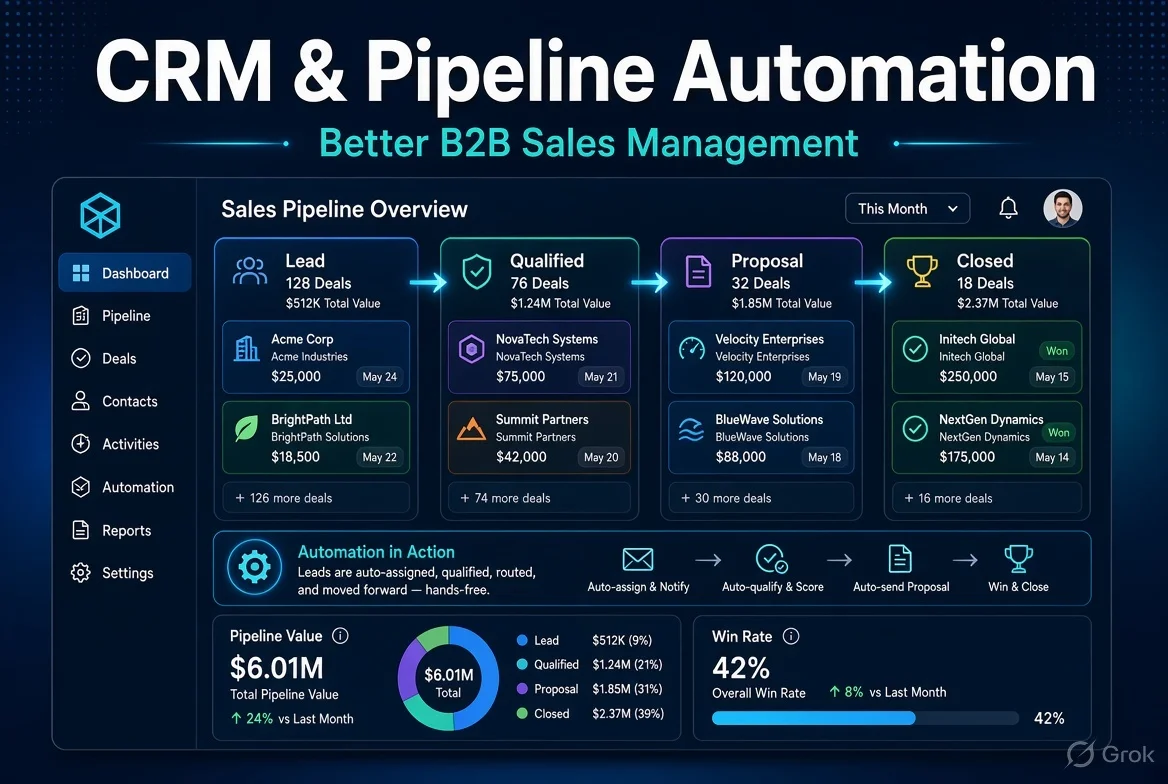
A CRM becomes much more useful when it reflects the way a business sells. Instead of treating every contact the same, companies can create stages that match their sales journey.
For example, a B2B software company might move a prospect from new inquiry to qualified lead, product discussion, proposal, negotiation, and closed deal. Automation can then trigger actions at different points in that journey.
A newly added lead could be assigned to a salesperson. A proposal-stage opportunity could generate a follow-up reminder. A completed deal could automatically move into the next customer management process.
The goal is not to automate everything. It is to remove repetitive work that does not need manual attention.
Why Sales Pipelines Become Difficult to Manage
Imagine a sales representative handling 80 active prospects. Ten need a follow-up this week, several are waiting for proposals, and others have gone quiet.
Without a clear system, remembering every conversation becomes difficult.
A structured CRM pipeline gives the salesperson a visual picture of these opportunities. They can see which prospects are new, which ones require action, and which deals are close to completion.
This is one practical reason businesses consider crm and pipeline automation services. The value comes from connecting everyday sales activities rather than simply adding another software platform.
Turning Leads Into Organized Sales Opportunities
Good automation starts with good information. If a sales database contains incomplete or outdated prospect details, automated workflows will not solve the underlying problem.
For example, a company selling commercial IT services may want to target technology managers at businesses within a specific employee range. Its sales team needs relevant company and contact information before those prospects enter the pipeline.
A b2b lead list building service can help create organized prospect data that sales teams can use for outreach and pipeline development.
Where Automation Can Save Sales Teams Time
Some CRM tasks are repetitive by nature. These are often good candidates for automation.
A business could automate:
- Lead assignment when a new inquiry arrives
- Follow-up reminders after sales conversations
- Pipeline stage updates
- Internal notifications for important opportunities
- Contact record updates
- Task creation for sales representatives
- Basic lead qualification workflows
Consider a simple example. A prospect downloads information about a service and submits a business email address. Instead of leaving the sales representative to manually record the contact and remember the next step, the CRM can create the record, assign ownership, and schedule a follow-up task.
The salesperson still handles the conversation. The system simply takes care of the administrative steps around it.
Connecting Lead Generation With CRM Workflows
Lead generation and CRM management work better when they are treated as parts of the same process.
A business may have a strong outreach campaign, but if the resulting contacts are scattered across spreadsheets, inboxes, and different tools, the sales team has to spend additional time organizing them.
A connected workflow can bring relevant prospects into one system, assign them to the right stage, and provide sales representatives with the information needed to begin outreach.
This also makes it easier to review the pipeline later and identify where opportunities are slowing down.
Choosing Automation Based on Your Sales Process
There is no single CRM workflow that fits every business. A recruitment company, construction firm, SaaS provider, and marketing agency may all have completely different sales cycles.
Before automating a process, it helps to map how leads currently move through the business. Identify where information is repeatedly entered, where follow-ups are missed, and which steps require unnecessary manual work.
Scale Front Digital focuses on building practical digital workflows around these business processes rather than treating automation as a one-size-fits-all solution.
Build a Sales Process That Is Easier to Follow
CRM automation is most useful when it makes the sales process clearer for the people using it. A well-organized pipeline can show what needs attention today, what is waiting for a response, and which opportunities are progressing.
For growing B2B teams, combining reliable prospect data with sensible automation can create a more manageable sales workflow.
Scale Front Digital provides CRM pipeline automation and B2B lead management solutions to help businesses bring these activities into a more organized process.