Sign up with Google
 Sign in with Zoho

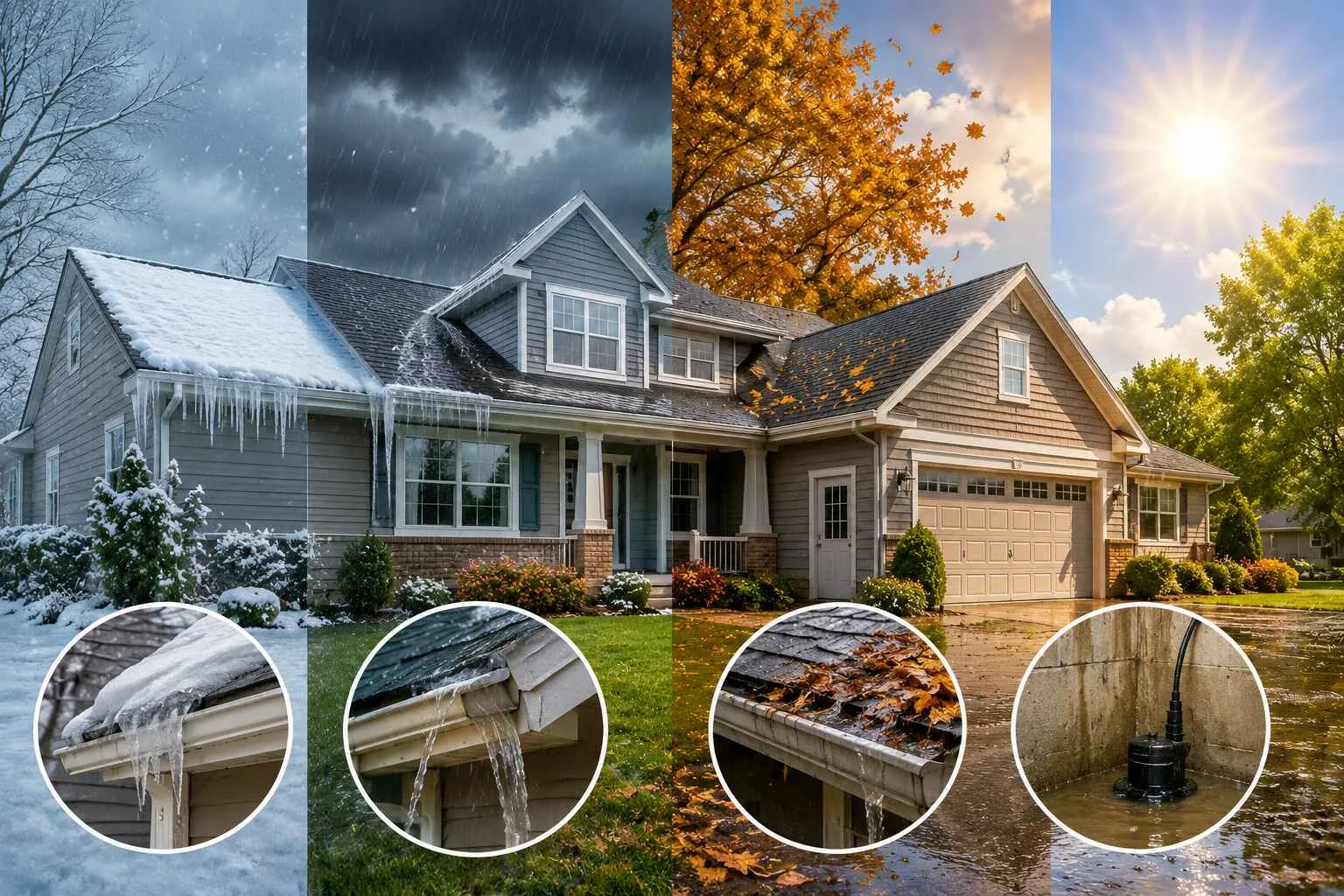
Every homeowner thinks about water damage a little differently depending on the season. Ask someone in January and they'll picture a burst pipe. Ask the same person in April and they'll picture a flooded basement. The truth is water damage doesn't take a break just because the calendar changes, it just shows up wearing a different costume each time. Understanding what each season actually threatens is the difference between catching a problem early and dealing with a much bigger mess later.
Why Every Season Brings a Different Kind of Water Risk
Water Damage Isn't Just a Spring Problem
A lot of people assume water damage is mostly a spring and summer issue, tied to storms and heavy rain. That's only half the picture. Winter causes just as much damage, if not more, through frozen pipes and ice dams that most homeowners never see coming until water is already dripping through a ceiling. Every season has its own weak spot, and knowing what to watch for ahead of time saves you from scrambling after the fact.
Why Homeowners Get Caught Off Guard Every Year
Here's the honest reason so many people get blindsided. Water damage risks shift throughout the year, but home maintenance habits usually don't. Gutters that should've been cleared in October get ignored until December. A pipe that needed insulation gets forgotten until it's already frozen solid. It's a bit like skipping oil changes on your car and being surprised when the engine finally complains. The risks were always there, they just weren't being watched.
Spring: Melting Snow and Heavy Rainfall
Saturated Ground and Overwhelmed Drainage
Spring hits hard because it combines two things at once, melting snow from winter and a jump in rainfall. The ground is often still partially frozen or already saturated from months of accumulation, which means new rain has nowhere to go. Instead of soaking in, it runs straight toward the nearest low point, which is frequently a basement window well or a foundation crack that's been quietly widening for years.
Basement Flooding During Storm Season
This is the season basements take the biggest hit. Sump pumps that haven't been tested since last year suddenly get put to work, and if they fail during a storm, water can rise fast enough to ruin flooring, drywall, and stored belongings within hours. Spring storms in the Midwest are also notorious for arriving with little warning, which doesn't leave much time to react once water starts coming in.
Why Spring Is Prime Time for Mold Growth
All that extra moisture sitting around damp basements and humid crawl spaces creates ideal mold conditions. This is exactly the time of year when searches for mold inspection near me spike, since homeowners start noticing musty smells that weren't there over the winter. If you're noticing that smell without any obvious visible water source, a proper mold inspection st louis provider can test the air and pinpoint whether there's hidden moisture behind walls or under flooring that spring runoff quietly left behind.
Summer: Storms, Humidity, and AC Condensation
Sudden Downpours and Flash Flooding
Summer storms tend to be dramatic rather than gradual. Heavy rain over a short period can overwhelm drainage systems that handle steady spring rain just fine, leading to flash flooding in low-lying areas. Homes near creeks or with poor yard grading are especially vulnerable during these sudden downpours.
Humidity's Quiet Role in Indoor Moisture
Summer humidity doesn't get blamed for water damage as often as it should. High humidity levels indoors create the same damp conditions mold needs, even without an actual leak or flood involved. Air conditioning units that aren't draining properly can also quietly leak moisture into ceilings or walls, going unnoticed until a stain finally appears. Anyone dealing with a persistent musty smell during the summer months, even without visible water damage, should consider a mold inspection st louis search rather than assuming it will resolve on its own once the weather cools down.
Fall: Clogged Gutters and the First Cold Snaps
Leaves, Debris, and Blocked Drainage
Fall looks harmless compared to the drama of spring storms or winter freezes, but clogged gutters cause a surprising amount of water damage every year. Leaves and debris pile up fast, and once gutters back up, water spills over the sides and runs straight down toward the foundation instead of away from it. This is one of the simplest problems to prevent, yet one of the most commonly ignored.
Early Freezes Catching Homeowners Off Guard
The first cold snap of the season often arrives before people have winterized outdoor faucets or insulated exposed pipes. A sudden overnight freeze can crack a hose bib or a poorly insulated pipe in a crawl space, and the resulting leak might not even be noticed until temperatures rise again and the damage has already spread.
Winter: Frozen Pipes and Ice Dams
Why Pipes Burst When Temperatures Drop
Water expands as it freezes, and that expansion is exactly what causes pipes to crack or burst. Pipes running through unheated spaces, attics, crawl spaces, exterior walls, are the most vulnerable. The frustrating part is that the actual burst often doesn't happen during the coldest moment, it happens as things start to thaw and pressure builds up behind the ice blockage.
Ice Dams and Roof Leaks
Ice dams form when heat escaping from the attic melts snow on the roof, which then refreezes at the colder eaves and creates a dam that traps water behind it. That trapped water eventually finds its way under shingles and into the ceiling below. By the time a homeowner notices a stain, water has often been seeping in for days.
Protecting Your Home Through the Coldest Months
Insulating exposed pipes, sealing attic air leaks, and keeping gutters clear before the first freeze all reduce winter water damage risk significantly. Even with precautions, damp spots that develop over winter are worth a proper look once temperatures rise. A mold inspection st louis homeowners schedule in early spring often catches issues that started forming quietly during the coldest months, long before anyone noticed a visible problem. If a musty smell shows up anywhere in the house after a rough winter, Gateway Water and Mold offers testing that identifies whether it's isolated moisture or something that needs a broader look, rather than guessing based on smell alone.
Conclusion
Water damage doesn't follow one script all year long. Spring brings saturated ground and basement flooding, summer brings sudden storms and sneaky humidity, fall hides its risk in clogged gutters, and winter delivers frozen pipes and ice dams that catch even careful homeowners off guard. The pattern that actually protects your home isn't reacting to whichever season is currently causing trouble, it's staying ahead of all four by matching your maintenance habits to what each season specifically threatens. A little seasonal awareness goes a long way toward avoiding a much bigger repair bill later.
Frequently Asked Questions
1. Which season causes the most water damage to homes?
It varies by region, but winter frozen pipes and spring flooding are typically the two biggest contributors, often causing more damage combined than summer storms alone.
2. Why do I notice a musty smell every spring even without visible water damage?
Melting snow and heavy rain increase ambient moisture indoors, which can trigger mold growth in damp areas even without an obvious leak. A mold inspection near me can confirm whether hidden moisture is the cause.
3. Can humidity alone cause mold without an actual water leak? Yes. Consistently high indoor humidity creates the damp conditions mold needs to grow, even in the complete absence of a leak or flood.
4. How do I know if I need a mold inspection St. Louis provider instead of just cleaning the area myself?
If the smell persists after cleaning, returns repeatedly, or shows up in a spot with no obvious water source, a professional inspection with air quality testing is worth scheduling.
5. What's the easiest way to reduce seasonal water damage risk year-round?
Match your maintenance to the season, clear gutters before fall rains, insulate pipes before winter, test sump pumps before spring storms, and check AC drainage before summer humidity peaks.