Sign up with Google
 Sign in with Zoho
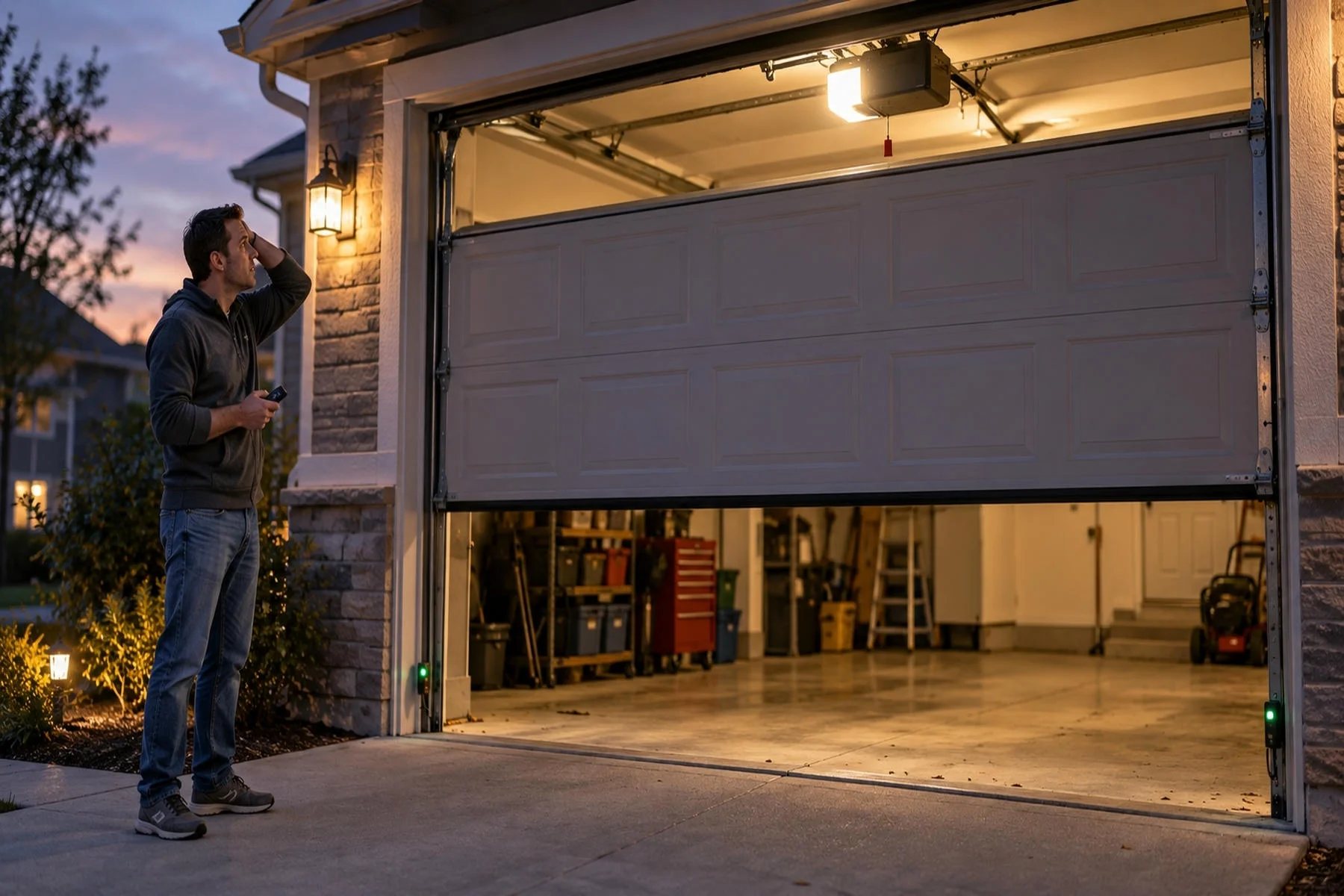
If you keep paying for repairs on an aging garage door, it may be time to consider a complete Garage Door Replacement in Geneva instead of fixing another worn component.
Garage doors contain multiple moving parts that work together every time the door opens or closes. Springs support the door's weight, rollers move it through the tracks, cables help control movement, hinges connect the panels, and the opener provides powered operation.
When a garage door is relatively new, repairing one failed component usually makes sense. But as the entire system ages, replacing individual parts can become a repeating cycle.
Understanding when repair stops being the practical option can help Geneva homeowners avoid spending money on a door that is approaching the end of its useful life.
One Repair Is Different From a Pattern of Repairs
A broken spring does not automatically mean you need a new garage door.
Neither does a damaged roller, cable, hinge, or opener.
The bigger concern is when failures begin happening repeatedly.
For example, you might replace the springs one year, repair a damaged panel several months later, replace rollers after that, and then discover problems with the tracks or opener.
Each repair may appear reasonable on its own. Collectively, however, those repair bills can become significant.
When several major components are showing their age, replacing the complete garage door system may provide better long-term value than continuing to repair one problem at a time.
Consider the Overall Age of the Garage Door
Age should be considered alongside the condition of the door.
An older garage door may have years of wear affecting components that have not failed yet. Metal fatigue, worn hinges, deteriorating rollers, rust, panel damage, and outdated hardware can gradually reduce reliability.
This is especially important when an expensive repair is required.
Installing new components on a heavily worn door may solve today's problem without addressing other components that could fail soon afterward.
A professional inspection can help determine whether the problem is isolated or part of broader deterioration throughout the system.
Multiple Damaged Panels Can Change the Repair Equation
Minor cosmetic dents do not always require replacement.
However, severely bent, cracked, rusted, or warped panels can create more than an appearance problem.
Damaged panels can affect how evenly the door travels through the tracks. Structural weakness may place additional stress on hinges, rollers, cables, and other components.
Replacing a single panel may be practical when the remainder of the door is in good condition and a matching replacement panel is available.
When several panels are damaged, replacing the entire garage door may become more practical.
Another issue is availability. Manufacturers periodically discontinue older door styles and panel designs. Even when a replacement panel can be found, matching its appearance to a faded or weathered older door may be difficult.
Poor Balance Can Put Extra Stress on Other Components
A garage door should move smoothly and remain properly balanced.
If the door feels unusually heavy, moves unevenly, shakes, or repeatedly falls out of alignment, there may be problems involving springs, tracks, rollers, cables, or the door structure itself.
Correcting one component may improve operation temporarily.
But when several parts have experienced years of stress, another failure may follow.
An improperly balanced door can also make the garage door opener work harder than necessary. That additional workload may shorten the opener's service life.
Replacing an aging door and worn supporting hardware can sometimes address several interconnected problems at once.
Your Garage Door Opener Should Not Compensate for a Worn Door
Homeowners sometimes assume that upgrading to a stronger garage door opener will solve problems with a heavy or poorly operating door.
It usually will not.
The opener is designed to move a properly balanced garage door. It should not have to overcome damaged tracks, failing springs, binding rollers, or structural problems with the door.
If an old garage door repeatedly strains the opener, replacing only the opener may simply shift the failure to another component.
Before installing a new opener on an older system, the condition and balance of the garage door should be checked.
Energy Efficiency Can Be Another Reason to Replace
Older garage doors may provide limited insulation compared with newer insulated models.
That can matter when the garage shares walls with living areas, contains heating or cooling equipment, or is frequently used as a workspace.
Worn bottom seals and deteriorated weatherstripping can also allow outside air, moisture, dust, and debris into the garage.
Replacing the entire door gives homeowners an opportunity to select a model with improved insulation and updated sealing.
Energy efficiency alone may not justify replacement, but it can become an important additional benefit when the existing door already needs substantial repairs.
Safety Features and Hardware May Be Outdated
Garage door technology has changed over time.
Older systems may use aging hardware, outdated opener technology, or components that no longer provide the reliability homeowners expect from modern systems.
A new garage door installation can include updated tracks, rollers, springs, cables, seals, hardware, and compatible opener equipment where appropriate.
Starting with a coordinated system may be preferable to continuing to combine new replacement components with aging original hardware.
Compare the Repair Cost With the Remaining Life of the Door
The price of today's repair is only part of the decision.
Consider what you are likely to spend over the next several years.
Suppose an older garage door currently needs major spring work, damaged panel replacement, new rollers, and track adjustments. Even after those repairs, the opener, remaining panels, hinges, cables, and other components are still old.
Continuing to repair the system may eventually cost more than anticipated.
A professional garage door technician can identify which components are currently failing and which ones are showing advanced wear. That information makes it easier to compare the realistic cost of continued repairs with replacement.
Signs Garage Door Replacement May Be Worth Considering
Replacement deserves consideration when several issues appear together, including:
- Repeated repair calls within a relatively short period
- Multiple damaged or deteriorated door panels
- Significant rust or structural deterioration
- Persistent alignment or balance problems
- Excessive shaking or noisy operation
- Difficulty finding compatible replacement components
- An aging opener combined with an aging door
- Poor insulation or deteriorated weather sealing
- Repair costs becoming substantial compared with replacement
None of these issues automatically means the garage door must be replaced. The overall condition of the system matters.
Avoid Waiting Until the Door Completely Fails
A garage door often provides warning signs before a major failure.
Increasing noise, uneven movement, frequent adjustments, visible panel damage, recurring component failures, and changes in how the door opens or closes should not be ignored.
Addressing the situation early gives you more options.
You can compare repair and replacement costs without having to make a rushed decision after the garage door becomes unusable or gets stuck open.
Choosing Between Garage Door Repair and Replacement in Geneva
A relatively new garage door with one damaged component can often be repaired economically. An older door experiencing multiple failures requires a different calculation.
The question is not simply whether another repair is possible.
The better question is whether repairing the door again provides enough remaining service life to justify the expense.
For homeowners dealing with recurring garage door problems, a professional evaluation can clarify whether another repair is worthwhile or whether a complete residential garage door replacement in Geneva offers a better long-term solution.
A.S.A.P. Garage Door Repair, Inc. can inspect the condition of the door, hardware, springs, tracks, and operating system and explain the available repair or replacement options.