Sign up with Google
 Sign in with Zoho

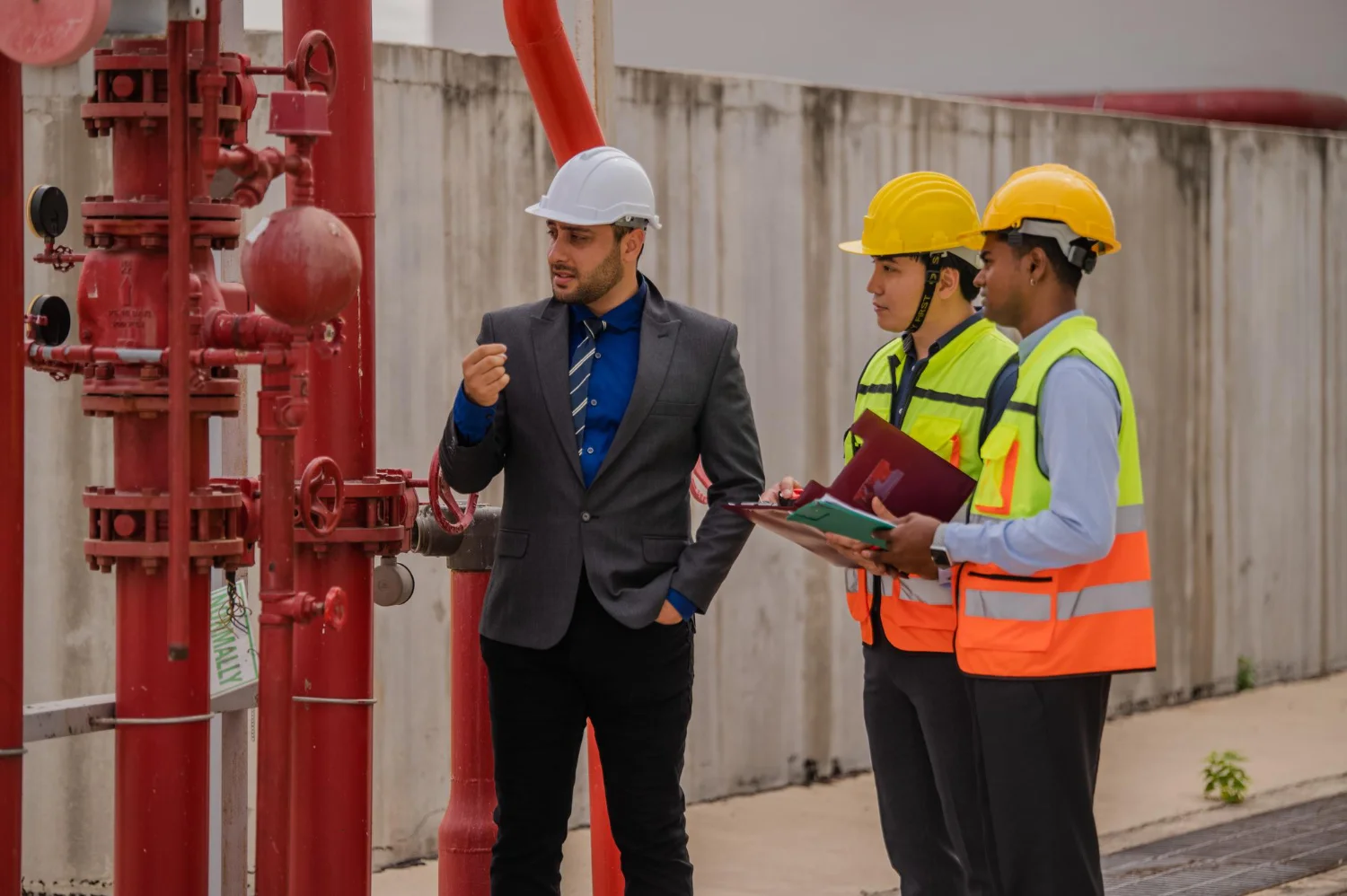
Most fire incidents in commercial and industrial buildings don't happen because nobody cared about safety — they happen because something got missed. An extinguisher past its expiry date. A fire door propped open during a busy shift. A wiring fault nobody flagged because it wasn't part of anyone's job description. A fire safety audit exists to catch exactly these gaps before they turn into emergencies.
If you run a commercial office, a manufacturing plant, a warehouse, a hospital, a school, or a residential complex, a fire safety audit isn't a box-ticking formality — it's one of the few tools that actually tells you where you stand. As detection and suppression technology keeps advancing, audits have become a core part of how serious organizations manage risk, not just a once-a-year compliance ritual.
This guide walks through what a fire safety audit actually involves, why it matters, how the process typically unfolds, and what to expect if you're getting one done for the first time.
What Is a Fire Safety Audit?
At its core, a fire safety audit is a structured, top-to-bottom review of a building or facility — done specifically to find fire hazards, check whether existing protection measures actually work, and confirm the site meets fire safety regulations that apply to it.
The goal isn't complicated: if a fire breaks out, people, assets, and operations need to stay protected. Getting there means a qualified fire safety professional has to look at everything — detection and suppression systems, emergency exits, electrical wiring, how flammable materials are stored, evacuation plans, firefighting equipment on site, and whether staff would actually know what to do.
That last point is where audits differ from routine maintenance checks. A maintenance visit tells you if the extinguisher works. An audit tells you whether your entire fire safety system — equipment, procedures, and people — would hold up under pressure.
Why Does It Matter?
Every workplace carries its own mix of fire risk. Electrical panels, combustible stock, industrial machinery, kitchen equipment, HVAC systems, and simple human error can all become the starting point of a fire — often in combination.
A well-run audit gives an organization a few concrete things:
- Fire hazards get flagged before they cause damage, not after
- Regulatory compliance becomes something you can demonstrate, not just assume
- Emergency response plans get tested against reality instead of sitting in a drawer
- Employees and visitors are genuinely safer
- Property damage and downtime from fire incidents drop
- Insurance compliance improves, which can affect premiums
- Overall workplace safety culture strengthens
There's a quieter benefit too: employees and customers notice when an organization takes safety seriously, and that shows up in trust and confidence, not just audit scorecards.
Who Actually Needs One?
Almost any occupied building benefits from a fire safety audit, but some sectors carry more weight than others. Commercial offices, manufacturing units, warehouses, hospitals, hotels, malls, schools, residential societies, industrial plants, data centers, airports, and government buildings all fall into this category.
High-risk sectors — chemical processing, pharmaceuticals, oil and gas, textiles, logistics, heavy manufacturing — usually need a more granular assessment simply because the nature of what they store, produce, or handle raises the stakes considerably.
What a Fire Safety Audit Is Trying to Achieve
Strip away the paperwork, and a professional fire safety audit is working toward a handful of clear objectives: identifying hazards, evaluating how well existing prevention measures actually function, checking detection systems, inspecting suppression equipment, reviewing evacuation procedures, confirming emergency response plans are current, verifying compliance with applicable codes, raising staff awareness, and recommending fixes where something falls short.
Put together, that's what "building a safer working environment" actually looks like in practice.
The Fire Safety Audit Checklist
No two facilities are identical, but most audits move through a fairly consistent set of checks.
Fire detection systems. Smoke detectors, heat detectors, fire alarm panels, manual call points, and alarm notification systems all get inspected to confirm they're operational, properly maintained, and positioned to actually cover the building — not just installed somewhere convenient.
Fire suppression systems. This covers automatic sprinklers, fire hydrants, hose reels, water storage tanks, fire pumps, clean agent systems, foam systems, and gas suppression setups. Auditors also check water pressure, maintenance logs, and whether the system would genuinely work if triggered.
Fire extinguishers. Each unit gets checked for correct placement, accessibility, expiry date, pressure level, proper signage, and maintenance history — and auditors confirm the extinguisher type actually matches the fire risk it's meant to handle. A CO2 extinguisher near a kitchen fryer, for instance, is the wrong tool for the job.
Emergency exits. Exit doors, emergency lighting, illuminated signage, escape route markings, staircase accessibility, and corridor obstructions all get reviewed here. Blocked exits remain one of the most common — and most preventable — violations auditors find.
Electrical safety. Electrical faults are a leading cause of workplace fires, so this section covers panels, wiring condition, circuit protection, overloaded sockets, cable management, generator rooms, and UPS systems. Anything defective gets flagged for immediate correction.
Storage of flammable materials. Chemicals, LPG cylinders, fuel, paint, solvents, hazardous materials, and combustible waste all need proper segregation, ventilation, labeling, and housekeeping — this is reviewed closely since poor storage practices are a frequent root cause of serious fires.
Employee preparedness. Equipment alone won't save anyone if staff don't know evacuation procedures, how to operate an extinguisher, emergency communication protocols, assembly points, or reporting procedures. Training records and mock drill frequency get checked as part of this.
How the Audit Process Actually Works
Step 1 — Planning. Before anyone walks the site, auditors gather building layouts, occupancy details, prior audit reports, existing fire safety documentation, and maintenance records. Understanding how the facility actually operates helps pinpoint where the higher-risk areas are likely to be.
Step 2 — Site inspection. This is the physical walkthrough — checking fire protection equipment, escape routes, electrical systems, machinery, storage practices, hazards, and general housekeeping. Auditors document everything with photographs and notes as they go.
Step 3 — Risk assessment. Each hazard identified gets weighed against probability of occurrence, potential impact, occupancy risk, and how effective the existing controls already are. This is what allows the audit to prioritize fixes instead of just listing problems.
Step 4 — Compliance review. The facility gets measured against the regulations, fire safety standards, and internal policies that apply to it, with any gaps clearly recorded.
Step 5 — Audit report. The final report typically includes observations, compliance status, identified hazards, risk ratings, recommendations, corrective actions, and priority levels — essentially the roadmap for what needs fixing and in what order.
Issues That Show Up Again and Again
Across different industries and building types, the same problems tend to resurface: expired extinguishers, blocked emergency exits, missing signage, faulty smoke detectors, damaged fire doors, poor housekeeping, overloaded electrical circuits, gaps in staff training, missing maintenance records, and improperly stored combustible materials.
None of these are exotic risks. They're mostly small oversights that compound over time — which is exactly why regular audits catch what daily operations tend to miss.
Why Regular Audits Pay Off
Better compliance. Staying on top of applicable regulations becomes routine rather than a scramble before an inspection.
Improved workplace safety. Hazards get caught while they're still hazards, not after they've become incidents.
Lower financial exposure. Fires are expensive — in repairs, insurance claims, and lost operating time. Prevention is almost always cheaper than recovery.
Business continuity. Fewer unexpected disruptions means fewer surprises for operations, clients, and revenue.
Stronger employee confidence. People work better when they trust the building around them.
Keeping Fire Safety on Track
A fire safety audit works best as part of an ongoing routine, not a one-off event. That means scheduling audits periodically, keeping fire protection equipment properly maintained, running fire drills regularly, training employees every year, keeping emergency response plans current, ensuring evacuation routes stay clear, maintaining accurate inspection records, replacing damaged safety equipment right away, and reassessing risk whenever the facility undergoes changes.
None of this is glamorous work, but it's the difference between a fire safety program that exists on paper and one that actually holds up when it's tested.
Where Fire Safety Audits Are Headed
Audits themselves are evolving alongside the technology they assess. AI-powered fire detection, smart smoke sensors, IoT-enabled monitoring, remote alarm management, cloud-based maintenance records, predictive maintenance, digital inspection reporting, and Building Management System (BMS) integration are all becoming part of how modern facilities approach fire safety.
For businesses looking to explore what's next in fire detection, suppression technology, and integrated building safety, the Fire & Security India Expo (FSIE) brings together manufacturers, technology providers, consultants, and safety professionals from across the industry — a useful place to see where the field is actually moving, not just read about it.
Staying Current With Fire Safety Innovation
As regulations and technology both keep shifting, staying informed matters — especially for facility managers, consultants, and safety professionals who are expected to know what's changed. Events like FSIE showcase developments in fire alarms, emergency response systems, access control, CCTV surveillance, and integrated building safety, giving businesses a direct look at what's available before committing budget to it.
The Bottom Line
A fire safety audit isn't really a compliance exercise dressed up as safety — it's a genuine strategy for protecting the people, assets, and operations that keep a business running. By catching hazards early, testing protection systems honestly, reviewing emergency procedures against reality, and laying out practical fixes, an audit builds a measurably safer environment.
Organizations that treat audits as routine — not as a once-a-year formality — are simply better positioned to prevent incidents and respond well when something does go wrong. Paired with regular training, consistent maintenance, and modern fire protection technology, a thorough fire safety audit is the foundation everything else in a fire risk management program is built on.
Businesses looking to stay current on fire detection systems and security technology can find practical insight, networking, and access to newer solutions through the Fire & Security India Expo (FSIE).