Sign up with Google
 Sign in with Zoho

Selecting protective workwear involves more than matching a worker's height and chest measurement to a standard size chart. Differences in torso length, shoulder width, waist position and leg proportions can affect how a garment fits during physically demanding tasks.
For industrial workplaces, FR coveralls must provide appropriate body coverage without restricting the movements required for the job. A garment that fits comfortably while standing may become restrictive during climbing, bending or overhead work. This makes individual measurement and practical fit assessment essential before bulk procurement.
Why FR Coveralls Need to Be Assessed Beyond Standard Sizes
Standard sizing provides a starting point, but two workers with similar chest measurements may have very different body proportions. One may require additional torso length, while another may need more room around the shoulders or hips.
Selecting a larger size to accommodate one measurement can create problems elsewhere. Excess fabric around the sleeves, waist or ankles may interfere with movement and increase snagging risks around machinery.
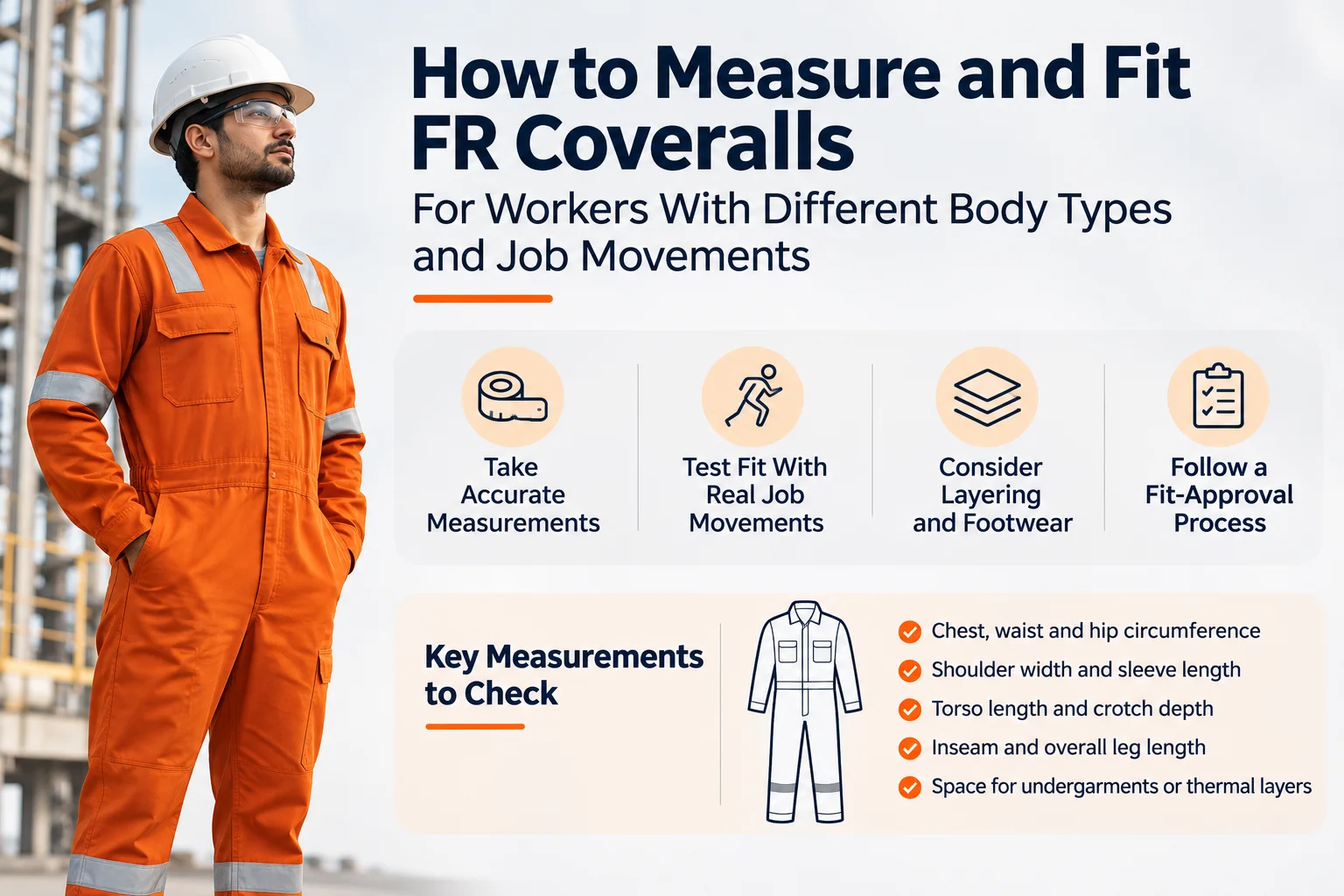
A proper fitting process should therefore consider:
● Chest, waist and hip circumference.
● Shoulder width and sleeve length.
● Torso length and crotch depth.
● Inseam and overall leg length.
● The additional space required for approved undergarments or thermal layers.
Measurements should be taken consistently, preferably over the clothing that workers are expected to wear underneath their protective garments.
Measuring Body Proportions for a More Accurate Fit
A reliable measurement process begins with the worker standing naturally, without deliberately adjusting their posture to fit the measuring process.
Measure the chest at its fullest circumference, keeping the measuring tape level. Record the natural waist and widest hip circumference separately, as these measurements influence the garment's fit around the torso and lower body.
Torso length deserves particular attention. An insufficient rise or short body length can cause pulling around the crotch when workers squat, climb or bend. Excessive length, meanwhile, can create unwanted folds.
Measure the inseam from the crotch to the desired trouser hem position, considering the footwear used at work. Sleeve length should also be checked with the arms relaxed and during forward and overhead extension.
The resulting measurements should be compared with the manufacturer's garment-specific size chart. Do not assume that sizing is interchangeable across different manufacturers or coverall designs.
Testing Garment Fit During Real Job Movements
A standing fit assessment cannot establish whether a protective garment will remain comfortable and properly positioned throughout a working shift.
Workers should test representative movements associated with their actual duties. These should include walking, sitting, squatting, kneeling, climbing ladders, reaching overhead and bending forward.
During each movement, check for excessive tension across the shoulders, back, crotch and knees. The garment should not pull excessively, open at closures or restrict the worker's normal range of movement.
Pay particular attention to coverage around the wrists, ankles and torso. Sleeves and trouser legs should remain appropriately positioned during movement, without exposing areas that the garment is intended to protect.
Where practical, conduct trials with workers representing different body proportions and job roles. Record their feedback and any fit issues before approving a size distribution for bulk orders.
Accounting for Layering, Footwear and Workplace Conditions
Protective clothing is often worn over other workwear. Depending on the hazard assessment and garment design, workers may need base layers, thermal clothing or additional protective equipment.
A coverall that fits over a lightweight shirt may become restrictive when worn over thicker layers. Procurement teams should therefore conduct fit trials using the actual clothing combination intended for the workplace.
Footwear is equally important. Check trouser length and ankle coverage while workers wear their designated safety boots. Excessively long hems can create tripping or snagging concerns, while insufficient length may compromise intended coverage during movement.
The compatibility of the complete PPE ensemble should also be reviewed. This includes gloves, footwear, respiratory protection and other equipment required for the task.
Alterations, Inspection and Size Replacement
Garment alterations should never be treated as an informal solution to sizing problems. Changes to seams, closures, fabric panels or other construction details can affect the protective performance of certified garments.
Any proposed alteration should be reviewed and approved by the manufacturer or other competent authority, as appropriate to the garment's certification and intended application.
Workers should also inspect their coveralls before use. Torn seams, damaged closures, worn fabric and other visible defects require attention under the site's inspection and replacement procedure.
Maintain an allocation record containing the worker's assigned garment model, size, batch details and any approved replacement. Reassess fit when workers change roles, when the required clothing layers change or when recurring discomfort is reported.
What to Include in a Workplace Fit-Approval Process
A documented approval process helps maintain consistency across departments, contractors and shifts.
The specification should identify the intended hazard, applicable protective performance requirements, approved garment model, available size range and required undergarments.
It should also record the measurement method, movement tests performed, coverage observations and fit-related feedback. Assign responsibility for approving size exchanges, investigating complaints and reviewing proposed design changes.
Most importantly, distinguish between a garment that fits correctly and one that simply feels comfortable. Both fit and protective performance must meet the requirements established by the workplace hazard assessment.
Frequently Asked Questions
1. Why can two workers with the same chest measurement require different coverall sizes?
Chest circumference does not account for differences in torso length, shoulder width, hip circumference or inseam. These variations can affect how a one-piece garment sits and moves, making individual measurements necessary.
2. How should coveralls be tested for movement restrictions?
Workers should perform representative job movements, including squatting, kneeling, climbing, bending and overhead reaching. Assess shoulder tension, crotch pulling, sleeve position, ankle coverage and closure stability during these activities.
3. Should workers select a larger size when their coveralls feel tight?
Not automatically. A larger size may resolve tightness in one area but create excess fabric around the sleeves, legs or waist. Compare individual measurements against the manufacturer's size chart and assess whether another size or garment design offers a better fit.
4. Can protective coveralls be altered to improve comfort?
Alterations should not be made without checking their compatibility with the garment's protective requirements and certification. Consult the manufacturer or an appropriate competent authority before modifying seams, closures or construction.
Conclusion
Accurate measurements, representative fit trials and regular inspection help organisations select FR coveralls that accommodate different body proportions and workplace movements. A well-fitted garment should maintain its intended coverage without creating unnecessary restrictions or excess fabric.