Sign up with Google
 Sign in with Zoho
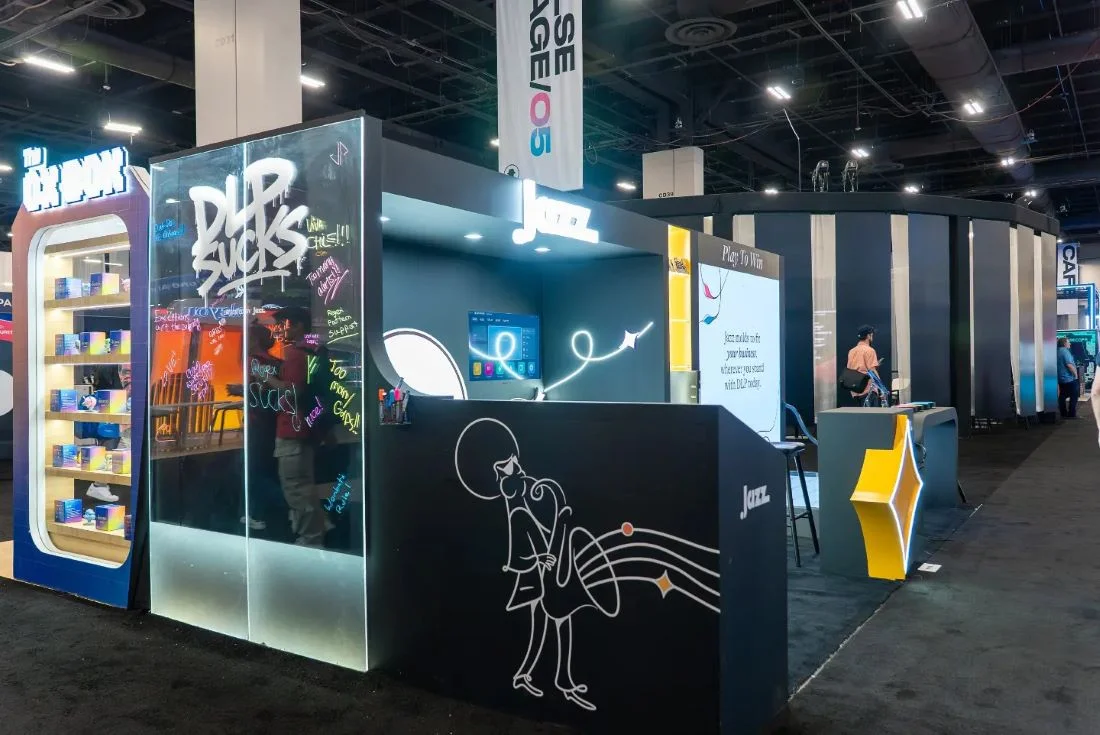
Picture the end of day three. Your booth is beautiful. Colleagues stopped by to say it looks great. A few visitors took photos. And your lead scanner shows a number that makes your stomach drop.
We've heard versions of this from exhibitors for years, and we've seen it from the builder's side too. A booth can win compliments and still lose the show. The reason is almost always the same: it was designed to be looked at, not to be talked in.
This article is for exhibitors who want to avoid that outcome. It covers how the better trade show exhibit design firms think about conversations first, and what you can check in your own plans before anything gets built.
(The scenarios below are composites drawn from patterns we see often, not specific clients.)
Why good-looking booths still miss
Most booth briefs begin with look and feel: colors, materials, a "wow" feature. Those matter. But they answer the question "How should this look?" rather than "What do we need to happen here?"
When the second question isn't asked, a few predictable problems follow:
· Attendees can't tell what you do. A beautiful structure with a vague tagline makes people guess. At a busy show, most won't.
· The booth blocks conversations. Tall counters, deep displays and tight entries can act as barriers. Visitors hesitate at the edge.
·Staff have nowhere to talk. Without room for a demo, a seat or a quiet corner, good conversations get cut short or never start.
· Nothing guides the visitor. There is no clear path from "glance" to "talk" to "next step."
None of these are design flaws in the artistic sense. They're planning flaws.
Start with the conversation you want to have
Before layouts and renderings, a good trade show booth design company asks what happens at the booth. In our experience, answering these questions in writing changes the whole design:
1.Who is the ideal visitor? Not "everyone at the show," but the buyer, engineer or partner you actually want.
2. What do you want them to understand in five seconds? This becomes the headline.
3. What is the first question your team asks? That's the opening line your booth should make easy.
A composite example: a software company arrives with a stylish open booth and a tagline about "reimagining workflows." Visitors nod and walk on. After they rewrite the headline as "Cut invoice approval from days to hours" and add a simple demo station, the same booth starts pulling people in. The design changed less than the message did.
What conversation-first design actually looks like
When we plan exhibition booth design USA clients can actually use at a show, these are the checkpoints we return to:
1. The aisle test. Can someone read the main message from 15-20 feet away, while walking? If it takes a stop and a squint, it fails.
2. The threshold. Is the entry open and inviting? Visitors shouldn't feel they're stepping into someone's space. Low or no barrier at the front edge helps.
3. The three zones. Many effective booths have a visible attract area (graphics, light, motion), a talk area (open conversation space) and a go deeper area (demo, seating or private meeting). Not every booth needs all three, but the thinking helps.
4. Staff flow. Where do your people stand? Where do they put bags, brochures and coffee? Booths that ignore staff comfort get staff who disengage by afternoon.
5. Demo that fits the talk. A product demo should support a 3-5 minute conversation, not require a 20-minute setup. Placement, power and visibility matter.
6. A clear next step. Scan, sign, schedule or sample. Make it visible and easy.
7. Storage and clutter. Hidden storage keeps the front clean and keeps the booth looking professional on day three, not just day one.
How to tell if a builder thinks this way
If you're comparing the best trade show display companies, the portfolio can look similar from one firm to the next. The conversation is where you learn the most. Pay attention to the first questions a builder asks.
Good signs:
- They ask who your visitors are and what you sell before they talk about finishes.
- They ask how many staff you'll have and how you run demos.
- They ask what you did at past shows and what didn't work.
- They explain trade-offs, such as "this counter looks great but will slow your demos."
Warning signs:
- The first proposal is a rendering with no questions beforehand.
- Everything is described in terms of materials and size.
- They can't explain why a layout choice supports your goals.
- Every project looks the same regardless of client or industry.
No firm is perfect, and every builder has different strengths. But the ones who ask about conversations early tend to produce booths that work harder.
Things you can do before you hire anyone
You don't need design training to improve your odds. A short internal prep goes a long way:
- Write a one-line message your booth must communicate. If your team can't agree on it, the booth can't either.
- List your top three visitor types and what each wants to know first.
- Decide your lead process in advance: what gets scanned, what gets qualified, what happens next.
- Review past shows. What worked? What slowed you down? Which questions did visitors ask most?
- Set a measurable goal, such as qualified conversations per day or meetings booked, so you can judge success after the show.
Share these with any builder you talk to. The quality of their response is informative.
A quick pre-build checklist
Ask these before approving a final design:
· Can a stranger understand what we do in five seconds?
· Is the entrance open and easy to step into?
· Is there space for at least two conversations at once?
· Where does the demo happen, and does it block the aisle?
· Where do staff stand, sit and store belongings?
· What is the one action we want visitors to take?
· How will we capture and follow up on leads?
If you hesitate on more than two or three of these, it's worth revisiting the plan.
The bottom line
A booth is a tool for starting conversations, not a sculpture. The most memorable designs we've worked on weren't always the flashiest. They were the ones where the team knew what they wanted to say, the space made it easy to say it, and visitors always knew what to do next.
If your last show looked great and delivered little, don't assume you need to spend more. Start by asking what conversations the booth is meant to create, and hold every design decision up against that question.