Sign up with Google
 Sign in with Zoho

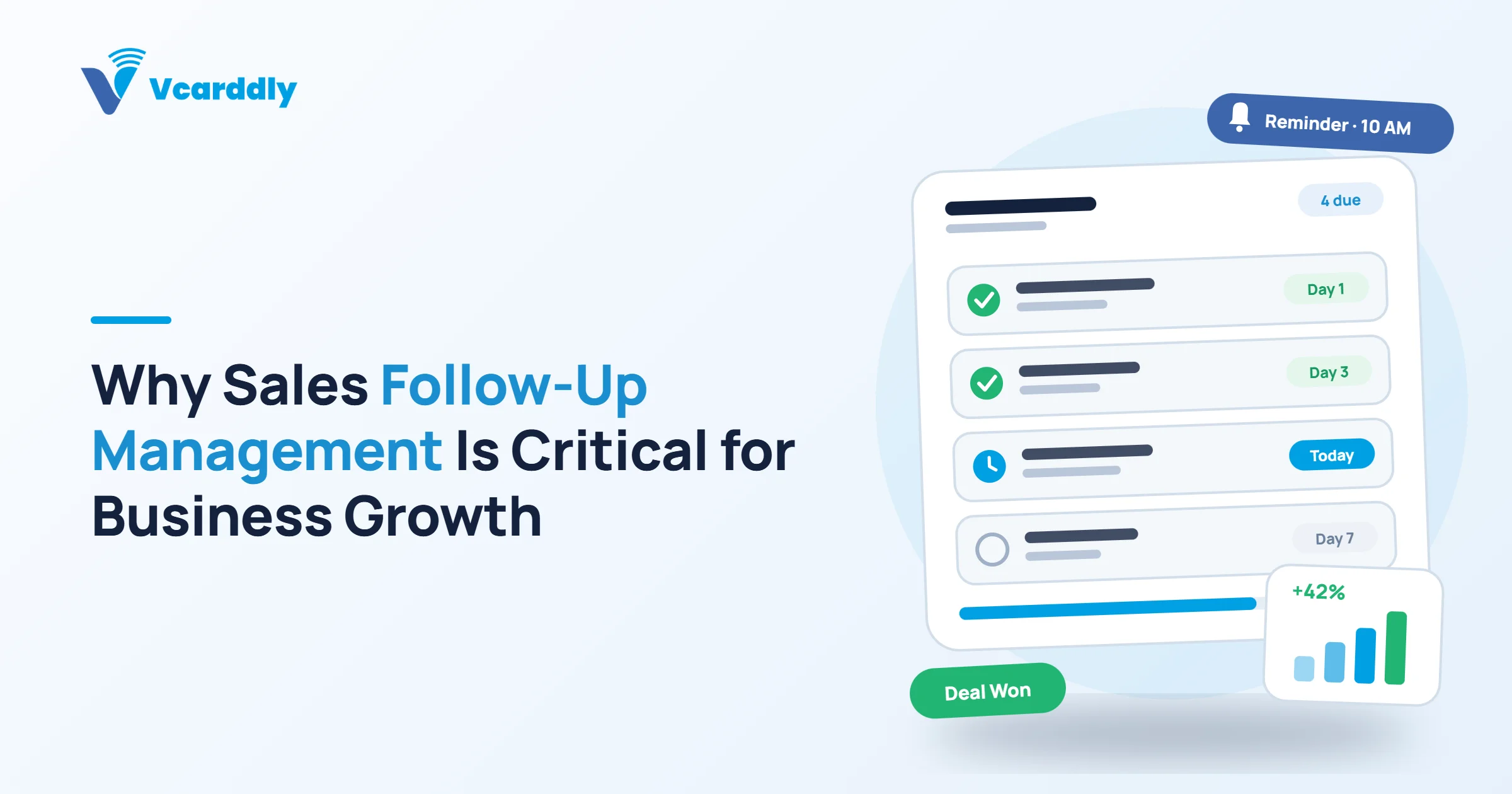
Generating leads is important for every business, but converting those leads into customers requires consistent communication. A potential customer may enquire about a product today, request pricing tomorrow and make a purchase decision after several discussions. If a business fails to follow up at the right time, that opportunity may be lost.
This is why sales follow-up management plays an important role in business growth. It helps sales teams maintain communication with prospects, remember previous conversations, track pending actions and move opportunities through the sales pipeline.
Many businesses invest in advertising, digital campaigns, networking and lead generation activities. However, without a structured follow-up process, even valuable enquiries can remain unattended.
A CRM follow-up system helps businesses organise these activities, assign responsibilities and maintain visibility into every customer interaction.
What Is Sales Follow-Up Management?
Sales follow-up management is the process of maintaining communication with potential customers after their first enquiry or interaction with a business.
It involves recording conversations, scheduling the next contact, sharing requested information, answering questions and monitoring the progress of each opportunity.
For example, when a prospect enquires about a service, the salesperson may need to:
- Contact the prospect and understand their requirements.
- Share product information or a quotation.
- Record the conversation and customer preferences.
- Schedule another call or message.
- Update the lead status based on the response.
- Continue communication until the opportunity is closed or marked inactive.
A structured follow-up process ensures that these activities are not dependent only on someone's memory or personal notes.
Why Do Businesses Lose Potential Customers Without Proper Follow-Ups?
Lead generation does not automatically guarantee sales. Businesses can lose opportunities for several reasons.
1. Delayed Responses
When a prospect submits an enquiry, they generally expect a response within a reasonable time. If the business takes too long to respond, the prospect may approach another provider.
A follow-up tracking system helps teams identify new enquiries and pending responses so that they can prioritise their next actions.
2. Missed Follow-Up Commitments
Sales representatives often handle multiple prospects simultaneously. They may promise to call someone after two days, send a quotation or arrange another meeting.
Without reminders or activity tracking, these commitments can be forgotten.
3. Scattered Customer Information
Customer details may be stored in spreadsheets, email accounts, messaging applications or personal contact lists. When information is spread across multiple places, salespeople may struggle to find the latest conversation history.
A CRM creates a central record of customer interactions and relevant notes.
4. No Clear Ownership of Leads
When multiple people are involved in sales, it may not always be clear who is responsible for contacting a particular prospect.
If a lead is not assigned to a specific salesperson, it can remain unattended. Clear lead ownership helps establish accountability.
5. Limited Visibility for Managers
Sales managers need to understand which leads have been contacted, which require follow-up and which opportunities are progressing.
Without a central dashboard, managers may have to collect updates manually from individual team members.
How CRM Software Improves Sales Follow-Up Management
A CRM system provides a structured environment for managing leads and customer interactions. Instead of maintaining separate records, sales teams can work with shared information.
1. Centralised Lead Records
A CRM stores customer and prospect details in one place. This may include names, phone numbers, email addresses, company information, lead sources and other relevant details.
When a salesperson opens a lead record, they can review the available information before contacting the prospect.
This helps make conversations more relevant and reduces the need to repeatedly ask customers for information they have already provided.
2. Follow-Up Reminders and Next Actions
Sales follow-up software can help teams record the next action associated with a lead.
For example:
- Call the prospect tomorrow.
- Send the requested quotation.
- Schedule a product demonstration.
- Follow up after the customer reviews the proposal.
- Contact the customer regarding a pending decision.
Recording these actions helps salespeople maintain a more consistent process.
3. Complete Conversation History
A customer may communicate with different team members over time. If each conversation is recorded in the CRM, authorised team members can understand the history of the relationship.
Notes, remarks and activity records help provide context for future communication.
This is especially useful when a lead is reassigned or another team member needs to continue the conversation.
4. Clear Lead Assignment
A CRM can help businesses assign every enquiry to a responsible salesperson.
Assignment may be handled manually by a manager or supported by AI-based lead assignment. In an AI-supported workflow, the system can consider factors such as salesperson expertise, language and current workload to help identify a suitable owner.
Clear ownership reduces confusion and helps teams understand who is responsible for the next step.
5. Sales Pipeline Visibility
Sales pipeline management helps businesses understand where each opportunity stands.
A typical pipeline may include stages such as:
- New Lead
- Contacted
- Follow-Up Required
- Interested
- Proposal Shared
- Negotiation
- Won
- Lost
The exact stages can vary according to the business model. What matters is that each lead has a visible status and a clear next action.
6. Team Activity Tracking
Managers need more than a total lead count to evaluate sales performance. They also need visibility into follow-up activities and team progress.
CRM activity tracking can help review lead ownership, communication history, pending tasks and sales activity.
This allows managers to identify delayed follow-ups, review workload distribution and support team members who need assistance.
How to Build an Effective Sales Follow-Up Process
A successful follow-up process does not need to be complicated. Businesses can begin with a few practical steps.
Step 1: Capture Every Enquiry
Make sure that enquiries from relevant sources are recorded in a central system. These may come from websites, marketing campaigns, digital business cards, QR scans, NFC interactions, referrals or manual entries.
Step 2: Assign a Responsible Person
Every lead should have a clear owner. Depending on the business, assignment can be based on location, product knowledge, industry experience, availability or workload.
Step 3: Record Every Important Interaction
Salespeople should record relevant calls, remarks, customer requirements and communication outcomes. This helps maintain continuity when the next follow-up takes place.
Step 4: Set the Next Action
After every meaningful interaction, record what needs to happen next. This could be a call, email, meeting, quotation or product demonstration.
Step 5: Review Pending Follow-Ups
Sales managers should regularly review leads that have not been contacted, overdue follow-ups and opportunities that have remained inactive.
Step 6: Measure Sales Performance
Review metrics such as lead response time, follow-up completion, lead-to-customer conversion and campaign performance. These indicators can help businesses identify opportunities to improve their sales process.
Why Sales Follow-Up Management Matters for Growing Teams
As a business grows, the number of enquiries and customer interactions also increases. A process that works for one salesperson may become difficult to manage when several employees are handling hundreds of leads.
A shared CRM helps growing teams maintain consistency.
For example, when a salesperson leaves the company, important customer information should not disappear with that employee. A company-managed CRM can preserve contact records, notes and interaction history so authorised team members can continue managing those relationships.
Similarly, sales managers can review the team's progress without depending entirely on individual reports.
For businesses with field sales teams, mobile CRM access and activity tracking can make it easier to manage communication and follow-ups outside the office.
Vcarddly CRM for Sales Follow-Up and Team Management
Vcarddly CRM brings lead capture, assignment, calling, follow-ups and campaign tracking together in one platform.
It helps businesses manage leads generated through digital business cards, QR codes, NFC interactions, campaign links, forms and other contact sources.
Its key capabilities include:
- Lead Management: Capture and organise enquiries from different sources.
- AI-Based Lead Assignment: Match leads with suitable salespeople based on expertise, language and current workload.
- Mobile Calling: Call leads from mobile and keep relevant call activity connected to CRM records.
- Activity Tracking: Record remarks, follow-up details and communication history.
- Campaign and UTM Tracking: Understand which sources and campaigns generate enquiries.
- Sales Team Management: Give leads clear ownership and help managers review team activity.
With these features, businesses can connect the process from the first customer interaction to assignment, follow-up and performance measurement.
Explore the Vcarddly CRM platform to understand how it supports lead and sales management.
Frequently Asked Questions About Sales Follow-Up Management
1. What is sales follow-up management?
Sales follow-up management is the process of contacting prospects after their initial enquiry, recording conversations, scheduling next actions and tracking opportunities until they are converted or closed.
2. Why are sales follow-ups important?
Follow-ups help businesses maintain communication with prospects, answer questions, address concerns and keep opportunities moving through the sales process.
3. How does CRM software help with follow-ups?
CRM software stores customer information, communication history, lead status and next actions in one place. It helps salespeople manage their responsibilities and allows managers to review pending activities.
4. What is a CRM follow-up reminder?
A CRM follow-up reminder is a recorded task or notification that helps a salesperson remember when to contact a prospect or complete another sales-related action.
5. What is the difference between lead management and follow-up management?
Lead management covers the broader process of capturing, organising, assigning and tracking potential customers. Follow-up management focuses on maintaining communication and completing the next actions for those leads.
6. Can AI help with sales follow-ups?
AI can support sales workflows through capabilities such as lead assignment, calling assistance, activity organisation and automation. The exact capabilities depend on the CRM platform and its configuration.
7. How can businesses prevent leads from going cold?
Businesses can improve lead handling by recording every enquiry, assigning clear ownership, responding promptly, scheduling next actions and regularly reviewing pending follow-ups through a CRM system.
8. Is CRM follow-up software useful for small businesses?
Yes. Small businesses can use CRM software to organise enquiries, maintain customer history and create a consistent follow-up process without relying entirely on spreadsheets or individual reminders.
Conclusion
Sales opportunities can be lost when enquiries are not followed up consistently. Delayed responses, unclear responsibilities and scattered customer information can make it difficult for businesses to maintain strong customer relationships.
A structured sales follow-up management process helps ensure that every enquiry has an owner, every important conversation is recorded and every opportunity has a clear next step.
With CRM capabilities such as lead tracking, AI-based assignment, mobile calling, activity records and campaign intelligence, Vcarddly helps businesses bring their sales activities together in one platform.
For growing businesses that want better visibility into their leads and sales teams, a connected CRM can provide a more organised foundation for long-term customer relationship management.