Sign up with Google
 Sign in with Zoho

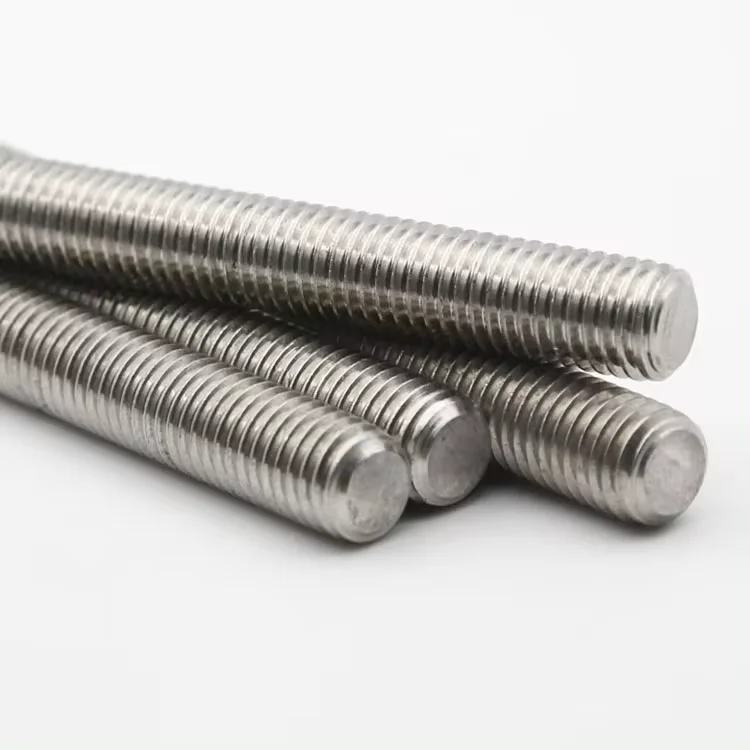
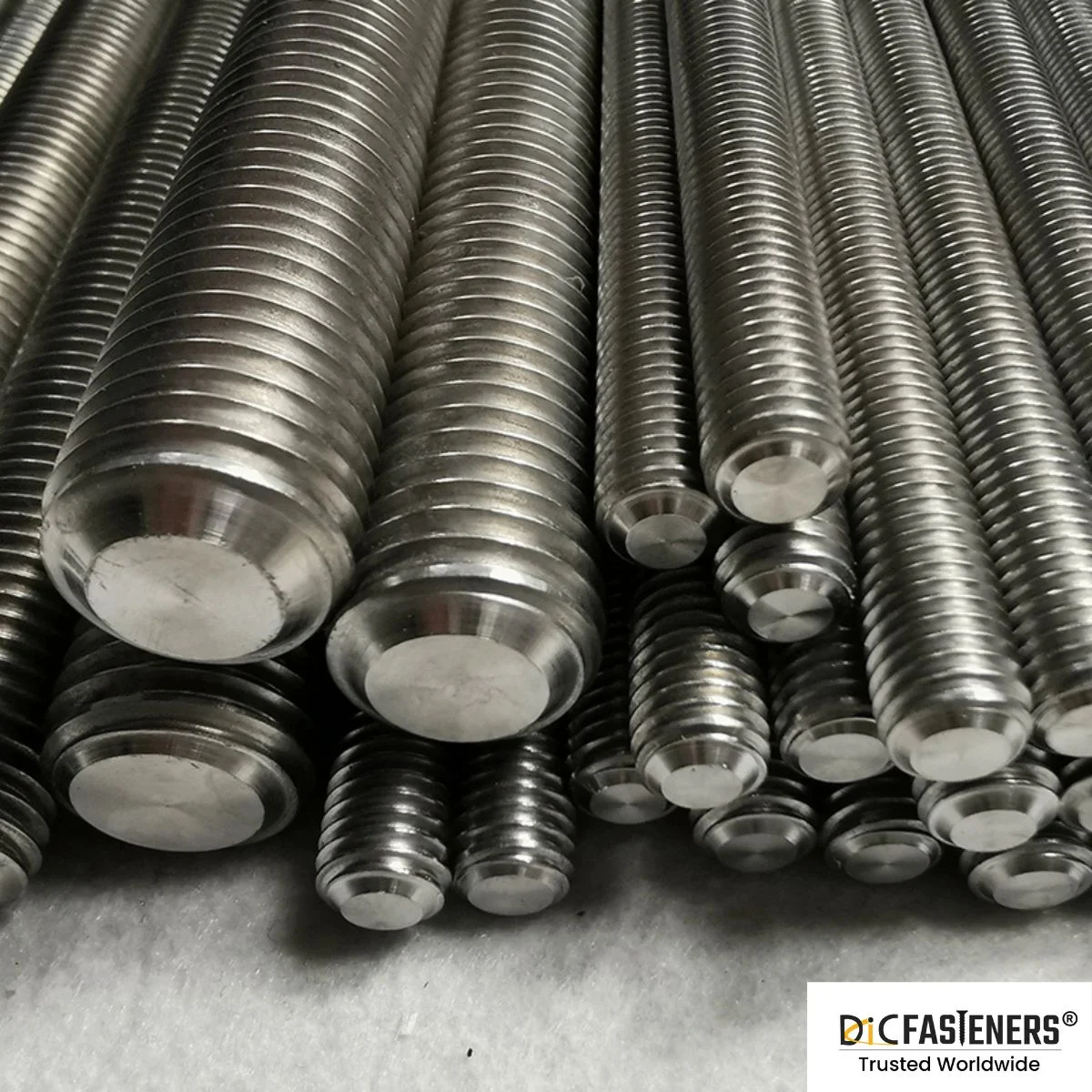
Modern industries rely on precision linear motion systems to keep machinery efficient, accurate, and reliable. Whether used in CNC machines, automation equipment, lifting systems, or industrial machinery, selecting the right ACME Threaded Rod directly impacts performance, load capacity, and service life. Unlike standard threaded rods designed for fastening, ACME threaded rods are engineered for smooth linear motion and heavy-duty power transmission.
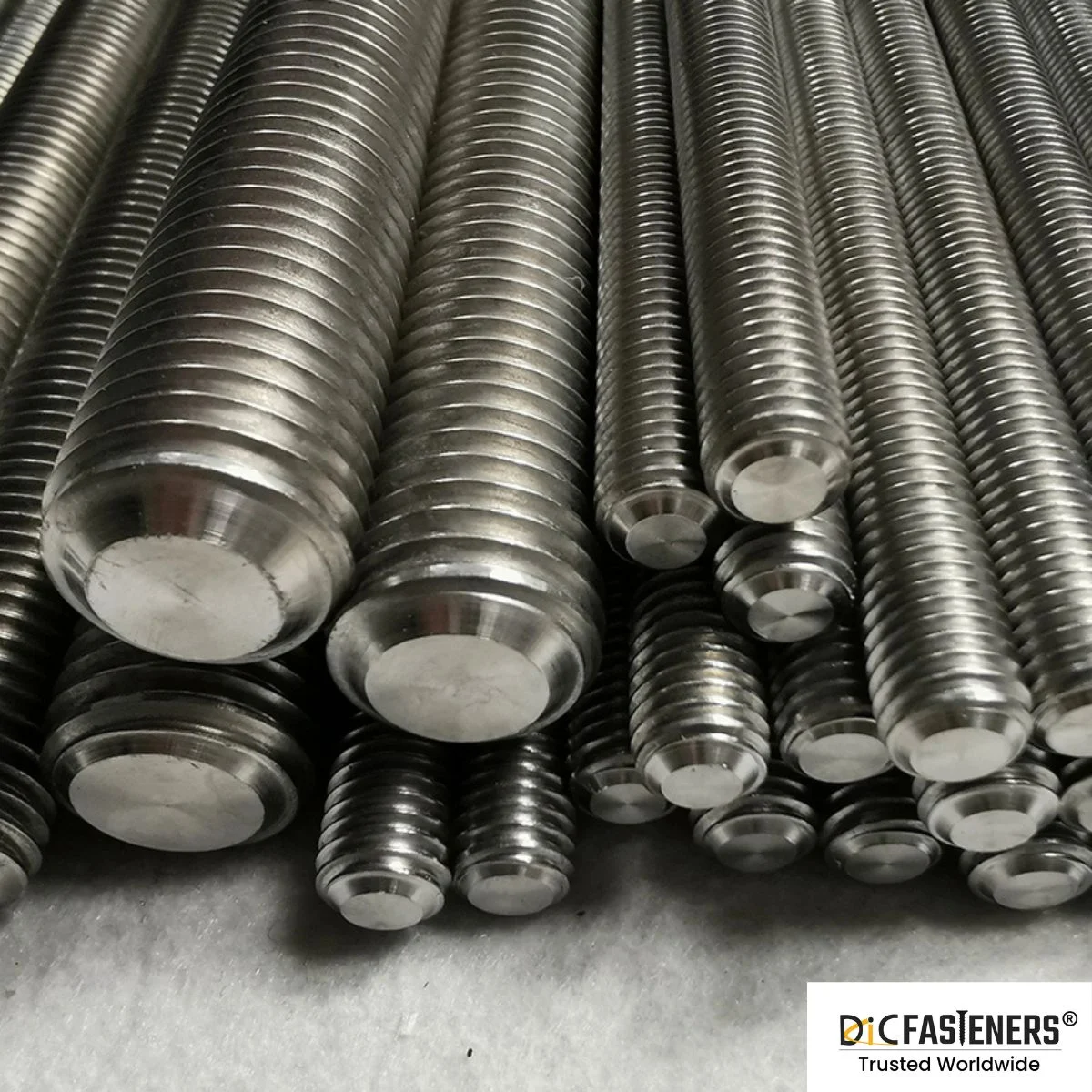
Table of Contents
- What is an ACME Threaded Rod?
- Understanding ACME Thread Geometry
- Materials Used in ACME Threaded Rod Manufacturing
- Manufacturing Process
- Applications Across Industries
- Types of ACME Threaded Rods
- How to Select the Right ACME Threaded Rod
- Why Choose DIC Fasteners
- Our Product Range
- Frequently Asked Questions (FAQ)
- Contact Us
What is an ACME Threaded Rod?
An ACME Threaded Rod is a precision-engineered power transmission component used to convert rotational movement into smooth and controlled linear motion. Instead of serving as a conventional fastening product, it functions as a lead screw in mechanical systems where positioning accuracy and load capacity are critical.
The trapezoidal thread profile allows better force distribution compared to standard V-threads, making ACME threaded rods suitable for repeated motion under demanding industrial conditions.
Modern machine builders often source these products from an experienced ACME Threaded Rod Supplier to ensure dimensional accuracy, smooth operation, and consistent quality for industrial machinery.
Understanding ACME Thread Geometry
One of the biggest advantages of ACME threads is their specialized design.
ACME Thread Angle (29°)
The standard ACME Thread Angle (29°) provides several engineering benefits:
- Higher load carrying capacity
- Reduced friction during motion
- Improved tool life
- Better wear resistance
- Easier machining than square threads
- Excellent strength for repeated movement
The optimized ACME Thread Form distributes loads evenly along the thread flanks, making it ideal for precision linear motion systems.
Common ACME Thread Forms
Different applications require different thread profiles, including:
- General Purpose ACME Threads for standard industrial machinery
- Stub ACME Thread for applications requiring higher core strength with reduced thread height
Selecting the correct thread profile depends on operating load, travel speed, duty cycle, and machine design.
Materials Used in ACME Threaded Rod Manufacturing
Material selection directly affects durability, corrosion resistance, wear characteristics, and operating efficiency.
Stainless Steel ACME Rod
A Stainless Steel ACME Rod is widely used in:
- Food processing
- Pharmaceutical equipment
- Marine applications
- Chemical processing
- Outdoor machinery
Its excellent corrosion resistance makes it suitable for harsh environments.
Alloy Steel ACME Screw
An Alloy Steel ACME Screw offers:
- High tensile strength
- Superior fatigue resistance
- Better wear performance
- Longer service life
These rods are preferred for heavy industrial machinery and high-load mechanical systems.
C45 Steel Lead Screw
A C45 Steel Lead Screw provides an excellent balance of:
- Strength
- Machinability
- Hardness
- Cost-effectiveness
It is commonly used in automation systems, machine tools, and industrial equipment.
Manufacturing Process
The performance of an ACME threaded rod depends largely on manufacturing precision.
Leading manufacturers utilize advanced CNC technology to achieve superior dimensional accuracy.
CNC Turned ACME Threaded Rod
A CNC Turned ACME Threaded Rod ensures:
- Precise thread dimensions
- Better concentricity
- Improved straightness
- Consistent surface finish
- Reduced vibration during operation
CNC Thread Whirling
Many premium manufacturers also use CNC Thread Whirling, an advanced machining process that produces highly accurate threads with excellent surface quality.
Benefits include:
- Faster production
- Improved thread accuracy
- Minimal material distortion
- Excellent finish
- Better tool life
For OEM machinery, this process significantly improves lead screw performance.
Applications of ACME Threaded Rods
ACME threaded rods are widely used wherever controlled linear motion is required.
Automation Equipment Components
Modern Automation Equipment Components frequently incorporate ACME threaded rods for accurate positioning and motion control.
Typical applications include:
- CNC machines
- Packaging machinery
- Robotics
- Assembly systems
- Material handling equipment
- Conveyor systems
- Industrial automation
- Lift platforms
- Medical equipment
- Textile machinery
- Printing machines
- Semiconductor equipment
- Testing systems
Because of their durability and efficiency, ACME threaded rods remain one of the preferred choices for precision engineering.
Types of ACME Threaded Rods
Manufacturers supply various configurations based on application requirements.
Common options include:
- Precision ACME Threaded Rod
- Stainless Steel ACME Rod
- Alloy Steel ACME Screw
- C45 Steel Lead Screw
- Metric ACME Threaded Rod
- Trapezoidal Lead Screw
- Custom Length ACME Threaded Rod
- Right-Hand Thread
- Left-Hand Thread
- Single Start Thread
- Multi Start Thread
An experienced OEM ACME Threaded Rod Manufacturer can also produce custom dimensions, special thread pitches, and application-specific solutions.
How to Select the Right ACME Threaded Rod
Selecting the correct threaded rod requires evaluating several technical factors.
Consider:
- Required load capacity
- Travel distance
- Operating speed
- Thread pitch
- Material selection
- Environmental conditions
- Corrosion resistance
- Lubrication requirements
- Thread accuracy
- Mounting configuration
- Service life expectations
- Manufacturing tolerances
If your application requires unique dimensions or specialized performance, working with a Custom ACME Lead Screw Manufacturer ensures the product is engineered specifically for your equipment.
Why Choose DIC Fasteners?
DIC Fasteners is a trusted global manufacturer and exporter of industrial fastening and precision threaded solutions. Our expertise in engineering, machining, and quality control enables us to deliver reliable ACME threaded rods for demanding industrial applications.
Why customers choose DIC Fasteners:
- Precision manufacturing
- Strict quality inspection
- Advanced CNC machining
- Custom manufacturing capabilities
- Competitive pricing
- OEM production support
- Global export experience
- Timely delivery
- International quality standards
- Technical assistance
As an experienced AChme Threaded Rod Exporter, DIC Fasteners supplies products to customers across North America, Europe, the Middle East, Asia, and other international markets.
Our Products
DIC Fasteners manufactures and supplies a comprehensive range of industrial fastening products, including:
Industrial Nuts
Bolts
Threaded Rod
Washers
Screws
Rivets
Industrial Pins
Strut Channel
Frequently Asked Questions (FAQ)
What is an ACME threaded rod used for?
An ACME threaded rod is primarily used for converting rotary motion into linear motion in CNC machines, lifting systems, automation equipment, and industrial machinery.
Why is the ACME Thread Angle (29°) important?
The 29° thread angle provides better strength, smoother operation, improved wear resistance, and higher load capacity compared to standard V-threads.
Which material is best for ACME threaded rods?
It depends on the application. Stainless steel is ideal for corrosion resistance, alloy steel for heavy-duty performance, and C45 steel for general industrial applications.
Can ACME threaded rods be customized?
Yes. DIC Fasteners offers customized dimensions, thread pitches, materials, machining, and finishes for OEM and industrial applications
What is the difference between ACME thread and regular thread?
ACME threads have a 29° trapezoidal profile and are designed for linear motion and power transmission, while regular V-threads (typically 60°) are primarily used for fastening and joining components.
Contact our team today to discuss your ACME threaded rod requirements and receive a customized quotation.
Serving Industries Worldwide
India, USA, Canada, Germany, United Kingdom, France, Italy, Spain, Netherlands, Poland, UAE, Saudi Arabia, Qatar, Oman, Kuwait, Bahrain, South Africa, Australia, New Zealand, Singapore, Malaysia,