Sign up with Google
 Sign in with Zoho

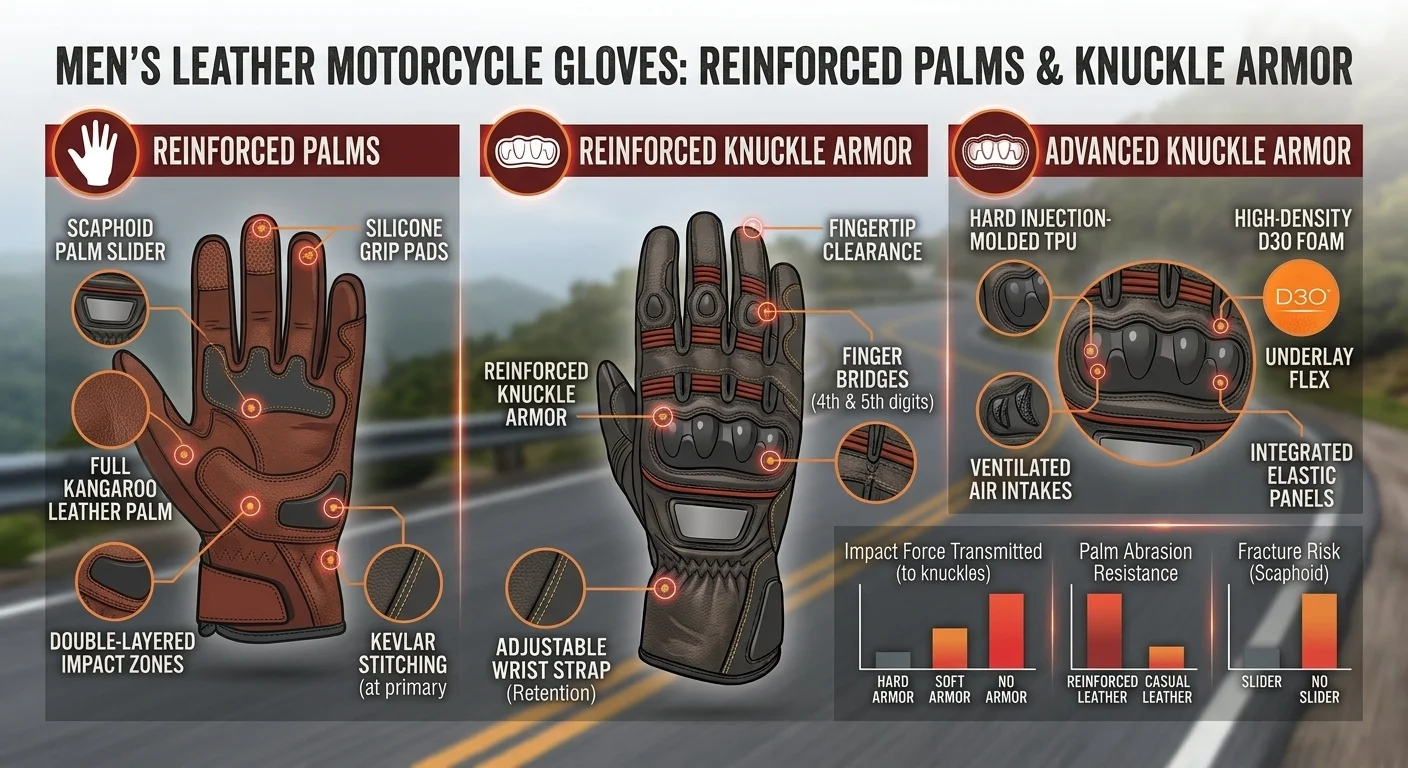
A good pair of men's motorcycle gloves can save you more during a ride than a leather jacket. Because reinforced palms and knuckle armor are functional features built to support grip, comfort, pressure control, and hand coverage on the road. These aren't decorative details rather they protect the parts of your hands that work the hardest: palms, fingers, knuckles, and wrists.
Understanding what these features actually do helps riders choose gloves that improve control, reduce hand fatigue, and add meaningful protection. Riding gloves for women follow the same logic, with fit adjustments that support comfort and confidence.
Why Motorcycle Leather Gloves Are Needed
Leather gives structure and abrasion resistance when designed properly, but construction matters more than material alone. Motorcycle riding gloves need reinforcement in high-contact areas like the palms and knuckles, plus strong stitching, secure wrist closure, and full-finger coverage.
The full build decides how useful the glove is on the bike. Leather motorcycle gloves with double stitching, reinforced seams, palm protection, and knuckle coverage perform better than basic leather gloves with no rider-specific features. Full-finger gloves offer better coverage than fingerless styles for actual road use.
What Reinforced Palms Actually Do
Your palms stay in constant contact with the handlebars, managing throttle control, clutch pulls, and brake lever feel throughout every ride. Reinforced palms add extra material or padding to this high-contact zone, supporting grip and reducing pressure buildup. Gel palm or padded palm sections help absorb vibration, which reduces hand fatigue on longer rides and highway cruising.
Key functions of reinforced palms:
- Grip support: Helps your hand stay steady on the throttle without slipping
- Pressure control: Reduces stress on the palm during long rides and stop-and-go traffic
- Durability: Adds material where gloves wear down fastest from handlebar friction
- Coverage: Gives more support to the palm area during road contact
A leather palm with double-layer reinforcement lasts longer and feels more secure than a single-layer design. Some gloves also include scaphoid protection or palm sliders, which add coverage to vulnerable areas during a slide. Anti-slip grip panels improve handlebar control in wet or sweaty conditions.
What Knuckle Armor Actually Does
Knuckles sit exposed when your hands are on the bars, making them vulnerable to road debris, weather, and impact during a fall. Knuckle armor helps shield these joints with hard or soft protection. Hard knuckle guards use TPU shells or carbon fiber-style inserts for impact resistance, while soft armor relies on foam padding for joint coverage without added bulk.
Good knuckle armor should protect without making your hand feel locked in place. The armor needs to flex naturally with finger movement so you can work the clutch, brake, and throttle smoothly. Look for designs that balance protection with mobility; stiff, uncomfortable armor reduces control and becomes a safety problem itself.
Reinforced Palms vs Knuckle Armor: Which Matters More?
Both features matter because they protect different areas of the hand. Reinforced palms support grip, reduce pressure points, and add coverage to the part of your hand that contacts the bars. Knuckle armor protects the back of the hand and exposed finger joints from impact and road debris.
It's not about choosing one feature over the other. A strong riding glove should protect the palm and the knuckles while still allowing natural movement. Add secure wrist closure, quality stitching, and proper fit, and you've got a glove that works as protective gear instead of just looking the part.
Fit Still Decides How Well the Glove Works
Glove features only work when the fit is correct. Reinforced palms need to line up with your actual palm pressure points, and knuckle armor should sit directly over your knuckles, not floating above or below. If the glove is too loose, the armor shifts out of position. If it's too tight, finger mobility suffers and control becomes harder.
Gloves should feel snug without pain. Your fingers should reach near the end of each finger tube without bunching or pressure. The palm should wrap your hand cleanly, and the wrist closure should stay secure during hard braking or aggressive cornering. Leather may break in slightly over time, but poor fit won't magically become perfect. Check glove size charts for finger length, palm width, wrist fit, and thumb mobility before buying.
What to Look for in Men's Motorcycle Gloves
Road tested men's motorcycle gloves should balance grip, protection, comfort, and riding style. Look for full-finger coverage, reinforced palms with gel or padded inserts, knuckle armor that flexes naturally, secure wrist closure with Velcro straps, and strong stitching in high-stress areas. Cowhide leather offers durability and abrasion resistance, while goatskin leather tends to be lighter and more flexible.
Cruiser riders often prefer classic black leather gloves with reinforced palms and minimal styling. Touring riders benefit from gauntlet gloves with waterproof inserts, gel palms for vibration control, and longer cuffs for wrist coverage. Summer riders may want perforated leather for breathability, while daily commuters need short cuff gloves that are easy to slip on and off between rides.
Riding Gloves for Women: Same Protection, Better Fit
Riding gloves for women should follow the same protection logic, reinforced palms for grip support, knuckle armor for joint coverage, and secure wrist closure, but the fit needs to support smaller palm shapes, narrower wrists, and different finger proportions. Women's hands often have longer fingers relative to palm width, so knuckle armor and palm reinforcement must align correctly or they won't protect the right areas.
Look for flexible leather that moves naturally with your hand, lightweight lining that doesn't add unnecessary bulk, and secure closures that fasten easily without excessive force. Heavy duty riding gloves for women fit snugly through the palm and wrist without feeling restrictive, allowing smooth clutch, brake, and throttle control.
Full-Finger vs Fingerless Gloves
Fingerless gloves feel cooler and more casual, making them popular for short rides and bike nights. They allow direct contact with controls and better ventilation in hot weather. But fingerless gloves leave your fingertips completely exposed to wind, debris, and road contact during a fall.
Full-finger gloves give better coverage, finger protection, and grip control. They block cold wind, reduce hand fatigue, and keep road grime off your hands. For real riding, full-finger gloves are the more practical choice because they protect more of the hand while still allowing natural movement.
Short Cuff vs Gauntlet Gloves
Short cuff gloves end at or just above the wrist, making them easy to slip on and off for city riding, quick trips, and warm weather. They feel lighter and less restrictive for casual rides. Gauntlet gloves extend past the wrist and overlap with jacket sleeves, offering more wrist coverage for touring, highway rides, rain, and cold weather.
Both styles can include reinforced palms and knuckle armor, the difference is wrist coverage and weather protection. The right cuff style depends on riding conditions, distance, and how much wrist coverage you need for comfort and protection.
Final Buyer's Checklist
Before buying, check for these essentials:
- Full-finger coverage for complete hand protection
- Reinforced palm with gel or padded inserts
- Knuckle armor that flexes naturally
- Strong double stitching and reinforced seams
- Secure wrist closure with adjustable strap
- Correct glove size based on finger length and palm width
- Comfortable breathable lining
- Natural finger mobility for clutch and brake control
- Weather suitability for your riding conditions
- Care instructions for long-term maintenance
A good glove should feel secure, flexible, protective, and comfortable before it ever hits the road.
Final Thoughts
The best men's motorcycle gloves do more than look rugged. Reinforced palms support grip, pressure control, and palm coverage where your hands contact the bars most. Knuckle armor helps cover exposed joints from impact and debris. Riding gloves for women should offer the same core protection with a fit that supports comfort, control, and confidence. Choose gloves that protect the areas that work hardest and fit well enough to improve your riding, not just your look.