Sign up with Google
 Sign in with Zoho

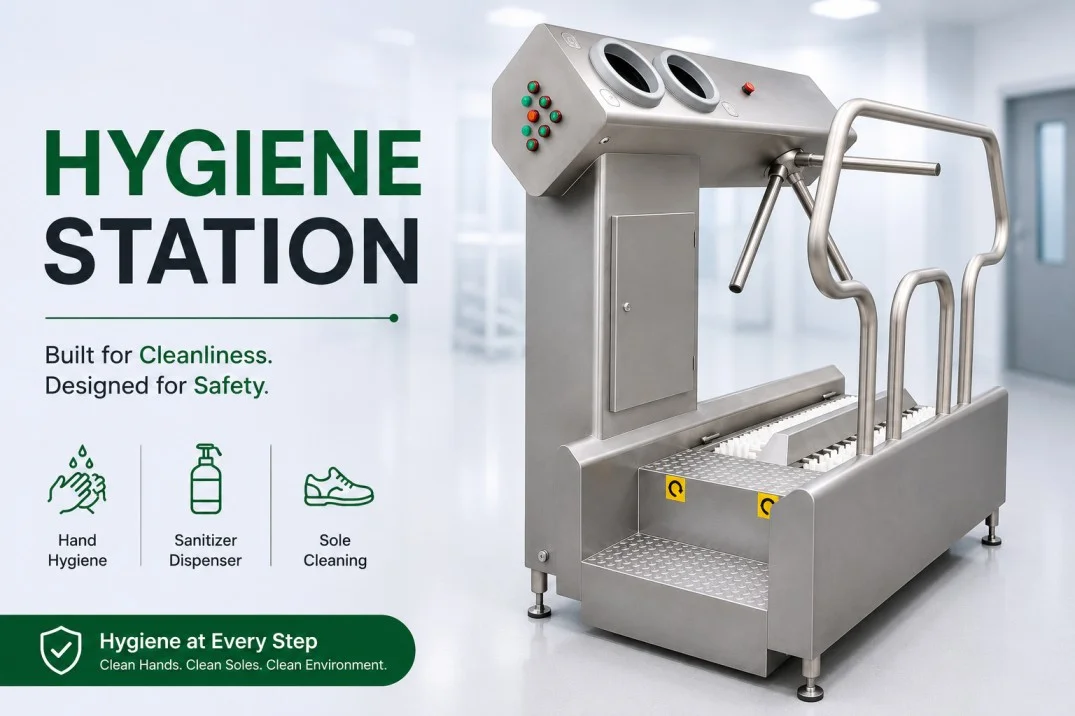
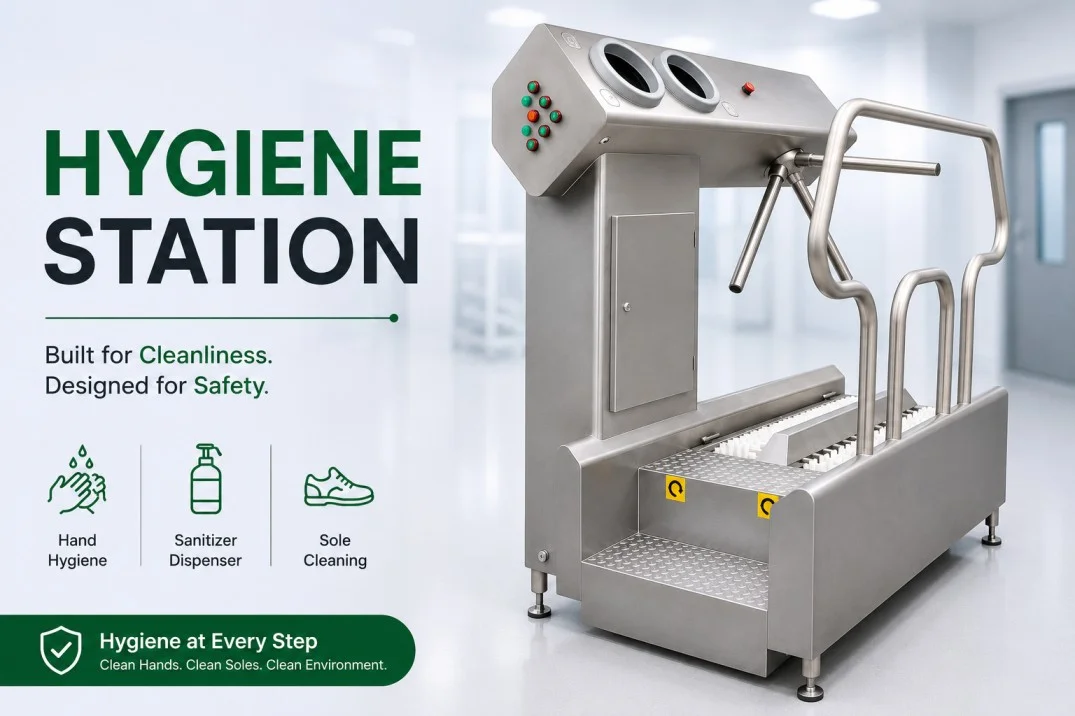
Walk into a food or pharma factory today, and you'll probably notice something that wasn't there ten years ago: a proper hygiene station right at the entrance, before anyone even reaches the shop floor. This isn't a trend for the sake of it. It's a response to a problem that's been sitting in plain sight for decades — people, not machines, are usually where contamination actually enters a facility.
What Is a Hygiene Station, Exactly?
A hygiene station is a set-up at the entry point of a production area that makes sure everyone goes through a cleaning routine. Hand washing, sanitizing, boot cleaning, sometimes a shoe change. Before they are allowed onto the floor. A hygiene station is not a machine. A hygiene station is usually a sequence: sink, sanitizer, boot wash and often a locked door that will not open until the whole routine is completed.
The way to think about it: a hygiene station turns "please wash your hands" from a request, into something that physically has to happen. A hygiene station makes the cleaning step mandatory not optional. A hygiene station keeps the floor clean and the workers safe.
Why Factories Are Investing in This Now
A few things are pushing this shift, and honestly, most of it comes down to one uncomfortable fact: humans are unpredictable, even when they mean well.
A normal day in a packaging area starts with a worker leaving for a break. They touch a door handle maybe look at their phone and then return. If there is no hygiene measure at the door they are walking right onto the production line with whatever they picked up outside. No one is doing this on purpose. It's the way people act when hygiene depends on memory instead of a real barrier.
This is supported by data, not a guess. According to CDC data on illness outbreaks in retail food places, worker-related contamination. Through touching with bare hands with gloves or other ways. Was a cause, in about 41% of the outbreaks studied. That is a number. It means almost half of the outbreaks recorded had a person as the source of contamination not the materials or the tools.
And this isn't a niche problem. CDC estimates that just four pathogens are responsible for around 1.9 million foodborne illnesses in the US every year. A meaningful share of that traces back to hygiene lapses at exactly the kind of entry points a hygiene station is built to control.
This Happens More Often Than You'd Expect
Picture a mid-sized ready-to-eat food plant. They had a decent hygiene policy on paper — hand wash signs, a sanitizer bottle at the door, the usual training during onboarding. Then a batch got flagged during a routine audit for elevated bacterial counts. The investigation didn't point to the raw materials or the machinery. It came down to shift-change traffic: fifty-plus workers moving through one entry point in under ten minutes, with no physical control forcing the hand-wash step. People were skipping it, not out of carelessness, but because there was nothing stopping them from walking straight past the sink when things got busy.
After installing a proper hygiene station — with an interlocked door that wouldn't open until the wash-and-sanitize sequence was complete — that specific issue stopped showing up in audits. The policy hadn't changed. The physical setup had.
This kind of story is common enough that it's become one of the more predictable findings in food safety audits: the gap usually isn't the recipe or the equipment, it's the walk from the locker room to the production floor.
What a Good Hygiene Station Actually Includes
A proper set-up usually covers:
- Sensor or foot-pedal hand wash sinks, so nobody touches a tap after cleaning up
- Automatic, non-contact sanitizer dispensers
- Boot or shoe sole washers, sometimes a disinfectant footbath
- A clear point where outdoor shoes get swapped for indoor ones
- In stricter facilities, an interlocked door that only opens once the sequence is finished
Not every factory needs the full list. A basic packing unit might get by with a sink, sanitizer, and boot wash. A pharma cleanroom usually needs the whole sequence, interlocked, with no shortcuts available.
How Cronax Builds Hygiene Stations for Real Factory Conditions
We build hygiene stations for food, pharma, and manufacturing facilities where "we told people to wash their hands" isn't good enough anymore — audits, customers, and regulators expect a physical control, not just a policy.
A few things we pay attention to:
- We design the layout so the hygiene sequence is the only way through, not an optional detour someone can walk around
- Fixtures are non-contact by default, because a tap you have to touch after washing defeats the purpose
- Everything is built in stainless steel to handle daily washdown and the sanitizing chemicals your facility already uses
- We size each station for your actual shift-change traffic, not just average daily headcount, so it doesn't create a bottleneck at the busiest part of the day
- We install and service across India, so a broken sensor doesn't quietly turn into an audit finding
Frequently Asked Questions
Do small factories really need a hygiene station, or is this just for big facilities? Size matters less than what you're producing. A small ready-to-eat food unit or a small pharma packing line carries the same contamination risk per person as a large one — the hygiene station just needs to be sized down to match your headcount and floor space.
Is a policy with signage and training enough without a physical hygiene station? It can work in theory, but the data doesn't back it up well in practice. Contamination linked to worker contact remains one of the most common contributing factors in outbreak investigations, which suggests policy alone often isn't enough without something physically enforcing it.
It takes a days to a couple of weeks to install a hygiene station at an existing entry point. The time depends on the plumbing and electrical work that is needed. This kind of retrofit is usually faster than a redesign. That’s because most facilities already have a location, near the entry point. So the setup can go smoothly without changes.
Does a hygiene station slow down shift changes? A well-sized one shouldn't. The real risk is under-sizing it for your peak traffic — if fifty people need to get through in ten minutes and the station's only built for ten people, that's when it becomes a bottleneck and people start looking for ways around it.
If your entry point still relies mostly on signage and good intentions, it might be worth a second look. Get in touch with Cronax Industries and we'll help you figure out what your factory actually needs.