Sign up with Google
 Sign in with Zoho


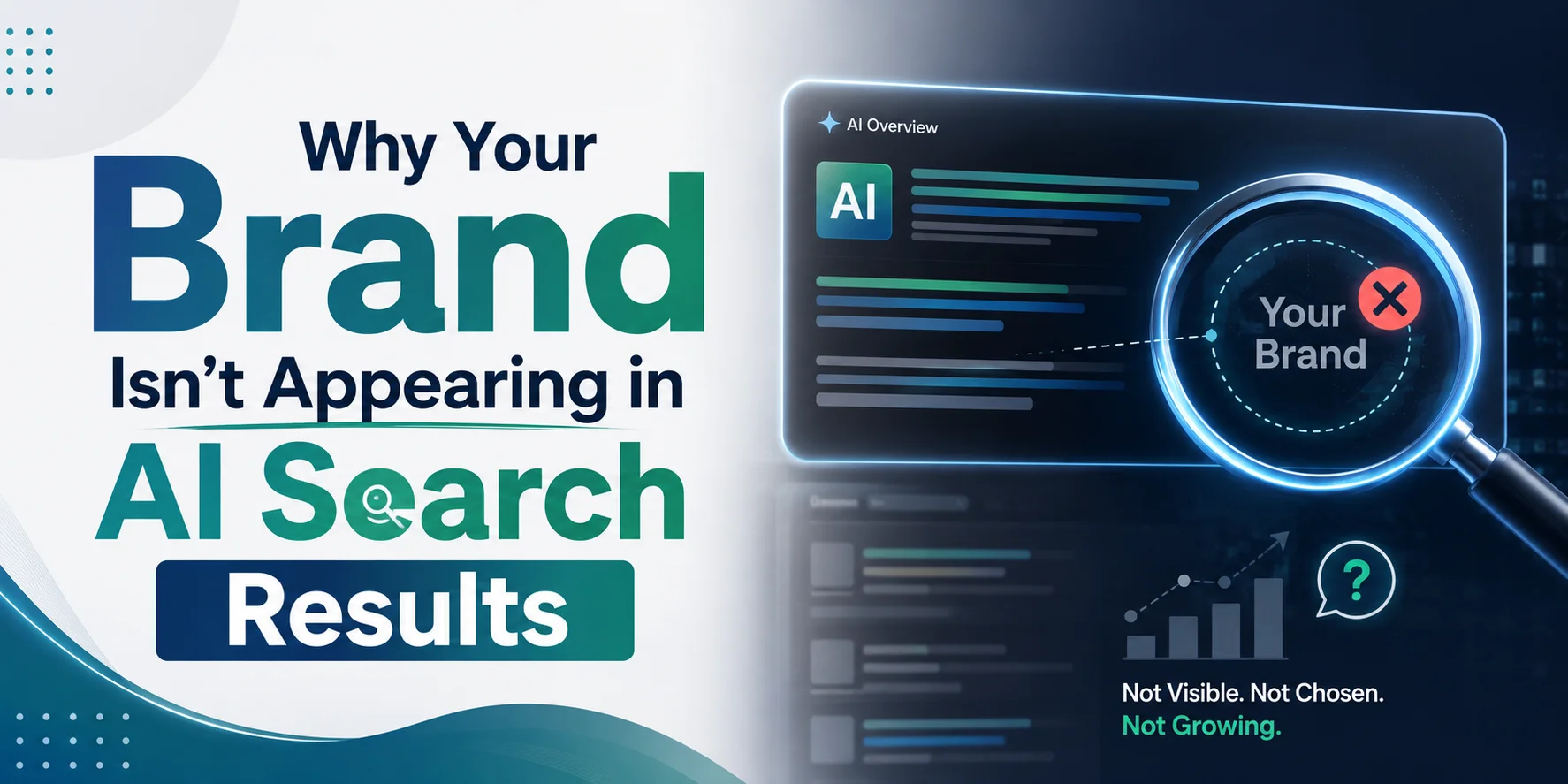
Yes, your business may be invisible to ChatGPT, Google AI, Gemini, or Perplexity even when your website ranks reasonably well on traditional Google search.
That happens because ranking for a keyword and being recognized as a trustworthy recommendation are no longer the same thing.
A Philadelphia attorney may appear on page one for a legal term but still be missing when someone asks, “Who is a trusted business attorney in Philadelphia for a growing company?” A doctor may have a polished website but never appear when a patient asks an AI platform to compare local specialists.
An AI Search Visibility Audit reveals whether these platforms can clearly understand your expertise, verify your credibility, connect you with the right services and confidently mention your business in an answer.
Why Is Traditional SEO No Longer Enough?
Traditional SEO is still important, but it now represents only one part of digital visibility.
Search is moving from a list of links toward direct answers, comparisons, summaries and recommendations. Instead of typing “Philadelphia financial consultant,” a user may ask:
“Who is a reliable financial consultant in Philadelphia for a small professional services firm?”
That question requires more than keyword matching. The AI system must understand the consultant’s location, experience, audience, services, reputation and areas of expertise.
A website may contain all this information, but if it is scattered, inconsistent or unsupported, AI platforms may not confidently use it.
This is why professionals need to think beyond rankings. The future question is not simply, “Does my website appear?” It is, “Does the search system understand and trust my business enough to recommend it?”
How Is Google Search Expected to Change in 2026 and Beyond?
Google is unlikely to abandon traditional search results, but AI-generated experiences will continue taking a larger role in how answers are presented.
Google’s direction suggests that search will become more conversational, personalized, multimodal and action-oriented. Users will ask longer questions, add follow-ups and expect Google to help them complete tasks rather than merely locate pages.
For professionals, this creates three major changes.
First, broad informational searches will increasingly be answered directly within search.
Second, Google will likely place greater emphasis on sources that add original expertise rather than repeating information already available across hundreds of websites.
Third, businesses will need to demonstrate clear connections between their people, services, location, experience and third-party reputation.
Future updates are therefore likely to reward websites that are technically accessible, genuinely useful, clearly structured and supported by credible external signals.
They are also likely to become less forgiving of generic AI-generated content created only to target search terms.
What Are Zero-Click Searches?
A zero-click search happens when a user gets enough information from the search results or an AI-generated response without visiting a website.
For example, a Philadelphia homeowner might ask:
“What should I check before hiring a local estate-planning attorney?”
Google or ChatGPT may summarize the key considerations immediately. The user may never click the ten articles that helped inform that answer.
This does not mean websites are becoming useless. It means the role of a website is changing.
Your content must now accomplish two goals. It should attract qualified visitors, but it should also provide clear, trustworthy information that search engines and AI systems can extract, interpret and reference.
Visibility without a click can still influence a buying decision. A prospect may repeatedly see your name in AI answers, Google results, media articles, podcast appearances and professional directories before finally visiting your website or contacting you directly.
The new customer journey may contain fewer clicks but more trust-building moments.
Which Ranking Factors Will Matter Most?
No single optimization technique will guarantee AI visibility. However, several factors are becoming increasingly important.
Is Your Expertise Clearly Demonstrated?
A professional should not merely claim to be experienced. The website should show that experience through detailed service pages, expert commentary, case-based insights, professional credentials and original observations.
A Philadelphia healthcare consultant, for example, should publish more than a generic article titled “What Is Healthcare Consulting?” A stronger piece might explain how independent medical practices can reduce patient-acquisition costs, supported by first-hand experience and realistic examples.
Can Search Systems Understand Your Business?
Your website should clearly communicate who you are, what you offer, where you operate and whom you serve.
Consistent business information, descriptive service pages, strong internal linking and accurate structured data can help search engines interpret those relationships.
Schema markup does not automatically create authority, but it can provide clearer machine-readable information about your organization, professionals, articles, services and local presence.
Is Your Reputation Supported Beyond Your Website?
A business describing itself as “trusted” is less convincing than independent sources demonstrating that trust.
Media coverage, podcast interviews, professional profiles, reviews, citations, industry contributions and relevant mentions can strengthen the wider authority surrounding a brand.
For a Philadelphia lawyer, appearing in an established legal publication or discussing a specialized topic on a respected podcast may create stronger credibility signals than publishing another short keyword-focused blog.
Does Your Content Answer Real Questions?
AI search systems are built around natural questions.
Your content should directly answer what prospective clients actually ask before choosing a professional:
“How much does the service cost?”
“What type of professional do I need?”
“What risks should I consider?”
“How do I compare providers?”
“What happens during the first consultation?”
Question-based headings, concise opening answers and deeper supporting explanations make content easier for both readers and machines to understand.
Does Your Brand Show Real E-E-A-T?
Experience, Expertise, Authoritativeness and Trustworthiness should be visible throughout the website.
That includes named authors, accurate biographies, qualifications, editorial standards, updated content, transparent contact information, evidence of first-hand experience and reliable supporting sources.
E-E-A-T is not a badge that can be added to a page. It is the combined impression created by your content, people, reputation and digital footprint.
What Should an AI Search Visibility Audit Examine?
A useful audit should go beyond rankings and traffic.
It should examine whether AI platforms mention your business for relevant discovery, comparison and recommendation questions. It should review how clearly your services, expertise and target audience are presented.
The audit should also assess:
- Website structure and indexability
- Service and location relevance
- Entity consistency across the web
- Author and expert credibility
- Structured data implementation
- Content depth and answer quality
- Reviews, media mentions and authority signals
- Competitor visibility in AI-generated answers
The goal is not simply to find technical errors. It is to identify why another professional is easier for AI systems to understand, verify and recommend.
How Can Credancy Help?
Credancy helps professionals and service-based businesses build the authority systems needed for both traditional and AI-driven search.
Instead of treating SEO, content, digital PR and reputation as disconnected activities, Credancy brings them together.
The process may include an AI Search Visibility Audit, AEO strategy, website improvements, structured content, schema markup, expert articles, podcast placements, media features, digital PR and ongoing SEO.
For a Philadelphia professional, this could mean improving local service pages, clarifying expertise, publishing answer-focused content, securing relevant third-party exposure and creating consistent signals across the broader web.
The objective is not to manipulate ChatGPT or Google. It is to make your business genuinely easier to understand and more credible to recommend.
Are You Ready for the Next Version of Search?
The professionals who win in 2026 and beyond will not necessarily be those publishing the most content.
They will be the ones with the clearest expertise, strongest evidence, most consistent digital presence and most useful answers.
An AI Search Visibility Audit gives you a starting point. It shows whether your brand is merely present online or actually recognized as an authority.
Because when a potential client asks AI for the best person to help, your business should not be hidden behind a list of links.
It should be part of the answer.
Frequently Asked Questions
What is an AI Search Visibility Audit?
It evaluates how easily AI platforms can understand, verify, cite and recommend your business.
Can a business rank on Google but remain invisible to ChatGPT?
Yes, because keyword rankings do not automatically create the authority signals required for AI recommendations.
Does schema markup guarantee AI visibility?
No, but accurate schema can help search systems understand your website and business entities more clearly.
Are zero-click searches bad for professional service businesses?
Not always, because repeated brand mentions in AI answers can build trust before a prospect visits or contacts you.
How can Credancy improve AI Search Visibility?
Credancy combines AEO, SEO, structured content, schema, digital PR, media and podcast authority to strengthen your brand’s visibility.