Sign up with Google
 Sign in with Zoho

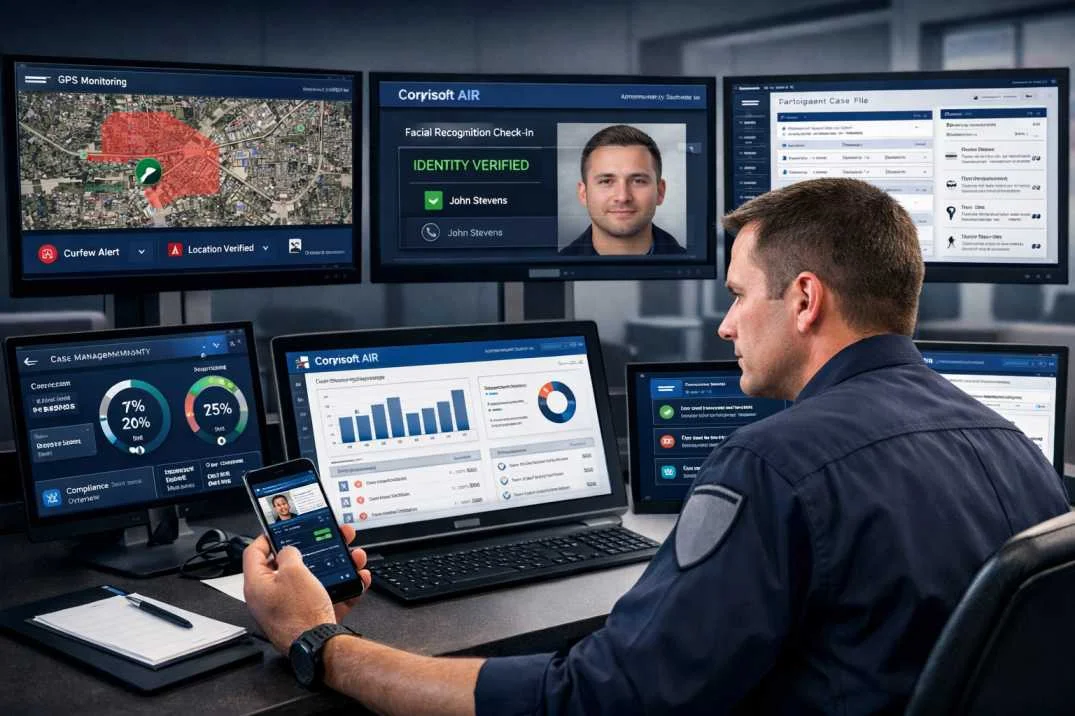
Organizations across the public and private sectors rely on GPS tracking to monitor location data, improve accountability, and gain better visibility into people, vehicles, and assets. In community supervision environments, GPS monitoring technology helps agencies verify compliance, monitor movement patterns, and support informed decision-making while balancing operational efficiency and public safety.
GPS tracking has become a common technology in transportation, logistics, public safety, and community corrections. While many people use GPS every day through smartphones and navigation apps, fewer understand how the technology works behind the scenes or how it supports professional monitoring programs.
What Is GPS Tracking?
GPS tracking is the process of using Global Positioning System (GPS) satellites to determine and record the location of a device, person, vehicle, or asset. A GPS-enabled device receives signals from satellites orbiting the Earth and calculates its geographic position.
The technology allows authorized users to monitor movement, review location history, receive alerts, and analyze travel patterns through a connected software platform.
GPS tracking uses satellite signals to determine a device's location and transmit that information to authorized users through software applications, dashboards, or monitoring platforms.
How GPS Tracking Works
The Global Positioning System consists of a network of satellites that continuously transmit signals to receivers on the ground.
A GPS-enabled device performs several steps:
- Receives signals from multiple satellites.
- Calculates its location using triangulation.
- Records coordinates and movement data.
- Transmits information through cellular or internet networks.
- Displays the data within a monitoring platform.
Modern GPS monitoring systems can update location information frequently, allowing agencies to receive timely information regarding participant movement and compliance activities.
Key Components of a GPS Tracking System
GPS Receiver
The receiver captures signals from satellites and calculates the device's location.
Cellular Communication
Many monitoring devices use cellular networks to transmit location information to centralized software platforms.
Monitoring Software
Software dashboards organize and display tracking information, reports, alerts, and historical data.
Administrative Controls
Authorized personnel can configure monitoring parameters, review activity, and generate compliance reports.
Common Uses of GPS Tracking
GPS technology supports many industries and operational environments.
Transportation and Fleet Management
Organizations use GPS tracking to monitor vehicles, optimize routes, and improve operational efficiency.
Asset Protection
Businesses track valuable equipment and assets to reduce loss and improve accountability.
Emergency Services
Public safety organizations use location technology to coordinate resources and improve response times.
Community Supervision
Probation departments, pretrial services agencies, and community corrections organizations use GPS monitoring to support offender monitoring and compliance verification.
GPS Tracking in Community Supervision
Community supervision agencies face increasing demands to improve accountability while managing limited resources.
GPS monitoring helps agencies:
- Verify participant locations
- Monitor exclusion and inclusion zones
- Review movement history
- Generate compliance reports
- Support investigations
- Improve officer awareness
Technology provides valuable information that can supplement supervision strategies while helping agencies manage larger caseloads.
Benefits of GPS Monitoring Technology
Improved Accountability
Location verification helps ensure participants comply with supervision requirements.
Better Resource Allocation
Officers can focus attention on higher-priority situations rather than relying solely on manual check-ins.
Enhanced Documentation
GPS systems create digital records that support case management and reporting activities.
Increased Operational Visibility
Administrators gain access to data that can assist with program oversight and decision-making.
Challenges and Considerations
Although GPS tracking offers many benefits, agencies should carefully evaluate several factors.
Privacy and Policy Requirements
Organizations must establish clear policies governing monitoring practices and data access.
Device Reliability
Successful monitoring programs depend on reliable hardware, connectivity, and participant engagement.
Training Requirements
Staff members need appropriate training to effectively interpret data and respond to alerts.
Program Objectives
Technology should support supervision goals rather than replace professional judgment.
How Corrisoft Supports GPS Monitoring
Corrisoft AIR® helps agencies modernize supervision programs through smartphone-based monitoring tools and GPS capabilities.
The platform combines:
- Real-time GPS tracking
- Participant communication
- Facial recognition check-ins
- Compliance monitoring
- Case management tools
- Reporting and alerts
By using smartphone supervision technology, agencies can often reduce reliance on traditional monitoring approaches while maintaining visibility and accountability.
According to the National Institute of Justice, electronic monitoring technologies continue to play an important role in supporting community supervision and criminal justice operations.
The Future of GPS Tracking
GPS monitoring continues to evolve as agencies seek more efficient supervision strategies.
Emerging trends include:
- Smartphone-based monitoring
- Improved reporting analytics
- Enhanced participant engagement tools
- Automated compliance alerts
- Integration with case management systems
As technology advances, agencies will continue exploring ways to improve supervision outcomes while maintaining public safety responsibilities.
Conclusion
GPS tracking has become an important tool for organizations seeking greater visibility, accountability, and operational efficiency. In community supervision settings, GPS technology supports compliance monitoring, offender tracking, and informed decision-making.
When combined with communication tools, reporting capabilities, and case management features, GPS monitoring can help agencies improve supervision effectiveness while supporting rehabilitation and public safety goals.
CTA
To learn more about Corrisoft AIR® and smartphone supervision technology, contact Corrisoft at +1 800-247-1551 or [email protected]. Request a free demo to see how GPS tracking, participant communication, and compliance monitoring tools can support your supervision program.
FAQs
What is GPS tracking used for?
GPS tracking is used to determine and monitor the location of people, vehicles, devices, or assets. Organizations use it for navigation, fleet management, asset protection, public safety operations, and community supervision programs.
How accurate is GPS tracking?
GPS accuracy depends on device quality, signal strength, environmental conditions, and connectivity. Most modern systems provide highly reliable location information for operational monitoring purposes.
Can GPS tracking work in real time?
Many GPS systems provide near real-time updates by transmitting location information through cellular networks to monitoring platforms and dashboards.
How does GPS tracking help probation agencies?
GPS monitoring helps agencies verify participant locations, monitor compliance requirements, review movement history, and support supervision activities through location-based reporting.
Is GPS tracking the same as electronic monitoring?
GPS tracking is one form of electronic monitoring. Electronic monitoring may also include alcohol monitoring, facial recognition check-ins, smartphone supervision tools, and other compliance technologies.