Sign up with Google
 Sign in with Zoho

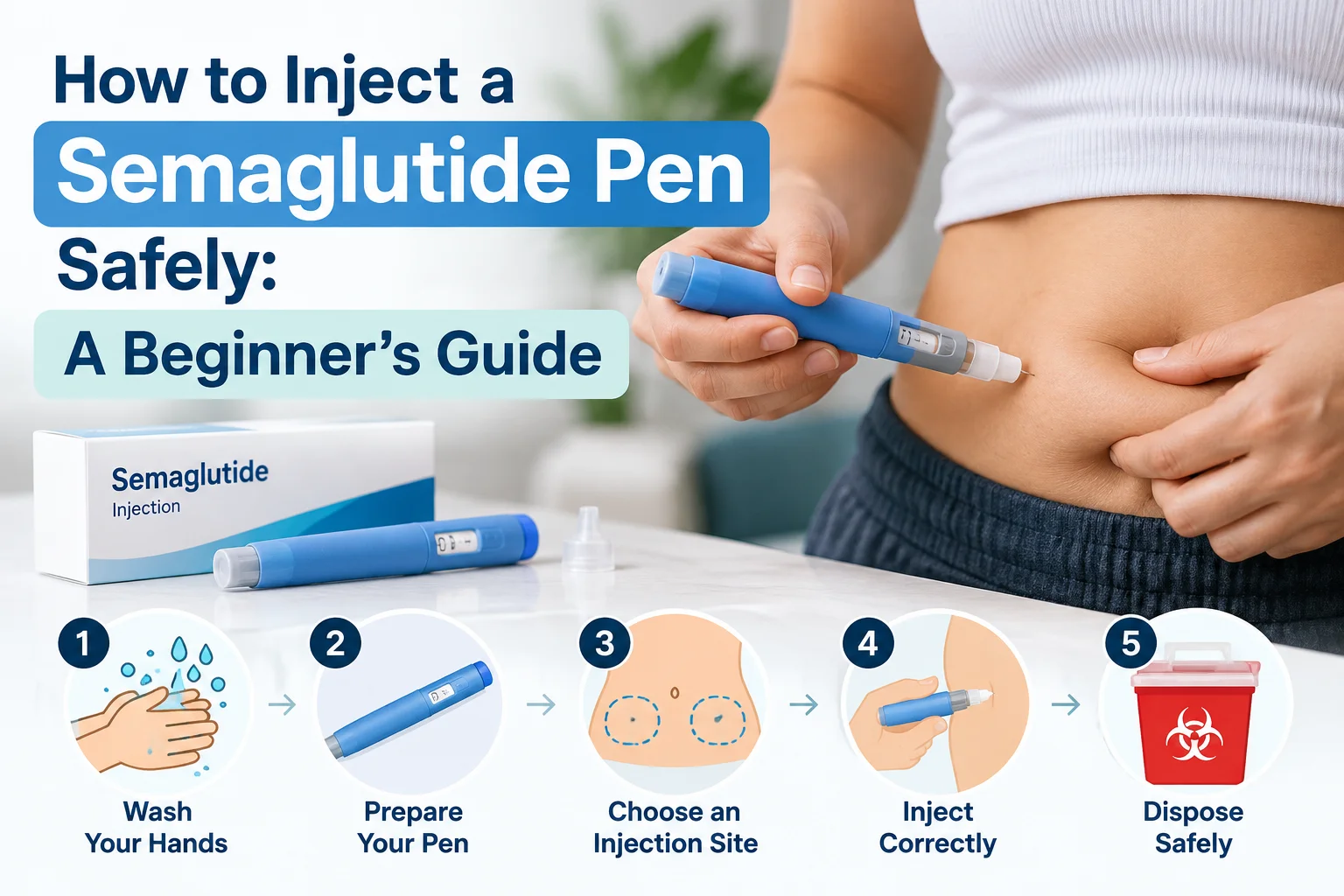
Starting semaglutide can feel intimidating, especially the first time you hold the pen. Semaglutide, sold as Ozempic, Wegovy, and other brands, is a once-weekly injectable medicine prescribed for type 2 diabetes and for weight management. The needle is tiny and the process is simple, but a few steps matter for safety, comfort, and getting the full dose.
This guide walks you through the process from preparation to disposal. It is general education and doesn't replace your prescriber's advice or the Instructions for Use that come with your pen. Pens differ by brand and dose, so always follow the leaflet in your box.
What Is a Semaglutide Pen?
A semaglutide pen is a prefilled injector that delivers medicine into the fatty tissue just under your skin, called a subcutaneous injection. Depending on the brand, you'll use one of two designs:
- Multi-dose pens (such as Ozempic) hold several weeks of doses. You dial the dose each week and attach a fresh needle each time.
- Single-dose pens (such as Wegovy) deliver one preset dose and are then discarded.
Because the designs differ, your first job is to read the Instructions for Use for your specific pen. The core safety principles below apply to both.
Before You Begin: Get Your Supplies Ready
Gather everything before you start so you're not searching mid-injection:
- Your semaglutide pen
- A new pen needle (for multi-dose pens; use a new one every time)
- Alcohol swabs
- A sharps disposal container
- Clean gauze or a cotton ball (optional)
Choose a clean, well-lit spot and sit down comfortably. Try to inject on the same day each week so it becomes a habit.
Step 1: Wash Your Hands and Check Your Pen
Wash your hands with soap and water. Then take the pen out of the refrigerator if that's where you keep it, and check these things:
- The label: Confirm it's the right medicine and the right strength.
- The expiry date: Never use an expired pen.
- The liquid: Semaglutide should be clear and colorless. If it looks cloudy, discolored, or contains particles, don't use it.
- The pen itself: Look for cracks or damage.
Some people prefer to let the pen sit at room temperature for a few minutes before injecting, since very cold medicine can sting slightly. Follow your leaflet on this point.
Step 2: Attach a New Needle (Multi-Dose Pens)
For pens that use detachable needles:
- Take a new needle and peel off the paper tab.
- Push the needle straight onto the pen and screw it on until it's snug.
- Pull off the large outer cap and keep it, because you'll need it to remove the needle later.
- Pull off the small inner cap and throw it away.
Never reuse a needle. Reused needles become dull, cause more pain and bruising, can clog, and raise the risk of infection. Never store the pen with the needle attached.
Step 3: Check the Flow (First Use Only, for Some Pens)
Many multi-dose pens require a flow check the first time you use a new pen. This confirms that medicine comes out properly:
- Turn the dose selector until you see the flow check symbol.
- Hold the pen with the needle pointing up.
- Press and hold the dose button until the counter returns to zero.
- Check that a drop of medicine appears at the needle tip.
If no drop appears, repeat the step up to a few times as your leaflet directs. If you still see nothing, replace the needle and try again. Single-dose pens like Wegovy don't require this step.
Step 4: Select Your Dose
For multi-dose pens, turn the dose selector until your prescribed dose lines up with the pointer. Semaglutide is started at a low dose and increased gradually, usually every four weeks, to reduce side effects. Only use the dose your healthcare provider prescribed, and never adjust it yourself.
Step 5: Choose and Prepare Your Injection Site
You can inject into three areas:
- Abdomen: at least two inches (about 5 cm) away from your belly button
- Front or outer thigh
- Back of the upper arm (easier if someone else helps)
Rotate your injection site each week. You can use the same general area, such as the abdomen, but choose a different spot within it. Repeated injections in the same place can cause lumps, hardened skin, or irregular absorption.
Avoid skin that is bruised, scarred, tender, red, or hard. Clean the site with an alcohol swab and let it dry completely. Injecting into wet alcohol can sting.
Step 6: Inject the Medicine
- Hold the pen so you can see the dose counter.
- Insert the needle into your skin straight in, at a 90-degree angle. There's usually no need to pinch the skin with these short needles, but follow your leaflet or your nurse's advice, especially if you're very lean.
- Press and hold the dose button until the counter shows 0.
- Keep the needle in your skin and count slowly to six, or for as long as your leaflet advises. This ensures the full dose is delivered.
- Pull the needle straight out.
Some people see a small drop of blood or clear fluid at the site. That's normal. Press gently with gauze for a few seconds, and don't rub the area.
If you remove the needle too early, you may see medicine leaking out. Don't inject a second dose to make up for it. Note it and speak to your healthcare provider if you're unsure.
Step 7: Remove the Needle and Dispose of It Safely
Put the large outer cap back over the needle carefully, using one hand and the flat surface method rather than holding the cap. Unscrew the needle and drop it directly into your sharps container.
Never throw loose needles into household trash or recycling. If you don't have a sharps container, a heavy-duty plastic household container with a screw-top lid, such as a laundry detergent bottle, can be a temporary substitute. Check local disposal rules, since regulations vary by region. Put the pen cap back on and store the pen as directed.
How to Store Your Semaglutide Pen
Proper storage protects the medicine's effectiveness:
- Unused pens: Store in the refrigerator at 36°F to 46°F (2°C to 8°C). Never freeze them, and discard any pen that has frozen.
- Pens in use: Many multi-dose pens can be kept in the fridge or at room temperature (up to about 86°F/30°C) for a limited period, often around 56 days, but this differs by brand. Check your leaflet.
- Keep it protected: Store the pen with its cap on, away from direct heat and sunlight.
- Travel: Use an insulated pouch, and never leave the pen in a hot car.
What If You Miss a Dose?
Semaglutide is taken once a week. General guidance for many pens is that if you miss a dose, you can take it as soon as you remember, provided it's within about five days of the scheduled day. If more than five days have passed, skip the missed dose and take the next one on your regular day. Never take two doses within a short window to catch up. Rules differ by brand, so check your leaflet or ask your pharmacist.
Common Side Effects and How to Manage Them
Most side effects are mild and ease as your body adjusts:
- Nausea
- Vomiting or diarrhea
- Constipation
- Bloating or stomach discomfort
- Fatigue
- Mild redness or itching at the injection site
Some tips that many people find helpful:
- Eat smaller meals and eat slowly.
- Avoid very greasy, fried, or heavily sugary foods.
- Stay well hydrated, especially if you have diarrhea or vomiting.
- Stop eating when you feel full.
When to Seek Medical Help Immediately
Contact your healthcare provider or emergency services if you experience:
- Severe or persistent stomach pain that may spread to the back, with or without vomiting, which can signal pancreatitis
- Pain in the upper right abdomen, fever, or yellowing of the skin or eyes, which can signal gallbladder problems
- Signs of a serious allergic reaction, such as swelling of the face, lips, or throat, difficulty breathing, or a severe rash
- A lump or swelling in the neck, hoarseness, trouble swallowing, or shortness of breath
- Signs of dehydration or kidney problems, such as very little urine or extreme dizziness
- Vision changes, particularly if you have diabetes
Semaglutide carries a boxed warning about a risk of thyroid C-cell tumors seen in rodent studies. It should not be used by people with a personal or family history of medullary thyroid carcinoma or Multiple Endocrine Neoplasia syndrome type 2. Tell your provider about your full medical history before starting.
If you also take insulin or a sulfonylurea, you have a higher risk of low blood sugar. Learn the symptoms, which include shakiness, sweating, confusion, and a fast heartbeat, and discuss with your provider whether your other medicine doses need adjusting.
Safety Tips Worth Remembering
- Never share your pen, even with a new needle. Sharing pens can spread bloodborne infections.
- Use only prescribed products from a licensed pharmacy, and be cautious with unregulated online sellers or unverified compounded versions.
- Tell your provider if you are pregnant, planning pregnancy, or breastfeeding, as semaglutide is generally stopped before a planned pregnancy.
- Keep a simple log of your injection dates, doses, and injection sites. It helps with rotation and with tracking side effects.
- Ask for a demonstration. Many pharmacists and nurses will watch you do your first injection and correct your technique.
Tips to Make Injecting Easier
If you're nervous about needles, these can help:
- Relax the muscles around the injection site.
- Let the alcohol dry fully before injecting.
- Inject at room-temperature medicine when the leaflet allows.
- Breathe out slowly as you press the needle in.
- Don't rush, since the injection itself takes only seconds.
Most people find the injection far less painful than expected, and it quickly becomes routine within a few weeks.
Final Thoughts
Injecting a semaglutide pen safely comes down to a repeatable routine: clean hands, a new needle, the correct dose, a rotated injection site, a slow count to six, and proper disposal. Combine that with correct storage and attention to side effects, and you'll be well set up to get the most from your treatment.
Every pen and every person is different, so lean on your healthcare team. If anything in your leaflet seems unclear, or something doesn't feel right during or after an injection, ask your doctor, nurse, or pharmacist before your next dose.