Sign up with Google
 Sign in with Zoho
Imagine a busy hospital on a Monday morning. The registration counter is crowded, patients are waiting for consultations, and the staff are trying to manage appointments alongside unexpected emergencies. Doctors may be doing their best, but delays can still happen when information is scattered or resources are not planned properly.
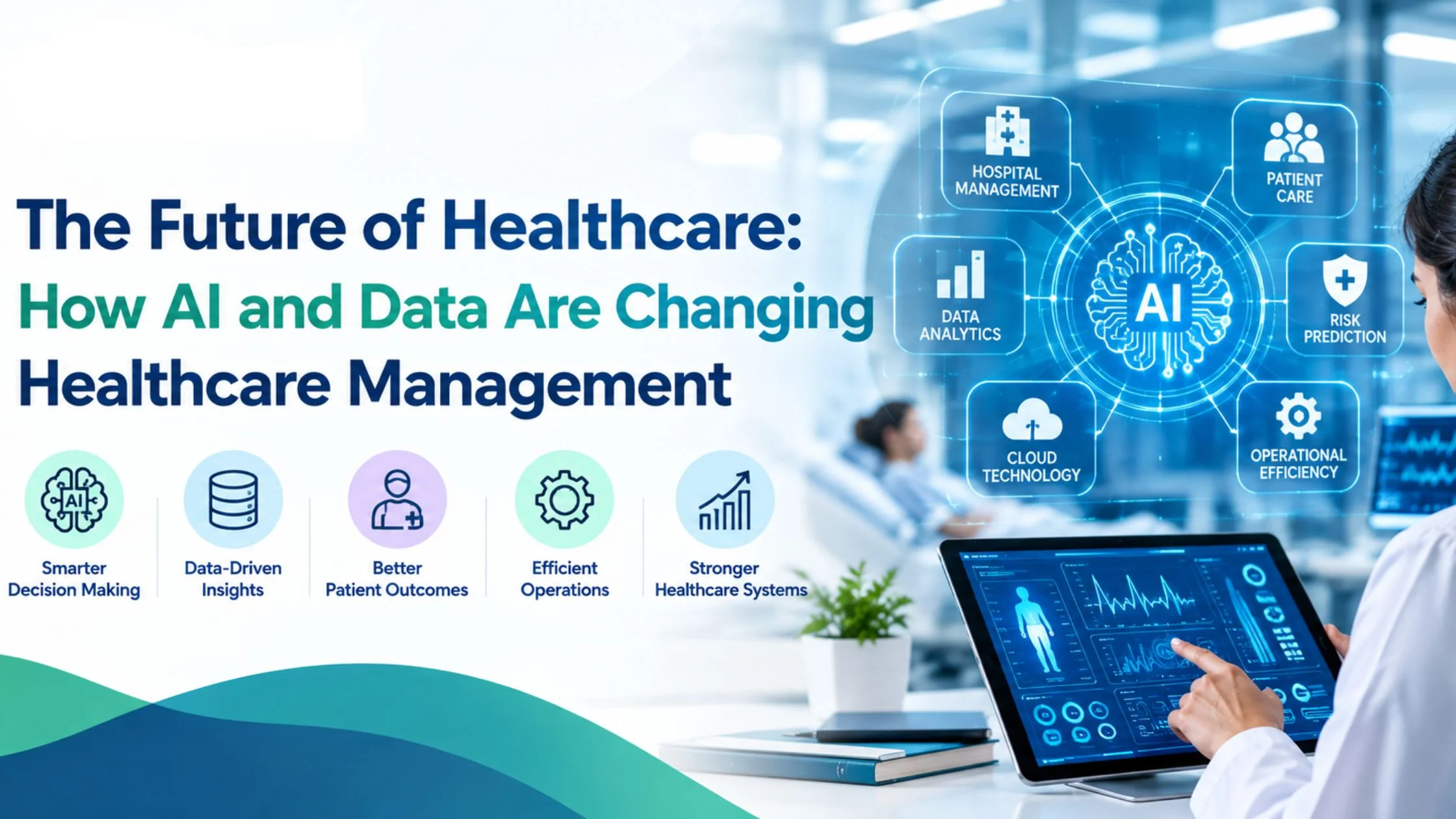
Situations like this show why healthcare management involves much more than maintaining hospital records or preparing staff schedules. Behind every patient visit, several administrative decisions influence how smoothly a healthcare facility operates. Artificial intelligence (AI) and data analytics are beginning to support these decisions by helping teams understand patterns and identify areas that need attention.
Looking Beyond the Numbers in Hospital Operations
Suppose a hospital notices that patients regularly wait longer for consultations on certain days. The immediate response might be to add more appointments or ask staff to work faster. However, the actual cause could be a mismatch between appointment slots and doctor availability, delays in registration, or a higher number of walk-in patients.
Looking at historical appointment records, consultation times, and staffing schedules can help administrators investigate the problem. AI-based tools may identify recurring patterns and estimate when demand is likely to increase. Managers can then consider whether adjusting appointment slots or changing staff schedules would help.
The important point is that data gives managers evidence to investigate a problem rather than relying entirely on assumptions. The final decision still requires an understanding of the hospital, its employees, and the needs of its patients.
Practical Ways AI Can Support Healthcare Management
AI does not have to involve complicated medical technology to be useful. Some of its potential benefits are connected to routine administrative work.
Planning staff and appointments: Demand patterns can help hospitals anticipate busy periods and review whether staffing levels match patient needs. Unexpected emergencies will still require flexibility, but better planning may help reduce avoidable delays.
Making better use of resources: Information about equipment usage, available beds, and departmental demand can support decisions about allocating resources. Managers can use these insights to identify bottlenecks and review existing processes.
Handling repetitive administrative tasks: Certain digital tools can assist with document processing, routine reports, and information management. As a result, employees may have more time for tasks that require communication, coordination, and judgment.
Understanding service performance: Operational dashboards can bring information from different activities into one place. Rather than reviewing isolated figures, managers can compare waiting times, appointment patterns, and service demand to decide which issues deserve attention first.
These applications are not automatic solutions. A hospital must evaluate whether a tool addresses a real operational need, works reliably, and fits its existing processes.
The Challenges That Come With Digital Healthcare
Introducing technology also creates responsibilities. An AI system can only provide useful insights when the information it receives is sufficiently accurate and relevant. If patient records are incomplete or departments maintain inconsistent data, the resulting recommendations may be unreliable.
Privacy needs equal attention. Healthcare information can contain highly sensitive personal details, so organizations must establish appropriate access controls, security measures, and procedures for handling data.
It is also important to consider the human aspect of implementation. Employees may need time and training to understand a new system, and managers should provide a clear explanation of how it will be used. Recommendations should be reviewed before important decisions are made, especially when they could affect patient services or the allocation of essential resources.
Before adopting a new tool, healthcare managers should consider three things: what problem it is expected to solve, whether the available information is trustworthy, and who will be accountable for reviewing its recommendations.
Skills That Can Help Future Healthcare Managers
Technology is changing the responsibilities associated with healthcare administration. Professionals may increasingly need to understand operational data alongside traditional management principles.
A healthcare management course can introduce learners to hospital administration, planning, coordination, and healthcare systems. Practical healthcare management training can help them connect these concepts with situations they may encounter in the workplace.
Those considering a healthcare management certification should examine the curriculum, practical learning opportunities, and suitability of the program for their career plans. A healthcare administration course may also be relevant to people interested in patient services, departmental coordination, and hospital operations.
Beyond formal qualifications, future professionals can benefit from learning how to interpret reports, communicate across departments, recognize operational problems, and evaluate digital recommendations. Understanding information security and the limitations of automated systems is also important.
These abilities can help managers ask better questions when reviewing data instead of accepting every result at face value.
Exploring Intelligent Healthcare Management Training
For learners interested in the relationship between healthcare operations and emerging technology, Intelligent Healthcare Management (iHealth) Training is one area worth exploring.
Before choosing a program, learners should review what it covers, the practical skills it develops, and how well it fits their existing education and professional interests. Understanding both healthcare administration and technology can provide a useful foundation for exploring this developing area.
Clinilaunch Research offers learning opportunities in healthcare and life sciences. This field offers a variety of programs that can be reviewed by learners who are interested in this field and choose the best program for them.
A More Thoughtful Approach to the Future
AI and data analytics can help healthcare organizations identify operational challenges, plan resources, and review service performance. However, better technology does not automatically produce better healthcare management.
The real benefit comes from combining reliable information with practical experience and responsible decision-making. A data report might reveal where delays occur, but healthcare professionals must still understand why they happen and which changes are appropriate.
For people preparing for careers in healthcare management, developing administrative knowledge alongside data literacy and digital awareness can be a valuable step. The aim is not to hand every decision over to technology. It is to use technology thoughtfully so healthcare teams can make better-informed decisions and organize services around patients' needs.