Sign up with Google
 Sign in with Zoho

It’s 2 a.m. The baby is finally asleep, the house is quiet, and you should be sleeping too. Instead you’re lying there thinking about tomorrow’s work deadline, the pile of laundry, the pediatrician’s appointment you haven’t booked, and whether you’re doing any of this right.
If that sounds familiar, you’re in good company. Parenthood is often described as joyful, and it is. But it’s also tiring, repetitive and full of decisions nobody trained you to make. Many parents feel guilty admitting that, as if being stressed means they love their children less. It doesn’t.
Stress in parenthood isn’t a sign that you’re failing. It’s what happens when you’re caring for someone else around the clock while still being expected to work, cook, answer messages and look like you have it all together.
This guide isn’t about becoming a perfect parent. It’s about finding small, realistic ways to feel calmer, steadier and less alone.
Why Parenthood Can Feel So Stressful
Becoming a parent changes almost everything at once: your sleep, your schedule, your body, your finances, your relationship and even how you see yourself. Even when the change is wanted and loved, it’s still a big adjustment.
Some common sources of stress include:
- Lack of sleep and constant tiredness
- Little or no time for yourself
- Worry about your child’s health, behaviour or development
- Money pressure, especially with rising childcare and school costs
- Balancing work and home responsibilities
- Advice and opinions from relatives, neighbours and social media
- Feeling that you’re not doing enough
It also doesn’t affect only new mothers. Fathers, adoptive parents, single parents and grandparents raising children can feel the same weight, even if they show it differently.
How Stress Shows Up in Everyday Parenting
Parental stress isn’t always dramatic. It’s often quiet and easy to dismiss:
- Snapping at your child over something small, then feeling awful about it
- Feeling irritated by noise, mess or questions you’d normally handle fine
- Being exhausted even after a full night’s sleep
- Losing interest in things you used to enjoy
- Feeling disconnected from your partner
- Comparing yourself with other parents and always coming up short
- Feeling guilty whether you rest or work
If this has become your normal, it’s worth taking seriously. Managing it doesn’t need a big life overhaul. It starts with small, steady changes.
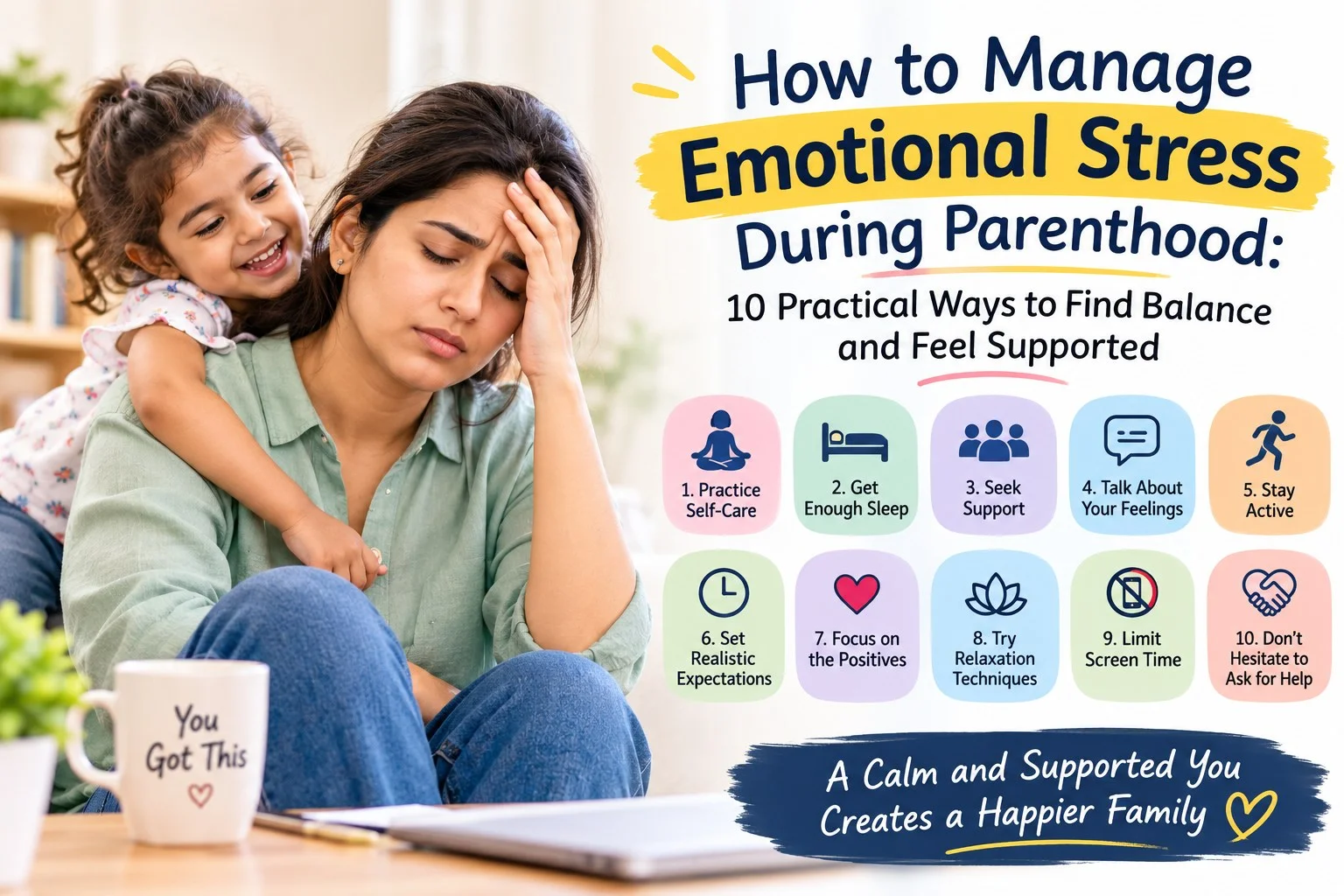
10 Practical Ways to Manage Emotional Stress During Parenthood
1. Let go of the idea of the “perfect parent”
Much of the stress comes from an invisible standard: the parent who is always patient, never tired, cooks fresh meals and has an organised home. That person doesn’t exist. What you see online is a few good moments, not the whole day.
Children don’t need a flawless parent. They need one who is present, loving and willing to say sorry when things go wrong. Good enough really is good enough.
Try this: At the end of the day, name one thing you did well as a parent, however small. It trains your mind to notice more than your mistakes.
2. Protect your sleep as much as you can
Sleep and mood are closely linked. When you’re short on rest, everything feels bigger: small problems seem huge, and patience runs out faster.
You can’t always control a baby’s sleep, but you can often improve your own. If you have a partner or family member nearby, split night duties so each of you gets a longer stretch of rest. Nap when your child naps, at least some days, even if the dishes are waiting. Keep your phone away from the bed so you don’t lose half an hour to scrolling.
The dishes will still be there. Your energy is more important.
3. Say yes to help (and ask for it)
Many parents struggle to ask for help because they feel they should manage alone. But raising children was never meant to be a one-person job.
Be specific. “Can you help me?” is vague. “Can you take the kids for two hours on Saturday morning?” or “Could you pick up groceries on your way?” is easy to say yes to.
If a grandparent, sibling, friend or neighbour offers, accept. If nobody does, ask. People often want to help but don’t know how.
4. Make small pockets of time just for you
Long breaks might not be realistic right now, and that’s okay. Ten or fifteen minutes can still matter.
It could be a cup of tea you drink while it’s still hot, a short walk around the block, a few pages of a book, or sitting quietly on the balcony. Choose something that’s purely for you and doesn’t need to be productive.
This isn’t selfish. A parent who gets small moments to recharge usually has more patience and warmth to give back.
5. Talk openly with your partner
When both people are tired, small things turn into arguments. Who handled the last night waking? Who always remembers the school forms? Resentment can build quietly.
Set aside a few minutes each week to talk, not in the middle of a tantrum or at midnight. Share how you’re really feeling, and divide tasks in a way that feels fair, not just equal on paper. Appreciation helps too. A simple “thank you for handling today” goes a long way.
If you’re a single parent, find at least one person you can regularly check in with, even if it’s only a phone call.
6. Build a routine, but stay flexible
Predictable routines help children feel secure, and they take a lot of decision-making off your plate. Regular meal times, a simple bedtime ritual and a loose daily rhythm can reduce chaos.
But don’t turn routine into another source of pressure. Some days will fall apart because of illness, a missed nap or a bad mood. When that happens, adjust and move on. A flexible routine serves you. A rigid one stresses you.
7. Cut down the comparison
Parent WhatsApp groups, Instagram reels and well-meaning relatives can make you feel you’re falling behind. Is your child talking early enough? Eating enough? Doing enough activities?
Every child develops at their own pace, and every family has different circumstances. If certain accounts or groups leave you feeling worse, mute or leave them. Choose a few trusted sources, such as your child’s doctor, and ignore the rest of the noise.
Ask yourself: is this advice helping me, or just making me anxious?
8. Move your body, even a little
You don’t need a gym membership or an hour to spare. Light movement helps release tension and can lift your mood.
Take the stroller for a walk. Dance around the living room with your toddler. Stretch for five minutes before bed. Do a short home workout while your child plays nearby.
Little and often works better than waiting for the perfect time.
9. Learn to calm yourself in the heat of the moment
Every parent loses their cool sometimes. What helps is having a few tools ready for when stress spikes.
- Take a slow breath in for four counts and out for six, a few times
- Step into another room for a minute if your child is safe
- Splash cold water on your face
- Say to yourself, “This is hard, but it will pass”
If you do lose your temper, you can repair it afterwards. Telling your child “I got upset and I’m sorry” teaches them how to handle big feelings too.
10. Seek support when stress feels too heavy
Sometimes, tiredness and worry go beyond what rest and routines can fix. If you’ve been feeling persistently low, anxious, hopeless or emotionally numb for more than a couple of weeks, or if you feel you can’t cope, please don’t wait it out.
Talking to a counsellor or mental health professional can help you understand what you’re feeling and find ways to cope. Many parents find that having a safe space to speak honestly, without judgement, makes a real difference. Online counselling can be especially convenient when leaving the house is hard.
If you ever have thoughts of harming yourself or your child, or feel unsafe, contact a doctor, a trusted person or your local emergency helpline immediately.
Asking for help doesn’t mean you’re a weak parent. It means you’re taking care of the person your child relies on most.
Healthy Stress vs Stress That Needs Attention
If most of your experiences fall in the right-hand column, consider speaking to a professional.
Parenting Stress at Different Stages
New parents (0 to 1 year): Sleep loss, feeding worries and recovery after birth dominate this phase. Accept help, lower your expectations and rest when you can.
Toddler years: Tantrums, safety worries and endless energy can be draining. Focus on routine, patience and short breaks for yourself.
School-age children: Homework, school pressure, activities and friendships add new responsibilities. Keep communication open and avoid overscheduling.
Teenage years: Arguments, privacy issues and worry about their choices can bring a different kind of stress. Listen more than you lecture, and pick your battles.
At every stage, the goal is the same: look after your own wellbeing so you can show up for your child.
Frequently Asked Questions
1. Is it normal to feel overwhelmed as a parent? Yes. Almost every parent feels overwhelmed at some point. The combination of responsibility, tiredness and lack of personal time makes it very common. What matters is noticing it and responding with support, not self-blame.
2. How can I manage stress with a newborn? Sleep when you can, accept practical help, and keep your expectations low in the early months. Share night duties if possible, and talk openly with your partner or someone you trust about how you’re coping.
3. What’s the difference between parental stress and postpartum depression? Stress usually improves when circumstances ease or you get rest and support. Postpartum depression involves deeper, longer-lasting sadness, anxiety or numbness that interferes with daily life. If you’re unsure, speak to your doctor or a mental health professional.
4. Can fathers experience emotional stress too? Absolutely. Fathers can feel pressure about finances, work and their role in the family, and they sometimes hide their feelings. Their wellbeing matters just as much.
5. How do I find time for myself when I have small children? Start with very small moments, like ten minutes of quiet or a short walk. Ask your partner or family to cover a regular slot each week, and treat that time as important, not optional.
6. Does feeling stressed mean I’m a bad parent? Not at all. Stress is a sign that you’re carrying a lot. Good parents get tired, frustrated and overwhelmed. What counts is how you care for yourself and repair the hard moments.
7. When should I consider counselling? Consider it if stress is affecting your sleep, mood, relationships or daily functioning for more than a couple of weeks, or if you feel stuck or unable to cope. A counsellor can offer practical tools and a supportive space to talk.
Final Thoughts
Mental Health Support - Parenthood will stretch you in ways you didn’t expect. Some days you’ll feel proud and full of love, and other days you’ll feel tired and unsure. Both are part of the same journey.
You don’t have to fix everything at once. Pick one idea from this list, whether that’s asking for help, taking a short walk or talking to your partner, and try it this week.
You’re not expected to do this perfectly. You’re expected to do it with care, and that includes caring for yourself. When you feel supported, your children feel it too.
And if the stress feels bigger than you can handle alone, reaching out for professional emotional support can be a good first step toward feeling like yourself again.







 (1) (1).webp)