Sign up with Google
 Sign in with Zoho

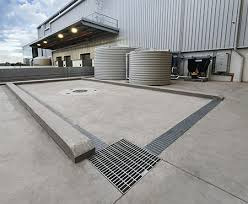
There is a moment in every wash bay project where someone looks at the drainage plan and says, "It's just a drain. How complicated can it be?" That sentence has caused more compliance headaches, budget blowouts, and rejected council applications than almost any other assumption in commercial construction.
Wash bay drainage is not just a drain. It is a complete water management system that sits at the intersection of plumbing engineering, environmental regulation, stormwater law, and site-specific civil design. Get it right and your wash bay runs clean, complies with every authority requirement, and costs you nothing in ongoing fines or retrofits. Get it wrong and you are looking at contaminated stormwater entering the council system, failed inspections, and a bill to rip up and redo work that should have been done properly the first time.
This article walks through how wash bay drainage actually works, what decisions matter most, and where operators and builders tend to go wrong.
Start With What You Are Washing — Because It Changes Everything
The first question a drainage engineer should ask is not about pipe sizes or gradient. It is: what is being washed here, and what is coming off it?
A truck wash bay dealing with vehicles that have been on mine sites is going to carry very different contaminants compared to a bay washing food delivery vehicles or rental cars. Diesel, hydraulic fluid, heavy metals, suspended solids, chemical degreasers, and high-pressure detergent all behave differently in a drainage system. Some require settlement. Some require chemical separation. Some require pH neutralisation before discharge. Many require a combination of all three.
The nature of the wash process matters just as much as the vehicle type. High-pressure washing dislodges contaminants that low-pressure rinsing leaves sitting on a surface. Steam cleaning introduces temperature considerations. Detergent-heavy wash programs produce a foam load that can overwhelm an undersized separator if it has not been factored into the design.
None of this is guesswork — it is engineering. But it starts with asking the right question before a single dimension goes on a drawing.
The Floor Is the First Part of the Drainage System
Most people think about drainage as the pipes and pits that sit underneath the floor. In reality, the floor surface itself is the first and most important element of any wash bay drainage system.
Floor gradient determines where water goes and how fast it gets there. A flat floor does not drain — it pools. Pooling water means longer wet times, slip hazards, bacterial growth in drainage channels, and sediment accumulation that blocks your pits. The industry standard for wash bay floors typically sits between 1.5% and 3% fall toward the collection point, with steeper gradients applied in high-volume or heavy sediment applications.
The collection point — whether a central floor drain, a perimeter channel, or a combination of both — needs to be positioned based on how the bay is actually used. Where does the vehicle sit? Which direction does runoff travel when the pressure washer is working the undercarriage versus the sides? A drain positioned for aesthetic symmetry rather than actual water flow behaviour is one of the most common and most frustrating design errors on real projects.
Channel drains versus pit drains is a genuine engineering choice, not just a preference. Linear channel drains along the bay perimeter or centreline tend to perform better in wide bays and those with high flow rates because they collect water across a longer plane rather than relying on everything funnelling to a single low point. Pit drains are often more cost-effective in smaller or single-vehicle bays where flow can be directed cleanly to one location.
Bunding — the raised edge or kerb that contains wash water within the bay — is not optional. It is both a regulatory requirement in most jurisdictions and a functional necessity. Bunding prevents contaminated wash water from spreading beyond the bay perimeter before it reaches the drainage system. The height and construction of bunding depends on wash volume, vehicle size, and local authority requirements, but the principle is the same everywhere: nothing leaves the bay until it has gone through the treatment system.
Oil-Water Separators: Selecting the Right One for Your Load
In virtually every commercial and industrial wash bay application, some form of hydrocarbon separation is required before water can be discharged to sewer or stormwater. The oil-water separator is the workhorse of wash bay drainage, and selecting the wrong one is one of the most expensive mistakes an operator can make.
There are two broad categories in common use: gravity separators and coalescing plate separators. Gravity separators work on the principle that hydrocarbons are less dense than water and will rise to the surface given enough residence time. Coalescing plate separators use engineered surface area to accelerate this process, allowing for a smaller unit footprint with equivalent or better performance.
The selection between them — and the sizing of whichever is chosen — depends on peak flow rate, influent oil concentration, temperature of the water, presence of detergents, and the discharge standard required by the local authority. That last point is critical. Different councils and water authorities set different maximum hydrocarbon concentrations for trade waste discharge, and your separator needs to reliably meet that standard under worst-case operating conditions, not just average ones.
A separator sized for average flow will be overwhelmed during a busy wash period, sending partially treated water into the drainage system and putting you in breach of your trade waste agreement. Size for peak, not average. This is not overengineering — it is basic operational insurance.
Maintenance access is a design consideration that gets left out of too many drawings. An oil-water separator that cannot be pumped out and inspected easily will not be maintained properly. Poor maintenance means reduced performance, which means non-compliance, which means fines. Design the access points, the vehicle access for pump-out trucks, and the maintenance schedule into the system from the beginning.
Silt and Sediment — The Problem Nobody Talks About Enough
Oil gets a lot of attention in wash bay drainage design. Sediment gets far less, which is curious because sediment is often the primary cause of system blockages and equipment failures.
Vehicles coming off construction sites, agricultural operations, or unsealed roads carry extraordinary amounts of silt, clay, sand, and organic material. When high-pressure washing dislodges this material, it enters the drainage system as a slurry that will settle in the first low-velocity zone it encounters — which, if your system is not designed to handle it, will be inside your oil-water separator or your drainage pipes.
Sediment traps and silt pits upstream of the oil-water separator are not optional extras in high-sediment applications. They are the reason the rest of the system keeps working. A well-designed sediment trap captures the bulk of particulate load before it reaches the separator, dramatically extending pump-out intervals and maintaining separator performance.
The design of sediment collection — pit dimensions, flow velocity through the trap, access for cleanout — requires the same engineering rigour as every other part of the system. A trap that is too small fills quickly and becomes ineffective. One that is difficult to clean will not be cleaned.
Connecting to the Right Discharge Point
Where the treated water from a wash bay goes is determined by local authority regulations, and those regulations vary significantly between councils and states. The two options are typically trade waste sewer discharge under a trade waste agreement, or treated water recycling on site.
Trade waste agreements set specific conditions on what you can discharge, including volume limits, chemical parameters, and pH ranges. Meeting those conditions is the operator's responsibility, which is why the treatment system upstream needs to be designed to reliably achieve the required standard.
Water recycling systems — where treated wash water is captured, further filtered, and reused in the wash bay — are becoming more common as water costs rise and environmental expectations increase. A well-designed recycling system can recover the majority of wash water for reuse, significantly reducing operating costs and discharge volumes. These systems require additional treatment stages beyond the standard oil-water separator, but in high-volume operations the economics usually justify the investment within a few years.
Pulling the Design Together
Good wash bay drainage design is not a collection of separate decisions — it is an integrated system where each component is sized and positioned in relation to the others. The floor gradient feeds the collection channel. The collection channel feeds the sediment trap. The sediment trap feeds the separator. The separator discharges to sewer or recycling under the conditions set by the authority.
Every connection in that chain matters. A well-sized separator with an undersized inlet pipe will still underperform under peak load. A correct floor gradient that feeds into an incorrectly positioned drain will still pool. Integration is everything.
The most reliable way to get that integration right is to work with specialists who have designed wash bay drainage systems across a range of vehicle types, site conditions, and council jurisdictions. Not because the principles are mysterious — they are not — but because the combinations of variables are specific enough that experience genuinely shortens the time between first design and final sign-off.
Wash bay drainage is a system. Treat it like one from the first conversation, and the rest of the project will be considerably easier.