Sign up with Google
 Sign in with Zoho

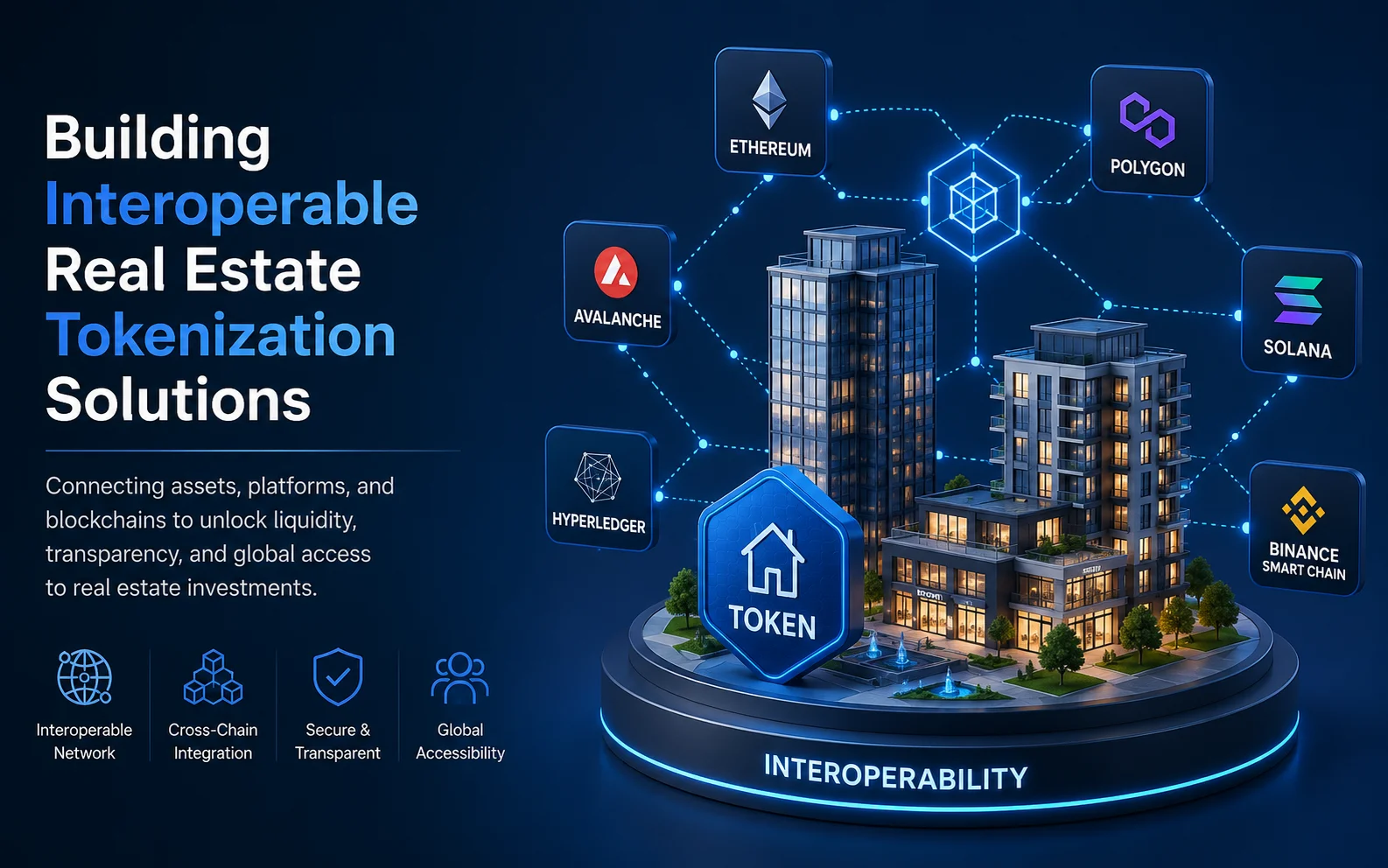
Real estate investment is gradually moving toward digital ownership models that offer greater accessibility and operational efficiency. As organizations and investors adopt blockchain-based property platforms, there is an increasing need for systems that work well across different blockchain networks, financial ecosystems, and regulatory environments. This is where interoperability becomes an important consideration.
Interoperability refers to the ability of different platforms, applications, and blockchain networks to exchange information and assets without unnecessary complexity. In the context of Real Estate Tokenization, interoperability helps digital property tokens move across multiple ecosystems while maintaining ownership records, compliance requirements, and transaction history. Businesses that invest in interoperable solutions can support wider investor participation, improve liquidity opportunities, and simplify asset management across jurisdictions.
This article explains why interoperability matters, the technologies behind it, architectural considerations, implementation methods, and future opportunities for businesses planning long-term digital real estate initiatives.
Understanding Interoperability in Real Estate Tokenization
Interoperability is the capability of different blockchain networks and software systems to communicate with one another. Instead of operating as isolated environments, interoperable platforms exchange information securely while maintaining consistency.
In real estate, tokenized assets often involve several participants including property owners, investors, legal firms, financial institutions, custodians, exchanges, and regulators. These parties may use different blockchain infrastructures and software platforms.
Without interoperability, transferring digital property assets between these systems becomes complicated. Organizations may face duplicated records, manual verification processes, and additional administrative work.
Modern real estate tokenization development focuses on reducing these limitations by creating systems capable of interacting with multiple blockchain environments.
Why Interoperability Matters for Digital Property Markets
Real estate has traditionally been fragmented because different countries, legal systems, and financial institutions operate independently. Digital asset ecosystems face similar fragmentation when multiple blockchain networks cannot communicate.
Interoperable solutions create better cooperation between these environments.
Some practical advantages include:
- Cross-network asset transfers
- Easier investor participation
- Consistent ownership records
- Better compliance management
- Improved secondary market activity
- Simplified property management
- Reduced operational duplication
Organizations planning long-term digital property initiatives often prioritize interoperability during the planning phase rather than adding it later.
Components of an Interoperable Tokenization Platform
Successful Real Estate Tokenization Platform Development combines multiple technical components that work together without depending entirely on one blockchain.
Multi-Chain Infrastructure
Many organizations no longer rely on a single blockchain. Instead, they use multiple public and private networks depending on transaction volume, compliance needs, or operational requirements.
A multi-chain architecture provides flexibility for different business scenarios while reducing dependency on one ecosystem.
Digital Identity Systems
Every investor participating in tokenized property markets must complete identity verification.
Interoperable identity systems allow verified users to participate across multiple platforms without repeating verification procedures every time they access another marketplace.
Smart Contract Compatibility
Property tokens rely heavily on smart contracts for ownership transfers, income distribution, governance, and compliance.
Compatibility between contract standards allows digital assets to function consistently across supported blockchain networks.
Compliance Frameworks
Property investments involve legal obligations that differ by region.
Interoperable compliance systems coordinate investor eligibility, KYC, AML verification, and ownership restrictions regardless of the blockchain being used.
Methods for Building Interoperable Real Estate Tokenization Solutions
Method 1: Select Blockchain Networks with Interoperability Support
The foundation of interoperability begins with selecting blockchain networks capable of communicating through established protocols.
Businesses should evaluate:
- Cross-chain communication
- Smart contract compatibility
- Network security
- Developer ecosystem
- Long-term adoption
- Transaction efficiency
Choosing networks with active interoperability initiatives reduces future integration challenges.
Method 2: Standardize Digital Asset Structures
Consistency becomes important when property tokens move between systems.
Organizations should standardize:
- Property metadata
- Ownership information
- Compliance attributes
- Transaction records
- Income distribution rules
Standardization reduces compatibility issues across exchanges, custodians, and marketplaces.
Method 3: Develop Cross-Platform APIs
Application Programming Interfaces connect external systems with tokenization platforms.
Examples include:
- Property databases
- Banking applications
- Investment portals
- Legal document management
- Government registration systems
- Digital wallet providers
Well-designed APIs simplify communication between multiple software environments.
Method 4: Integrate Cross-Chain Bridges Carefully
Cross-chain bridges allow digital assets to move from one blockchain network to another.
Since bridges handle valuable assets, careful planning is necessary.
Organizations should evaluate:
- Security practices
- Audit history
- Network compatibility
- Transaction verification
- Recovery mechanisms
- Monitoring systems
Selecting mature bridge technologies helps reduce operational risks.
Method 5: Adopt Universal Identity Verification
Investor onboarding often becomes repetitive across multiple investment platforms.
Universal digital identity solutions reduce duplicate verification processes while maintaining regulatory compliance.
Identity interoperability benefits:
- Faster onboarding
- Better user experience
- Consistent investor records
- Reduced administrative work
- Easier compliance monitoring
These systems become increasingly valuable as tokenized property markets expand internationally.
Method 6: Connect Existing Enterprise Systems
Many real estate firms already use property management software, accounting systems, CRM platforms, and legal databases.
Rather than replacing existing infrastructure, interoperable solutions connect these systems through integration layers.
Examples include:
- ERP platforms
- Property management software
- Accounting applications
- CRM solutions
- Investor portals
- Document management systems
This approach minimizes operational disruption during implementation.
Method 7: Design Flexible Governance Models
Interoperability involves multiple organizations sharing responsibility.
Governance policies should define:
- Ownership updates
- Compliance reviews
- Voting procedures
- Network participation
- Dispute resolution
- Asset migration policies
Documented governance reduces confusion among participating organizations.
Security Considerations for Interoperable Platforms
Connecting multiple systems increases technical complexity, making security planning even more important.
Organizations should pay attention to:
Smart Contract Audits
Independent reviews help identify coding issues before deployment.
Identity Protection
Sensitive investor information requires secure storage and controlled access.
Asset Monitoring
Continuous monitoring helps identify unusual transactions and suspicious activity.
Access Management
Role-based permissions reduce unnecessary access to administrative functions.
Disaster Recovery
Organizations should maintain recovery plans covering data backups, infrastructure failures, and unexpected incidents.
Compliance Across Multiple Jurisdictions
Real estate investments often involve participants from different countries.
Interoperable platforms should accommodate regional regulations without creating separate systems for every jurisdiction.
Areas requiring attention include:
- Investor verification
- Securities regulations
- Tax reporting
- Property ownership laws
- Data privacy requirements
- Transaction reporting
Legal teams should participate throughout development rather than only during final deployment.
Benefits for Investors
Investors gain several practical advantages when interoperable tokenization platforms operate efficiently.
These include:
- Access to broader property portfolios
- Participation across multiple marketplaces
- Simplified portfolio management
- Consistent ownership records
- Reduced administrative delays
- Better asset mobility
- Improved investment flexibility
These benefits contribute to greater confidence in digital property ownership.
Benefits for Property Owners
Property owners also experience operational improvements.
Interoperable platforms support:
- Wider investor participation
- Simplified fundraising
- Easier ownership distribution
- Better record management
- Faster reporting
- Improved asset administration
These capabilities support both residential and commercial property offerings.
Role of a Professional Development Partner
Developing interoperable platforms requires expertise across blockchain engineering, security, legal compliance, software integration, and property management.
An experienced Real Estate Tokenization company understands how these components work together throughout the project lifecycle.
A professional Real Estate Tokenization Development company generally assists with:
- Business analysis
- Blockchain architecture
- Smart contract development
- Compliance planning
- Security assessments
- Platform integration
- Testing
- Deployment
- Ongoing maintenance
Working with experienced development teams helps organizations reduce implementation challenges while preparing for future market growth.
Future Outlook
Interoperability is expected to become a standard expectation rather than an optional feature. As more financial institutions, governments, exchanges, and investment platforms participate in digital property markets, organizations will increasingly require systems capable of communicating across different blockchain environments.
Future developments may include wider adoption of common token standards, stronger regulatory cooperation, broader institutional participation, and improved compatibility between public and private blockchain networks. Businesses planning Real Estate Tokenization Development Services today are likely to benefit from architectures that support future integration instead of relying on isolated ecosystems.
Conclusion
Building interoperable solutions is becoming an important consideration for organizations entering digital property markets. Systems that communicate across multiple blockchain networks, financial platforms, and compliance frameworks provide greater flexibility for investors and property owners while reducing operational complexity. Careful planning, standardized asset structures, secure integrations, and thoughtful governance contribute to long-term platform success. Businesses looking to establish reliable digital property ecosystems should work with experienced technology partners who understand both blockchain and real estate requirements. Blockchain App Factory provides Real Estate Tokenization Services, supporting organizations with planning, development, integration, compliance, and deployment for modern real estate tokenization platforms.
FAQs
1. What is interoperability in real estate tokenization?
Interoperability refers to the ability of different blockchain networks, software platforms, and financial systems to exchange tokenized real estate assets and related information without compatibility issues.
2. Why is interoperability important for real estate asset tokenization?
It allows investors, property owners, exchanges, and financial institutions to interact across multiple platforms, reducing operational barriers and improving asset accessibility.
3. How does Real Estate Tokenization Platform Development support interoperability?
It incorporates multi-chain architecture, standardized token structures, API integrations, digital identity systems, and compliance mechanisms that work across different blockchain environments.
4. What challenges do companies face when developing interoperable tokenization platforms?
Common challenges include cross-chain compatibility, regulatory differences, smart contract consistency, security risks, identity management, and integration with existing enterprise systems.
5. Why should businesses work with a Real Estate Tokenization Development company?
An experienced development partner can assist with blockchain architecture, smart contract implementation, compliance planning, security reviews, system integration, and ongoing platform support, helping organizations create reliable interoperable solutions.





.webp)