Sign up with Google
 Sign in with Zoho

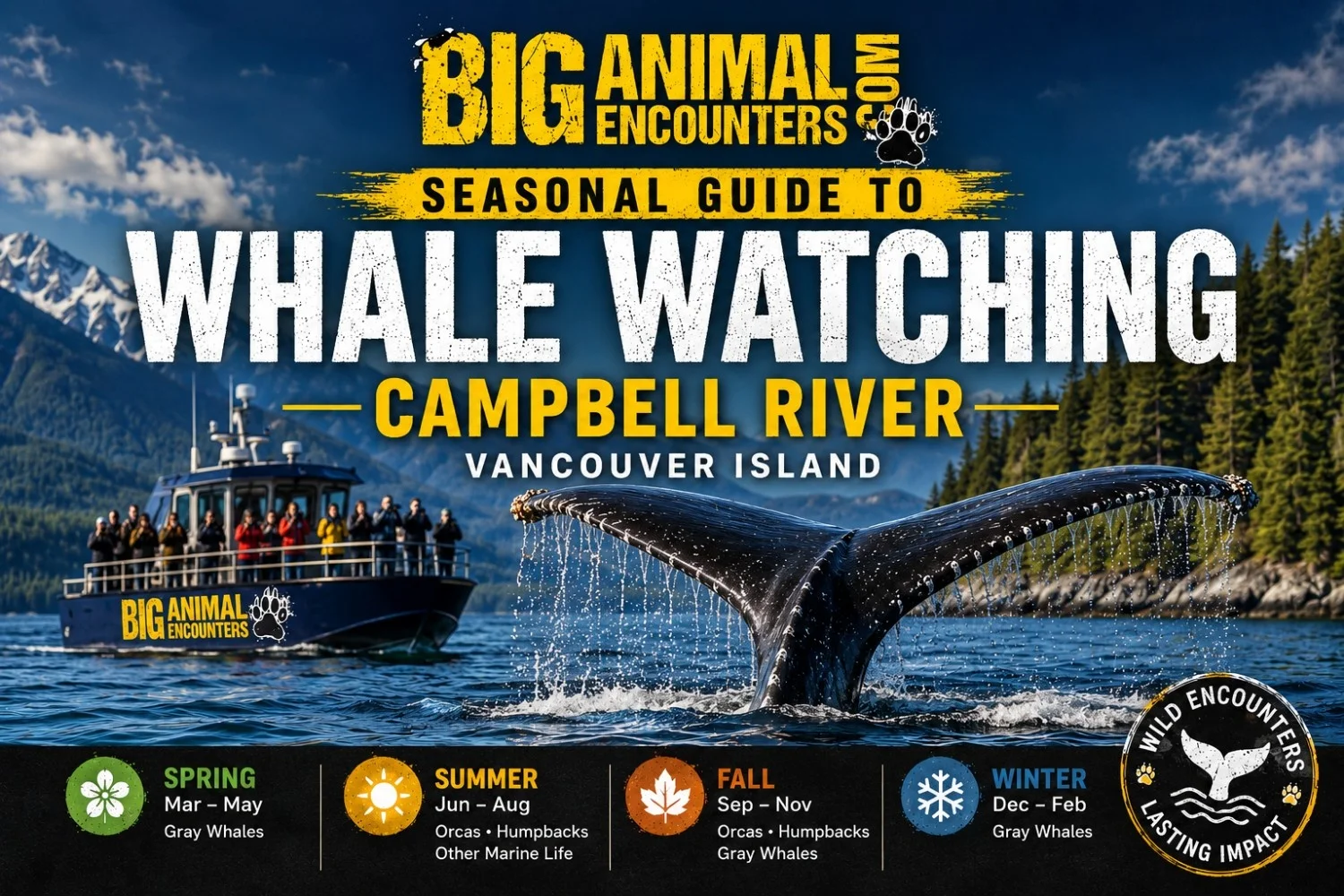
You stand on the dock. Cold air. Quiet water.
Then a blow. A whale surfaces.
This is what Whale Watching Campbell River feels like.
Campbell River sits on Vancouver Island. It’s one of the best spots in the world for whale sightings. Not luck. Consistency.
Big Animal Encounters runs tours here year-round. They know the patterns. They know where to go.
If you plan a trip, timing matters.
Spring Season. Early Action Starts
March to May
The season begins quietly. Then it builds.
You start seeing:
- Gray whales moving north
- Humpbacks returning
- Sea lions and seals active
Water is calmer. Crowds are low.
A typical tour sees at least one whale species. Sightings improve each week.
If you want fewer boats around you, this is your window.
Big Animal Encounters tracks early migration routes. That gives you a strong chance even at the start of the season.
Summer Season. Peak Whale Activity
June to August
This is the busiest time. For a reason.
You get:
- Resident orca pods
- Transient orcas hunting
- Humpback whales feeding daily
Sightings are high. Some tours report success rates above 90 percent.
You also see:
- Dolphins
- Bald eagles
- Bears along the shoreline
Weather is warmer. Water is steady.
Expect more boats. Book early.
Whale Watching Campbell River peaks in summer. If you want action, this is it.
Big Animal Encounters schedules multiple daily tours. Morning trips often get calmer water.
Fall Season. Strong Sightings, Fewer Crowds
September to October
Things slow down. Not the whales.
You still see:
- Orcas in hunting mode
- Late-season humpbacks
- Migrating species passing through
Tour boats reduce. Experience feels more personal.
Weather shifts. Some rough days. Still manageable.
A fall tour often feels quieter. More focused.
Big Animal Encounters adjusts routes based on late-season feeding zones. That keeps sightings consistent.
Winter Season. Raw and Real
November to February
Not everyone goes out in winter. That’s why it stands out.
You may see:
- Big transient orca pods
- Sea lions in large groups
- Stormy ocean scenes
Fewer tours run. Conditions change fast.
But when whales show up, it’s intense.
You get more time with them. Less traffic.
Whale Watching Campbell River in winter is not for everyone. But if you want a different experience, it delivers.
Big Animal Encounters only runs when conditions are safe. Safety always comes first.
What You Should Bring
Preparation matters.
Carry:
- Warm layers, even in summer
- Waterproof jacket
- Sunglasses
- Camera or phone with zoom
It gets cold on the water. Wind cuts through fast.
Stay ready.
Best Time of Day
Morning trips often work better.
Why:
- Water is calmer
- Visibility is clearer
- Wildlife is more active
Afternoon tours still work. But mornings give you an edge.
Big Animal Encounters offers flexible timing. Ask what works best during your visit.
Why Choose Big Animal Encounters
Experience matters here.
Big Animal Encounters offers:
- Local guides with real tracking knowledge
- Smaller group sizes
- Fast, stable boats
They don’t guess. They track movement daily.
That improves your chances.
Many visitors return for a second tour. That says a lot.
Tips to Improve Your Trip
You want results. Follow this.
- Book early in peak season
- Choose morning tours when possible
- Listen to your guide
- Stay patient on the water
Whales move. Timing matters.
Good operators like Big Animal Encounters adjust fast.
Final Thoughts
Whale Watching Campbell River gives you real wildlife encounters. No staged moments. No guarantees. But strong odds.
Each season brings something different.
Pick your timing based on what you want:
- Quiet experience. Go in spring or fall
- High action. Go in summer
- Raw conditions. Try winter
Plan well. Dress right. Choose the right team.
Big Animal Encounters helps you get the most out of your time on the water.
That’s what makes the trip worth it.






 🌎🔒#gdupco.webp)