Sign up with Google
 Sign in with Zoho
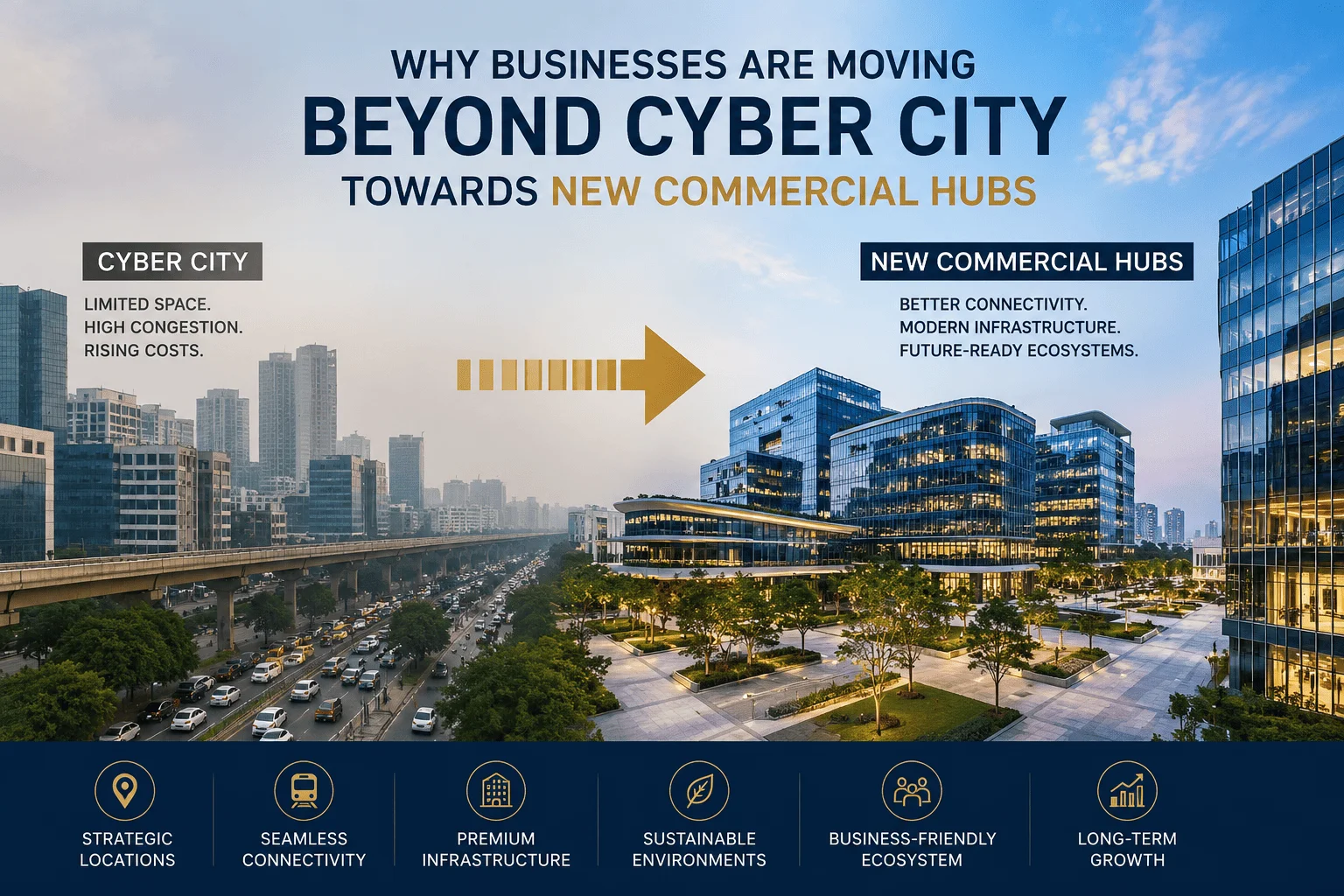
For decades, Cyber City in Gurugram stood as the undisputed crown jewel of corporate real estate in the Delhi NCR region. Its glass towers became synonymous with India's IT boom, multinational ambitions, and the rise of a new professional class. But something has quietly shifted. Walk through the corridors of India's corporate decision-makers today, and a clear pattern emerges: businesses are actively looking beyond Cyber City and gravitating towards newer, more thoughtfully designed commercial hubs spread across the region.
This is not a rejection of Cyber City's legacy. It is a natural evolution, driven by a convergence of infrastructure maturation, changing workforce expectations, rising occupancy costs, and a growing demand for environments that do more than just provide a desk.
The Saturation Problem
Cyber City's appeal was never just about office space. It was about proximity, prestige, and the network effects that come from having your offices surrounded by other leading firms. Over time, however, that density became a liability. Congestion on the arterial roads, limited parking, sky-high rentals, and a homogenous built environment have made Cyber City a challenging proposition for businesses rethinking their real estate strategy.
Companies, particularly those that scaled rapidly during the post-pandemic period, found themselves weighing the brand equity of a Cyber City address against the practical costs of operating there. For many, the math no longer favoured staying put.
Infrastructure Is Reshaping Accessibility
One of the most compelling reasons businesses are exploring new commercial corridors is the dramatic improvement in infrastructure across Gurugram and the broader NCR. The expansion of the Delhi Metro network, improved expressway connectivity, and the development of peripheral road networks have made locations that were once considered inconvenient deeply accessible.
Sectors along the Southern Peripheral Road, Golf Course Extension Road, and the Dwarka Expressway now offer connectivity that rivals, and in some cases surpasses, what Cyber City can offer. Employees are no longer forced to converge on a single choke point. This geographic diversification of accessibility has been transformative for how businesses think about office location.
The Rise of Mixed-Use Commercial Destinations
Modern businesses are not simply looking for office floors. They want environments that integrate work, retail, dining, and lifestyle into a single, walkable precinct. This demand has fuelled the growth of mixed-use commercial developments that offer a fundamentally different experience from standalone office towers.
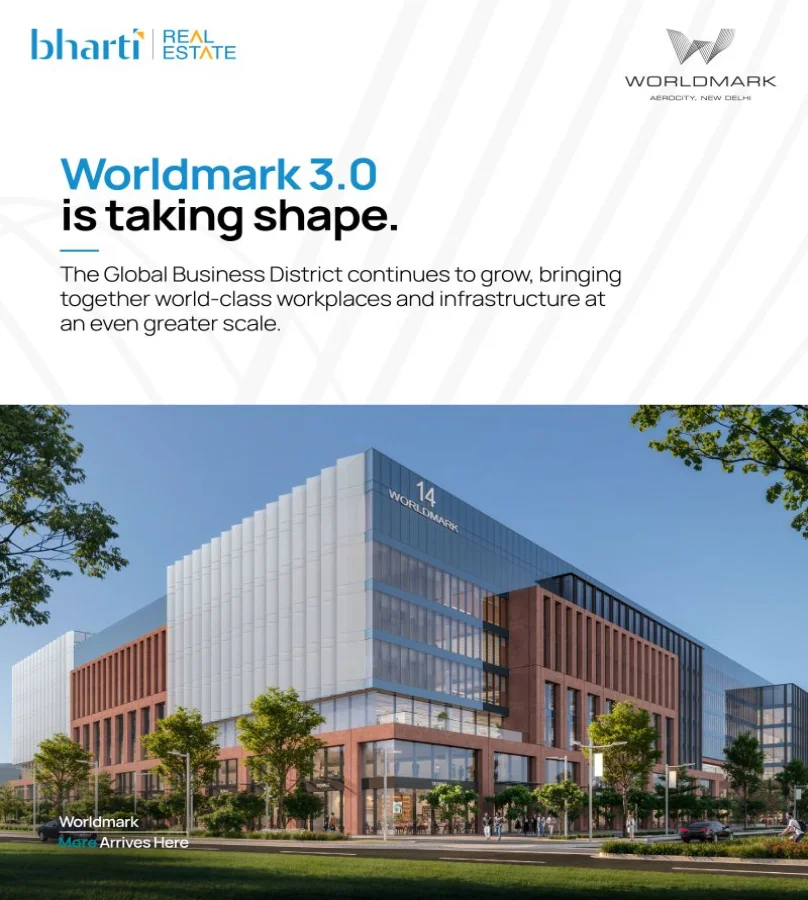
Worldmark Gurugram, developed by Bharti Real Estate in Sector 65, is a strong example of this shift in action. Spread across approximately 7 acres and housing over 75 tenants across half a million square feet of office space and 270,000 square feet of retail, the development brings together a diverse ecosystem of corporate occupiers, retail anchors, dining destinations, and entertainment options under one address. Tenants including Philips, Nissan, Halliburton, Hamleys, Starbucks, and an INOX multiplex reflect the breadth of the mixed-use model's appeal.
This kind of integrated environment serves a purpose beyond convenience. It makes the workplace a destination rather than an obligation. It supports talent retention in an era where employees have more leverage over where and how they work.
Talent Strategy and Location
The relationship between office location and talent acquisition has never been more direct. As hybrid work models have become standard across sectors, employees are making clear that when they do come into the office, the experience should justify the commute. A sterile tower block with few amenities nearby does not clear that bar.
New commercial hubs, by contrast, are being designed with employee experience as a primary brief. Green buffers, integrated F&B options, health and fitness facilities, and proximity to residential catchments are now considered essentials, not extras. Businesses that have relocated to or leased space in these newer developments consistently report improvements in employee satisfaction and, consequently, in talent retention metrics.
Sector 65 and the New Gurugram
Sector 65 and the surrounding corridors have emerged as one of the most dynamic commercial zones in the NCR. The area benefits from relatively uncongested road access, proximity to established residential neighbourhoods, and a concentration of premium developments that create their own gravitational pull for businesses.
Worldmark Gurugram sits at the heart of this emerging corridor. Designed by ARCOP and Capasite and completed in 2019, the development's intelligent design, integrated energy management systems, and best-in-class security infrastructure represent a new benchmark for what commercial real estate in the NCR can look like. The fact that it now attracts corporate giants alongside premium retail and entertainment brands speaks to the maturity of the mixed-use model it pioneered in this part of the city.
Sustainability as a Business Imperative
Another powerful driver pushing businesses towards newer commercial hubs is the growing emphasis on sustainability and green credentials. Corporate occupiers, particularly multinationals with global ESG commitments, are increasingly mandating that their offices meet specific environmental standards. Many older Cyber City buildings simply cannot meet these standards without prohibitively expensive retrofits.
Newer developments, built from the ground up with sustainability as a design principle, offer LEED certifications, energy management systems, waste management protocols, and green cover that older stock cannot match. For businesses with ESG reporting obligations, this is no longer a nice-to-have. It is a procurement requirement.
Cost Rationalisation Without Compromise
There is a widespread assumption that moving away from a marquee address like Cyber City means trading down. The reality, increasingly, is the opposite. Newer hubs in emerging corridors offer Grade-A specifications, superior amenities, and more flexible floor plates at rental values that allow businesses to optimise their real estate costs without compromising on quality or brand positioning.
For startups, mid-sized enterprises, and even large corporations rationalising their real estate footprints, this value proposition is compelling. The combination of lower absolute costs and a superior occupier experience creates a strong case for relocation.
What This Means for Gurugram's Commercial Future
Gurugram's commercial real estate story is entering a new chapter. Cyber City remains significant, but it is no longer the only story. The city is evolving into a polycentric commercial environment where multiple hubs, each with distinct character and catchments, serve different business needs and workforce profiles.
This maturation is healthy. It reflects the growing sophistication of occupiers, the ambition of developers willing to invest in integrated environments, and the infrastructure investments that have made dispersal viable. Businesses that embrace this shift early will find themselves in environments that support growth, attract talent, and align with the values their employees and clients increasingly expect.
For those exploring this new commercial geography, developments like Worldmark Gurugram offer a vivid illustration of where the market is headed. The move beyond Cyber City is not a retreat. It is an advance.