Sign up with Google
 Sign in with Zoho

## Allocation and funding are not the same thing
Two ideas get blurred together, so it helps to separate them.
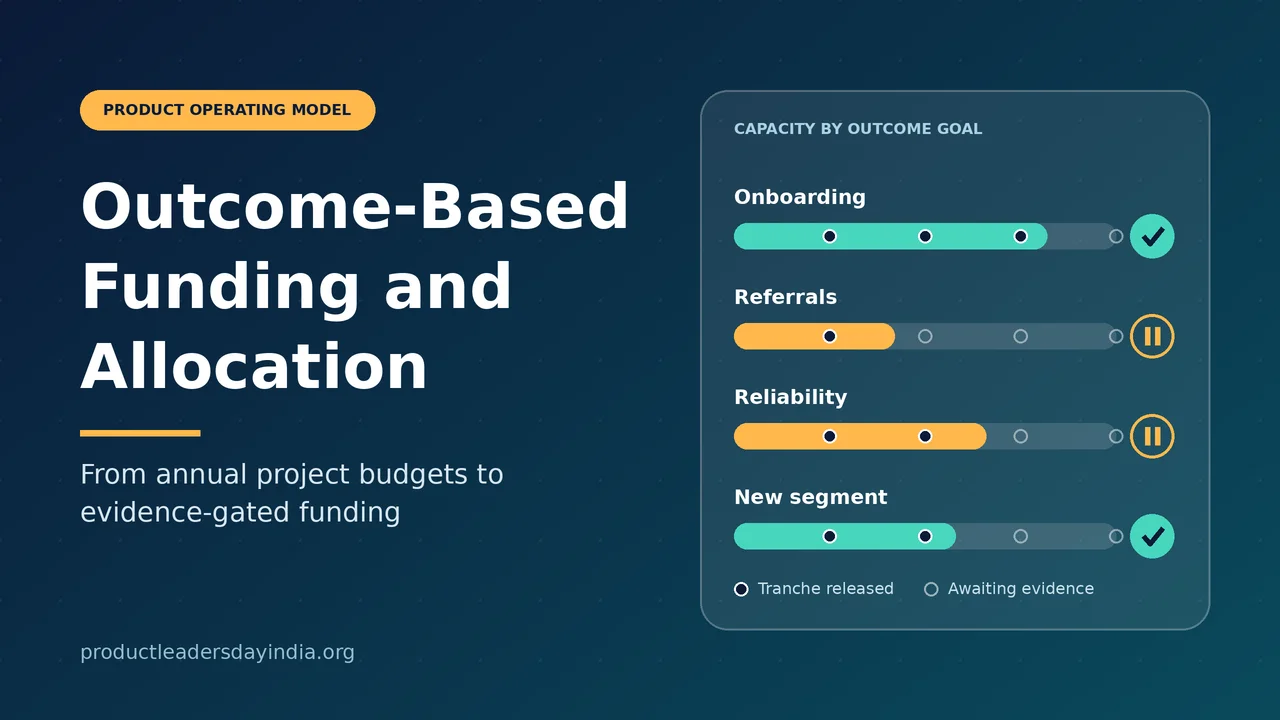
- Outcome-based allocation distributes resources across several outcome goals for the whole portfolio, then compares planned allocation with actual allocation.
- Outcome-based funding releases resources to a single product or initiative over time, based on agreed outcome milestones or metrics.
Allocation is the foundation and funding extends it. Both depend on ongoing collaboration between product leaders, finance and teams, and on good data.
## What has to be true first
Marty Cagan's warning applies directly: moving to outcomes is a consequence of moving to the product model. Many companies layered OKRs on top of output-based roadmap processes, expected change, and rarely got it. The OKR technique assumes teams that can discover solutions and choose how to deliver them. Without that, the key results simply become a delivery plan with new labels.
## A practical five-step sequence
1. Define outcomes that a team can directly influence.
2. Allocate capacity by outcome goal, then compare plan with actual.
3. Instrument the product so you can see whether the outcome moved.
4. Fund in stages, releasing more only when evidence shows progress.
5. Review evidence regularly and adjust.
The second step is where leaders often hesitate. Suppose a product group has four goals: reducing onboarding drop-off, growing referral sign-ups, improving reliability and expanding into a new segment. If referral work was planned at 20% of capacity but discovery shows weak demand, the group can reduce that allocation and pause the next funding tranche. That is a decision made on evidence rather than on who argued loudest.
## Five pitfalls to avoid
- Funding by outcome without discovery, which rewards optimistic claims.
- Outcome metrics nobody can measure, which turn decisions into opinions.
- Releasing or withholding money too quickly, so teams chase short-term numbers.
- Ignoring cross-product work, so shared platforms starve.
- Calling it outcome-based while still approving annual feature lists.
McKinsey's operating-model research lists funding among the capability areas where top and bottom performers differ most. Its advice is to fund teams against measurable goals, make sure those goals can be tracked, and release earmarked money against progress.
## Where to start
Before buying portfolio software, write down your outcomes, baselines and targets, and make sure your products can report on them. Tools help only after those foundations exist.
The full guide includes templates for an outcome brief, a funding release memo and a quarterly review agenda: [Outcome-Based Funding and Allocation: A Practical Guide](https://productleadersdayindia.org/blogs/ai-driven-product-operating-model/outcome-based-funding-and-allocation.html).
*Author: Ayush Bisht, Content Engineer and AI Tools Specialist at AgileWow.*








.webp)