Sign up with Google
 Sign in with Zoho

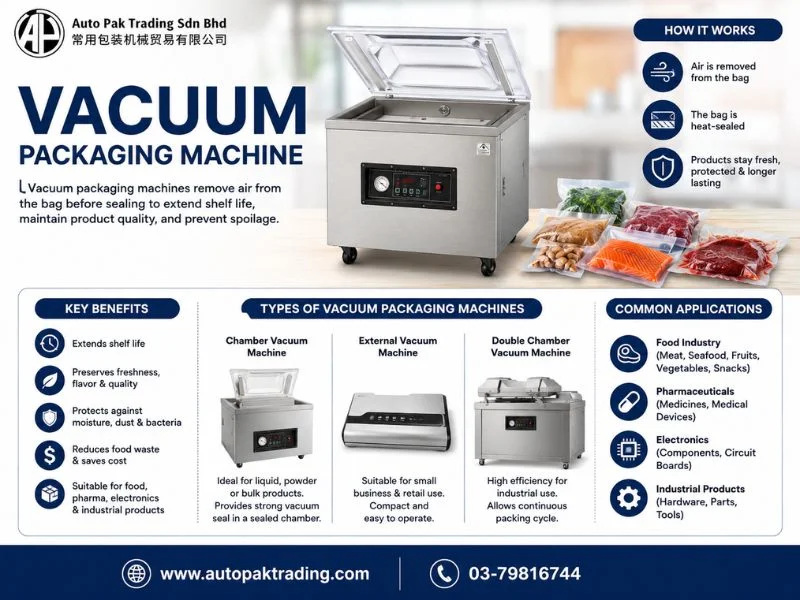
The vacuum packing machine is used to remove the air from the packaging, leaving a tight seal around the food products. This process not only prevents the growth of bacteria, but also prevents the process of oxidation and can give an extended shelf life of 3-5 times as compared to the conventional packaging method in many cases. It also helps to keep food products moist, maintain the texture, colour and nutritional value, and is thus a proven solution for food processors and retailers.
Food spoilage is a stubborn and cost-intensive problem in the food industry. Product loss is revenue loss whether you are a meat processor, a seafood distribution business or a retail food establishment. The vacuum pack machine is a practical and scalable solution to this problem, which will not affect the cleanliness, appearance, or productivity.
Here is a clear breakdown of the key benefits, backed by real-world applications and industry insights.
1. Extended Shelf Life That Reduces Product Waste
Oxygen is the primary driver of food degradation. When you eliminate it from the packaging environment, you dramatically slow down the spoilage process. Vacuum-sealed meats, for example, can remain fresh in refrigeration for up to 21 days, compared to just 3–5 days in standard packaging.
For processed and packaged foods sold through retail channels, this longer shelf life means fewer markdowns, less unsold stock, and a healthier bottom line. In high-turnover categories like deli meats, cheeses, and marinated proteins, the financial impact of extended shelf life is measurable and significant.
2. Superior Food Preservation Without Additives
Many food producers rely on preservatives to extend product life. Vacuum sealing offers a cleaner alternative. By removing the oxygen that supports mould, yeast, and aerobic bacteria, you preserve food naturally — no added chemicals required.
This matters increasingly to consumers and regulatory bodies. Clean-label products are in growing demand across Pakistan's retail and foodservice sectors. A vacuum sealing machine allows manufacturers to meet that demand while maintaining compliance with food safety standards set by bodies such as the Pakistan Standards and Quality Control Authority (PSQCA).
What Types of Food Benefit Most from Vacuum Sealing?
Almost every perishable food category sees measurable improvement. The most commonly vacuum-sealed products include:
- Red meats, poultry, and seafood
- Processed and cured meats (sausages, cold cuts)
- Hard and semi-soft cheeses
- Dried fruits, nuts, and snacks
- Cooked and ready-to-eat meals
- Marinades, sauces, and wet-packed products
Each of these categories experiences a direct improvement in quality retention and shelf life when sealed under vacuum conditions.
3. Maintained Product Quality From Processing to Point of Sale
Shelf life extension only tells part of the story. What vacuum packaging does equally well is protect product integrity throughout the supply chain. Before products are stored or transported, vacuum sealing eliminates freezer burn, dehydration, changes in texture and colour change.
If the retailer is offering top quality cuts of meat or specialty food products, it is all-important at the point of sale. When freshness is prized, vacuum-sealed products are delivered just as fresh as the day they were sealed. This visual quality means increased consumer confidence and fewer customer complaints.
How Does Vacuum Packaging Protect During Frozen Storage?
Freezer burn is the result of moisture loss from food and frost forming on the product. When you seal your bags with a vacuum system, you remove the air pockets that enable this to occur. Proteins stored in the vacuum-packaging bags have a better moisture holding capacity and better texture than those stored in a conventional plastic package or container.
4. Improved Packaging Efficiency and Operational Cost Savings
Modern packaging equipment is designed to integrate into production lines with minimal disruption. Vacuum sealing machines — ranging from tabletop chamber models to fully automated continuous belt systems — offer consistent sealing output with low material waste.
The cost savings are not limited to reduced spoilage. Vacuum packaging also:
- Reduces the volume of packaging material needed per unit
- Minimises the frequency of returns due to spoilage
- Lowers cold chain costs by extending the window between processing and delivery
- Speeds up packing cycles compared to manual wrapping methods
For food processors managing high daily volumes, these operational gains accumulate quickly across a production cycle.
5. Enhanced Food Safety and Hygiene Standards
Food safety is non-negotiable. Vacuum sealing creates a sealed barrier that limits post-processing contamination from handling, airborne pathogens, and cross-contamination in storage environments. This is particularly important for products that travel through multiple handlers before reaching the end consumer.
In Pakistan's food export sector, maintaining international hygiene standards is a competitive requirement. Vacuum-sealed packaging supports compliance with HACCP (Hazard Analysis and Critical Control Points) principles, which many export markets require as a baseline certification for food products.
Does Vacuum Packaging Replace Cold Chain Requirements?
No — and it should not be treated as a substitute. Vacuum packaging works alongside refrigeration and freezing to extend shelf life. It is most effective when the cold chain is maintained throughout transport and storage. Think of it as a force multiplier for your existing temperature-control systems.
6. Stronger Brand Presentation and Retail Shelf Appeal
Packaging is part of the product. Vacuum-sealed products have a tight, professional appearance that communicates quality to buyers — whether on a supermarket shelf or in a wholesale catalogue. The sealed format also makes portion control and labelling easier, which benefits both the producer and the end retailer.
For food businesses competing in modern trade channels across Pakistan, shelf presentation is a differentiator. Clean, uniform vacuum packaging signals consistency, hygiene, and premium positioning — all of which contribute to repeat purchases.
Comparing Vacuum Packaging With Alternative Methods
The data is clear. For food processors and retailers prioritising shelf life, hygiene, and clean-label positioning, vacuum sealing consistently outperforms alternatives across every meaningful category.
Choosing the Right Vacuum Sealing Machine for Your Operation
Not every operation has the same needs. A small-scale processor handling 200 units per day has different requirements than a large facility running multiple production lines. Key factors to evaluate when selecting packaging equipment include:
- Throughput capacity: How many packs per hour does your line require?
- Product type: Wet products, powders, and solids each respond differently to vacuum pressure settings.
- Bag or tray format: Chamber machines work well for pouches; thermoformers suit tray-based retail packaging.
- Automation level: Semi-automatic models suit mid-sized operations; fully automated systems serve large-scale processors.
- Maintenance and support: Local technical support availability is a practical consideration for operations in Pakistan.
Autopak Trading provides a range of vacuum sealer machine solutions suited to different production scales and food categories. Explore their full range to find equipment that aligns with your specific operational requirements.
FAQ: Vacuum Pack Machines for Food Packaging
How long does vacuum-sealed food last compared to regular packaging?
How long does it take for vacuum-packed food to last versus the normal packaged food?
Vacuum-sealed food can be stored for 3-5 times longer than non-vacuum food storage. Cooked red meat can be stored in a normal wrap for 3-5 days, but can be stored in vacuum seal and refrigerated for up to 21 days, thus reducing waste along the food chain.
Is vacuum packaging safe for all types of food products?
Most solid or semi-solid foods like meats, cheeses, dry goods and cooked foods can be vacuum packaged safely. It is not appropriate for soft cheeses, fresh mushrooms, or foods that release gases, however, and these should be packaged using modified atmosphere or breathable packages.
Can a vacuum sealing machine be used in a small food processing facility?
Yes. Table top and semi-automatic chamber vacuum sealers are intended for smaller operations or for providing the same sealing as with industrial units, but at reduced cost and size. These are ideal for small processors, butcheries and specialty food manufacturers looking to expand packaging production.
Does vacuum sealing eliminate the need for refrigeration?
No. Vacuum sealing helps to prevent spoilage but cannot be used in place of cold storage. It is best used in combination with refrigeration or freezing. The two systems work together: vacuum sealing means the removal of oxygen and temperature control means the inhibition of the remaining microbial activity.
What is the difference between a chamber vacuum sealer and an external vacuum sealer?
The chamber sealer fits inside a vacuum chamber and is suited to products that contain a lot of liquids or moisture, or where a large number of bags are needed. This is an outside sealer which draws out the air directly from the bag and is suitable for dry goods and lighter applications. Commercial food packaging requires a stronger and more consistent seal, which is achieved with a chamber model.
How does vacuum packaging support food export compliance in Pakistan?
Exporters can utilize the advantages of vacuum packaging technology to better comply with international food safety standards, as it minimizes contamination risk and prolongs the viability of the product during transportation. It enables HACCP compliance and is in line with the food hygiene standards of major importing countries thus offering a practical investment option for food processors in Pakistan for export markets.





.webp)