Sign up with Google
 Sign in with Zoho

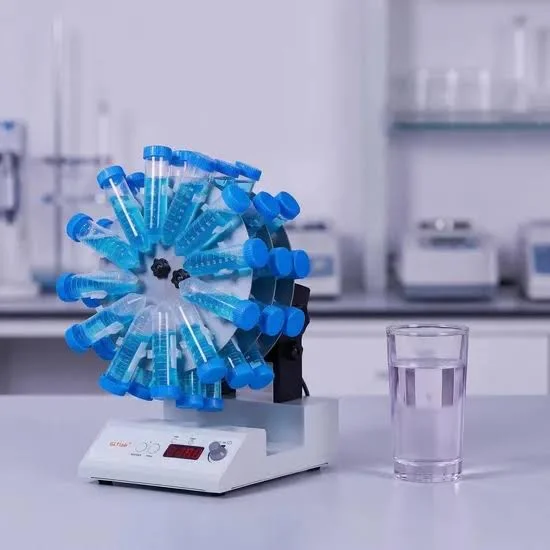
The laboratory has no shortage of mixing instruments. Vortex mixers, orbital shakers, reciprocating shakers, rocking platforms: each generates agitation through a different mechanism for a different purpose. The rotator mixer occupies its own distinct niche in this category, and understanding what makes it mechanically different from the other options is what makes it possible to use it correctly and avoid using it incorrectly.
A rotator mixer provides continuous, gentle rotation, typically end-over-end, that keeps samples in sustained motion over extended periods without generating the shear forces, heat, or foam that higher-intensity mixing produces. Its applications are not the quick, vigorous mixing tasks that vortexers handle. They are the slow, patient mixing tasks that biology actually requires: keeping bead-protein complexes suspended during hour-long incubations, maintaining blood sample homogeneity during pre-analytical holding, and running hybridization probes in uniform contact with target substrates overnight. This guide explains exactly how it works and where it belongs in your workflow.
The Working Mechanism
A rotator mixer operates through a motor that drives a platform, disk, or arm in a controlled rotational pattern. The most common configuration is end-over-end rotation: the motor drives a rotating arm or disk at 10 to 80 RPM, and sample tubes mounted on the arm or in disk wells experience continuous 360-degree inversion. With each revolution, the liquid inside the tube flows from one end to the other, keeping all components in continuous suspension without any single component accumulating at the bottom.
This inversion-based mixing is the key mechanical feature that distinguishes a rotator from an orbital shaker or vortex mixer. An orbital shaker moves liquid in circles within the vessel but does not invert it. A vortex mixer creates intense circular motion within the tube for seconds. A rotator slowly and repeatedly inverts the tube, ensuring that everything inside it stays uniformly distributed over incubation periods measured in hours rather than seconds.
Motion Types Available
End-over-end rotation provides complete 360-degree inversion and is the most thorough mixing motion for applications where dense particles would otherwise sediment during long incubations. Immunoprecipitation, bead-based pulldowns, and blood sample homogenization are the primary applications. The continuous inversion keeps beads, cells, or other particles in genuine suspension throughout the full incubation period.
Disk (orbital) rotation mounts tubes on a flat disk that rotates in a horizontal plane without full inversion. This produces gentler agitation than end-over-end rotation, suited for cell incubations where complete inversion would be mechanically stressful to cells, and for reagent preparations where light, continuous movement is all that is needed to prevent settling.
Rotisserie rotation spins tubes along their long axis in a rolling motion. This is the preferred motion for hybridization incubations, where the rolling keeps probe solution in uniform contact with all surfaces of a membrane or tube, and for protein purification steps using resin binding where the rolling maximizes surface contact between sample and resin throughout the binding period.
Why Not Just Vortex?
This is the question worth answering directly. Vortex mixers generate peak shear forces at the liquid surface that are orders of magnitude higher than the gentle rotation a rotator mixer produces. For applications involving fragile biological structures, this matters in a concrete way.
Antibody-antigen complexes, protein-bead interactions in immunoprecipitation, and the structural integrity of long genomic DNA molecules are all vulnerable to the shear forces generated during vortexing. A 10-second vortex at moderate speed that would be harmless to a PCR pellet can shear high-molecular-weight genomic DNA into fragments too short for downstream applications, disrupt a protein complex you spent four hours building, or cause hemolysis in a blood sample that must remain intact for accurate hematology analysis. The rotator mixer avoids all of these outcomes by never generating the shear that causes them.
Key Applications In Research And Clinical Settings
Immunoprecipitation: Antibody-coupled beads or resin must remain in continuous contact with the target protein in cell lysate over incubation periods of one hour to overnight. End-over-end rotation keeps beads suspended without shear damage to the protein complexes being captured. Settling during a static incubation, or shear during a vortex-based mixing attempt, both reduce pulldown efficiency.
Blood sample rotation: EDTA-anticoagulated blood tubes must be gently and continuously mixed during pre-analytical holding to prevent platelet activation, cellular settling, and microclot formation. Clinical laboratories use tube rotators for this purpose, typically at 10 to 20 RPM, because the alternative, periodic manual inversion, is inconsistent and insufficient for extended holding periods.
Nucleic acid extraction: Lysis buffer incubation steps require sustained contact between the buffer and the sample for complete cellular disruption. End-over-end rotation maintains this contact without the shear that would fragment long genomic DNA strands during the lysis period.
Hybridization: Nucleic acid hybridization protocols require that the probe solution remains in uniform contact with the target membrane or probe array throughout extended incubation periods. Rotisserie rotation achieves this more reliably than static incubation, which allows probe concentration gradients to develop across the membrane surface.
What To Look For When Choosing A Rotator Mixer
Speed range and digital control: A range of 10 to 80 RPM with variable digital control covers the full spectrum of rotator applications. Digital display of actual speed is important for protocol documentation and reproducibility.
Motion type options: Some models offer interchangeable disk, end-over-end, or rotisserie configurations that allow a single instrument to serve multiple application types. For labs running diverse protocols, this versatility is more economical than purchasing separate rotators for each motion type.
Timer and programmable operation: A programmable LCD timer enables timed unattended rotation for long incubation protocols, which is essential for immunoprecipitation and hybridization workflows that run through breaks or overnight.
Incubator and cold room compatibility: Temperature-controlled rotation is required for protocols that specify a temperature during the incubation period. Confirm that any model you evaluate is rated for use in your required temperature environment, and look for brushless DC motors that operate reliably in elevated temperature and humidity conditions without generating excess heat.
A Quiet Instrument That Does Critical Work
The rotator mixer rarely gets the attention that centrifuges, spectrophotometers, or PCR machines receive. It does not generate impressive statistics or operate at dramatic speeds. It simply rotates, slowly and continuously, protecting your samples from settling and your protein complexes from shear for as long as your protocol requires.
Trusted lab suppliers like NE LabSystems carry end-over-end, disk, and rotisserie rotator models with LCD digital control and programmable timers, all backed by free extended warranties on U.S. purchases.