Sign up with Google
 Sign in with Zoho

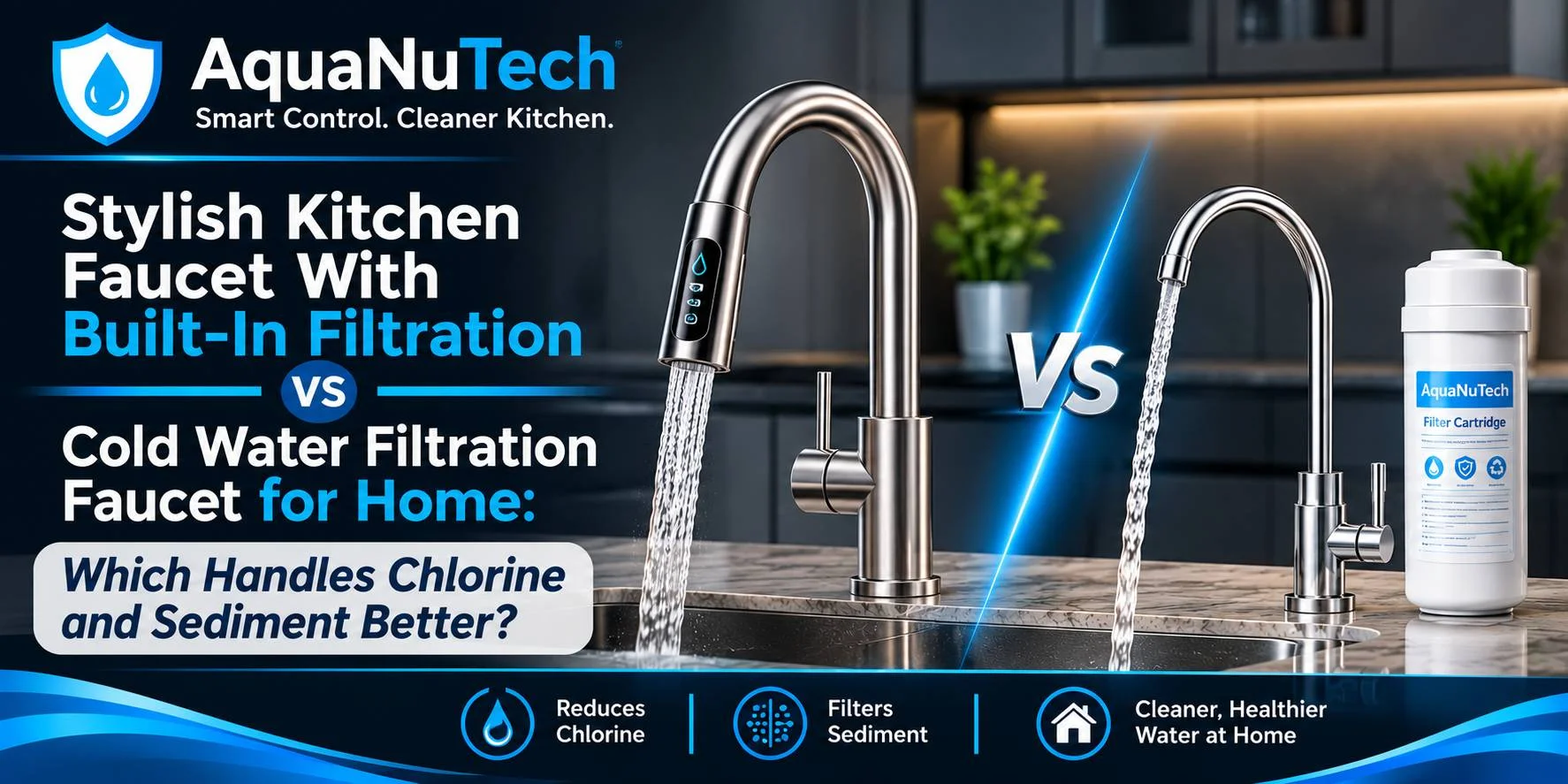
A stylish kitchen faucet with built-in filtration does not automatically remove more chlorine or sediment than a separate drinking-water faucet. The filter connected to it does the treatment work. Its materials and tested claims tell you more than the faucet’s shape.
A cold water filtration faucet for home may provide equally suitable filtration when paired with the correct system. This blog covers chlorine reduction, sediment removal, and the checks that make the comparison useful.
What “Built-In Filtration” Actually Includes
The phrase “built-in filtration” needs a closer look. Some designs combine regular and filtered-water controls in one fixture but keep the filter cartridge under the sink.
A separate cold-water faucet also connects to filtration equipment. Its main difference is the dedicated drinking-water outlet, rather than a different way of treating water.
Check the package contents carefully. A filtration faucet sold on its own still needs a compatible filter.
Which Filter Handles Chlorine Better?
Activated carbon reduces chlorine through a process that holds chlorine compounds on the carbon’s surface. A suitable carbon filter may improve water taste and smell, but the faucet design does not establish that performance.
For a stylish kitchen faucet with built-in filtration, look for a documented chlorine-reduction claim for the connected filter. NSF/ANSI 42 covers aesthetic effects such as chlorine taste and odor, but certification applies to specific claims rather than every possible contaminant.
Chlorine Reduction Checks
Read the performance data sheet and confirm:
1. The exact filter model and replacement cartridge
2. A chlorine taste-and-odor reduction claim
3. The rated flow and treatment capacity
AquaNuTech offers a three-stage under-sink filtration system designed to reduce chlorine, silt, and sediment. Its faucet and filter options show why buyers need to compare the complete setup, rather than the fixture alone.
Sediment Removal Depends on Particle Filtration
Sediment filtration traps particles as water passes through the filter. The size of the filter’s openings affects which particles pass through, so check its micron rating and documented particle-reduction claims.
A cold water filtration faucet for home does not gain better sediment removal simply because it has a separate spout. The connected cartridge needs to handle the particles present in the water.
Compare the Filter Details
Clear water alone does not prove that treatment works. The CDC advises against judging drinking-water safety by appearance, taste, or smell.
Faucet Layout and Cartridge Access
A stylish kitchen faucet with built-in filtration may appeal to someone who wants filtered-water controls within the main fixture. A separate faucet requires its own mounting space, so check the sink layout before ordering.
AquaNuTech’s Contemporary C-Spout Cold Water Filtration Faucet provides a dedicated filtered-water outlet when connected to a compatible system. The brand also offers faucet-and-filter combinations for buyers who need both components.
Leave room below the sink for maintenance. A cartridge hidden behind plumbing may be difficult to remove.
Installation Checklist
1. Confirm the mounting-hole and tubing requirements
2. Check the filter’s pressure and temperature limits
3. Allow room to remove replacement cartridges
4. Compare cartridge costs and availability
5. Choose the Filter First, Then the Faucet
Neither layout wins on chlorine and sediment removal without supporting filter data. Match the treatment claims to your water concerns, then choose the fixture.
A cold water filtration faucet for home offers a separate drinking-water outlet. An integrated design offers another layout. Compare the complete systems and confirm what each purchase includes.
FAQs
1. Does a built-in filter always remove chlorine?
No. Check the exact filter’s chlorine-reduction claim. The words “built-in filtration” alone do not establish which substances it reduces.
2. Will a sediment filter remove chlorine too?
Do not assume it will. A filter needs suitable treatment materials and a specific chlorine-reduction claim to address both concerns.
3. Does NSF/ANSI 42 certification cover every contaminant?
No. Certification covers the listed claims for that model. Check the product listing for the reductions you need.
4. Do separate filtration faucets need under-sink filters?
Many do. Check the product instructions and package contents to confirm which filtration equipment the faucet requires.
5. When should the cartridge be replaced?
Follow the manufacturer’s replacement schedule and service limits. Keep the filter maintained even if the water still looks clear.









.webp)