Sign up with Google
 Sign in with Zoho

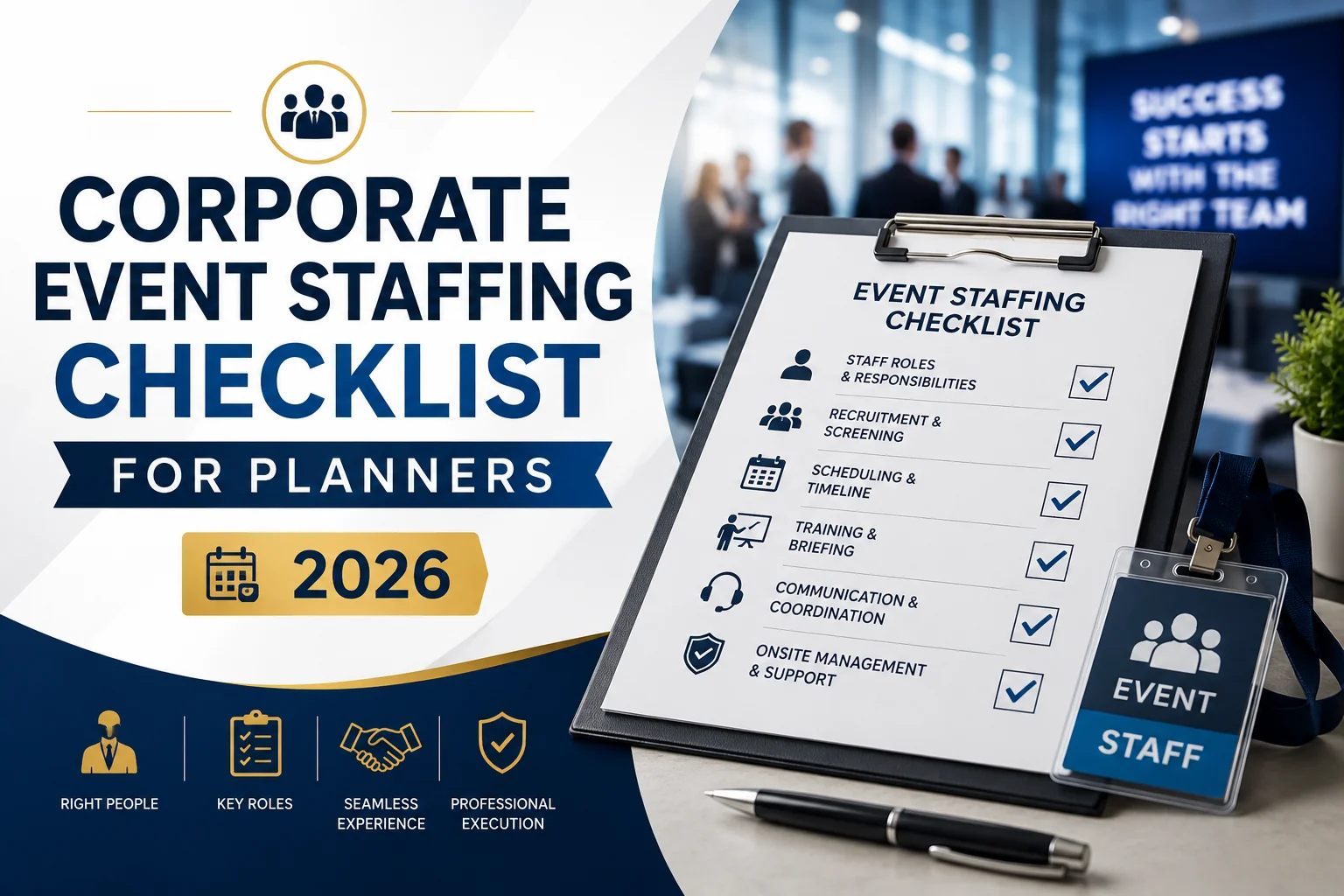
Staffing is logistics, not an afterthought
Corporate events live and die on details that guests never consciously notice: how quickly the bar moves, whether servers know which guests asked for the vegetarian option, whether the brand ambassador at the entrance can actually answer questions about the product. None of that happens by accident. It happens because someone planned the staffing the same way they planned the catering and the AV. Below is a checklist worth running through for any corporate dinner, launch, or offsite.
1. Book earlier than feels necessary
Good event staff in major markets like New York get booked weeks in advance, especially during the busy fall and spring event seasons. Waiting until two weeks before the event significantly narrows your options and often forces you to accept less experienced staff simply because they are available.
2. Know your staff-to-guest ratios
As a general guideline, plated dinners typically run about one server for every twelve to fifteen guests, while cocktail-style events can sometimes run a little leaner depending on the format. Bar service usually needs roughly one bartender per fifty to seventy-five guests, though that number shifts based on how elaborate the drink menu is and how many bar stations you are running.
• Plated dinner: ~1 server per 12–15 guests
• Cocktail reception: slightly leaner ratios, depending on format
• Full bar service: ~1 bartender per 50–75 guests
3. Decide on uniform and branding requirements early
If you want staff in specific colors, branded shirts, or a particular dress code, communicate that with as much lead time as possible. Agencies often need time to source or print branded apparel, and last-minute requests limit what is possible.
4. Ask directly about insurance and employment model
This is the question planners skip most often, and the one with the biggest downside if ignored. If your staffing partner does not carry insurance on its workers, your company can end up exposed if something goes wrong during the event.
5. Build in a no-show contingency
Even excellent staff get sick or have emergencies. Before the event, confirm exactly how your agency handles last-minute replacements, and whether there is a real backup bench they can pull from on short notice.
6. Brief staff on the event itself, not just the schedule
Sharing context about the event's purpose, key guests, and overall flow, not just call times and dress code, consistently leads to noticeably better guest interactions. Staff who understand what they are actually part of tend to perform differently than staff who only know their shift start time.
Why this checklist matters
Agencies that have run this kind of event at scale tend to have these checkpoints built into their process by default. Amerivents, a New York-based staffing agency that has been operating since 2007, structures its booking process around exactly these points: pre-screened, W2-insured staff, clear staffing ratios, and a single dedicated coordinator for each client.
Whether the event is a 50-person dinner or a 1,000-person activation, working through this list before booking staff will remove most of the last-minute stress that tends to show up otherwise.