Sign up with Google
 Sign in with Zoho

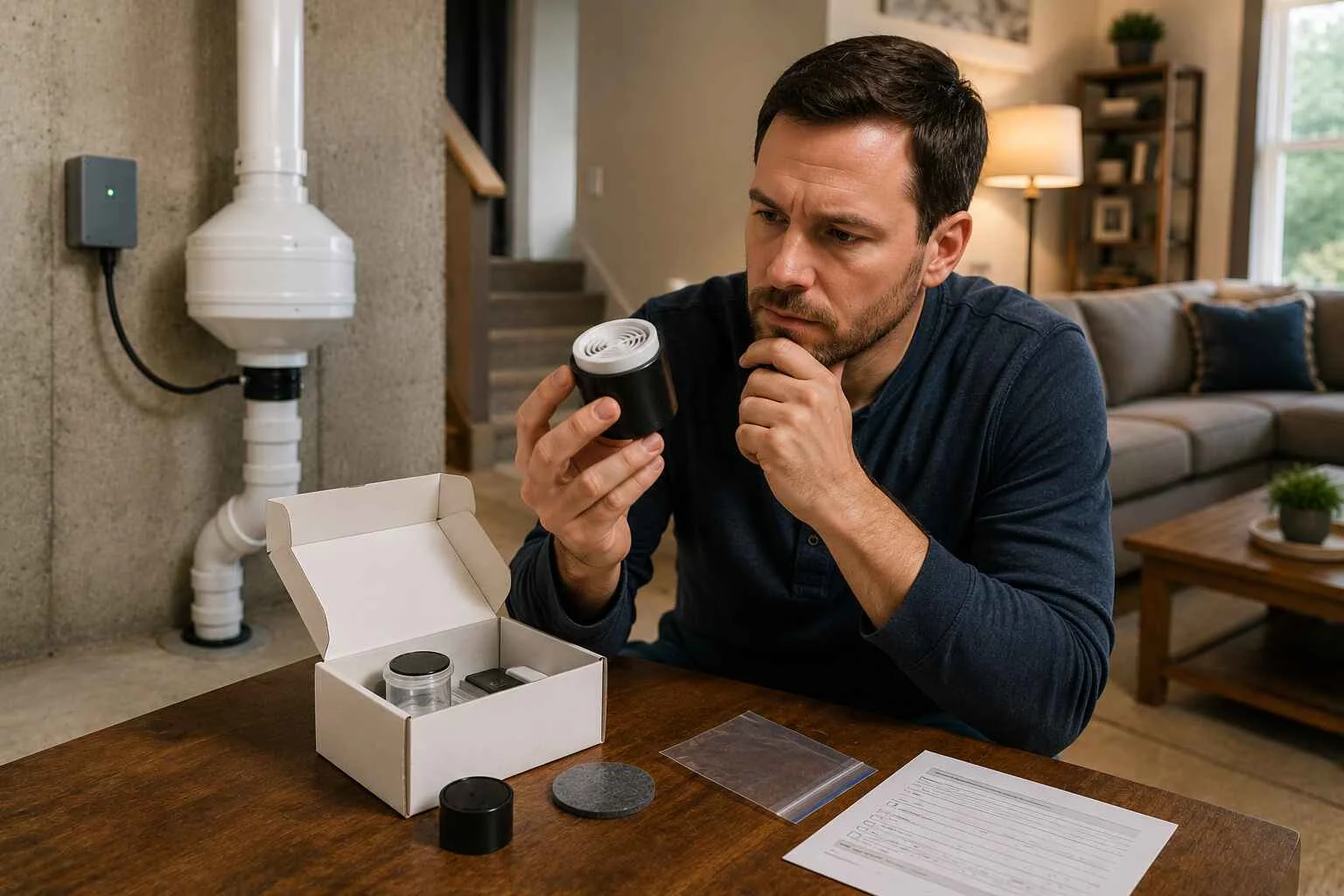
I've got nothing against DIY radon kits. Genuinely. They serve a purpose, and I recommend them to plenty of people who just want a baseline check without hiring anyone. But "accurate" is a loaded word, and the honest answer depends heavily on how carefully the kit gets placed and used, not just what's printed on the box. This question comes up constantly around radon testing St. Louis appointments, so let's get into the real strengths and real limitations, because both matter.
The Short Answer
Under ideal conditions, a properly placed DIY kit is reasonably accurate, often within a close range of what a professional continuous monitor would show. The catch is "ideal conditions" is doing a lot of work in that sentence. Placement mistakes, inconsistent closed-house conditions, and lab handling variability all introduce error that a professional test is specifically designed to minimize. For casual peace of mind, a DIY kit is fine. For anything tied to a real estate closing or a firm health decision, I'd lean toward professional radon testing St. Louis appointments instead.
How DIY Kits Actually Work
Charcoal Canister Kits
These are the most common kits you'll find at a hardware store. Activated charcoal absorbs radon from the air over the testing period, then gets mailed to a lab where technicians measure how much radon was absorbed to calculate your average level. Simple concept, and reasonably reliable when everything's done correctly.
Alpha Track Kits
These work a bit differently, using a small piece of plastic film that records tracks left by radioactive particles over time. They're often used for longer testing periods since the detection method holds up well over extended exposure, unlike some charcoal-based kits that work best strictly within a short window.
Where DIY Kits Get It Right
Basic Screening for a First-Time Check
If you've never tested your home and just want a general sense of where you stand, a DIY kit is a perfectly reasonable starting point. Think of it like a home blood pressure cuff. It won't replace a full medical workup, but it tells you whether something's worth looking into further. Plenty of my radon mitigation St Louis clients started exactly this way, a cheap kit that flagged a problem worth investigating professionally. It's a common first step, not a final answer, and most people end up glad they followed up.
Cost-Effectiveness
At $15 to $30, DIY kits are hard to beat for the price, especially if you're testing multiple rooms or just want a general household baseline before deciding whether to invest in anything further.
Where DIY Kits Fall Short
Placement Errors
This is the big one, and it's the reason I see more skewed results from DIY kits than from anything wrong with the technology itself. Kits placed too close to windows, exterior doors, or HVAC vents pick up outside air that dilutes the reading, often producing a falsely low result. I've also seen kits placed in areas with unusual airflow, like near a sump pump or a floor drain, that swing the reading the opposite direction.
No Tamper Protection
A DIY kit has no way of knowing if a window got opened halfway through the test, or if someone accidentally bumped it, moved it, or set something on top of it. Professional continuous monitors track movement and temperature specifically to catch this kind of thing, which matters a lot in situations like radon testing St. Louis real estate transactions where both buyer and seller need confidence the result wasn't compromised.
Lab Variability
Mail-in kits depend on a lab processing your sample correctly and promptly. Delays in shipping, inconsistent lab quality, or simple handling errors can all introduce small inaccuracies that you'd never know about since there's no way to independently verify the process on your end. It's one more reason professional radon testing St. Louis appointments skip the mail-in step entirely.
A Case Where a DIY Result Was Wrong
I mentioned earlier I test homes involved in real estate deals constantly, and one that sticks with me was a home in Ballwin where the seller had already run a hardware store kit and gotten a comfortable 3.1 pCi/L, safely under the EPA's 4.0 pCi/L action level. The buyer's agent still required a professional continuous monitor test as part of the closing paperwork, and that test came back at 5.6 pCi/L, almost double the DIY number. Turned out the original kit had been placed too close to a window that got opened occasionally for fresh air, which quietly diluted the reading the whole time. That mismatch changed the entire negotiation, and the buyer ended up requesting mitigation be completed before closing. It's the kind of scenario that shows up regularly across radon mitigation St Louis real estate deals, where an inaccurate DIY number almost let a real problem slip through unnoticed. It's a clean example of how a DIY kit isn't necessarily wrong because of bad technology, it's wrong because of where it sits in the room.
When a Professional Test Is Worth the Extra Cost
If you're buying or selling a home, most contracts and lenders specifically require professional testing anyway, so this isn't really optional in that scenario. Beyond real estate, I'd lean toward professional radon testing St. Louis appointments if your DIY result comes back anywhere close to the 4.0 pCi/L action level, since the stakes of a wrong number, in either direction, get higher the closer you are to that threshold. A false low reading means you might be living with a real problem you don't know about. A false high reading means you might spend money on radon mitigation St Louis installation you didn't actually need, which is exactly the kind of costly mistake accurate testing prevents.
Conclusion
DIY radon kits aren't inherently inaccurate, they're accurate enough for a first look when placed correctly and used under proper closed-house conditions. Where they fall short is consistency, since placement errors, tampering, and lab handling all introduce room for error that a professional continuous monitor is specifically built to eliminate. For casual curiosity, a $20 kit is a fine starting point. For anything tied to a real estate closing, a number near the EPA's action level, or genuine peace of mind about your family's long-term exposure, professional radon testing St. Louis technicians provide gives you a far more trustworthy answer. And if that answer points toward a real problem, radon mitigation St Louis installation is a fast, well-established fix rather than something to dread. If your DIY result left you uncertain either way, reach out to Air Sense Environmental and I'll get you a certified reading you can actually rely on.
FAQs
1. Can I trust a DIY kit result that came back well under 4.0 pCi/L? Generally yes, if it was placed correctly under proper closed-house conditions, though a comfortably low number is less likely to be a costly false positive than a false negative would be near the threshold.
2. Do DIY kits and professional monitors measure radon the same way? The underlying science is similar, but professional monitors use calibrated electronic sensors with tamper detection, while most DIY kits rely on passive materials like charcoal or track-etch film sent to a lab.
3. Is it worth buying two DIY kits and placing them in different rooms? It can help confirm consistency, especially in a larger home, though it doesn't replace the tamper protection and calibration a professional monitor provides.
4. How much does a professional test cost compared to a DIY kit? DIY kits typically run $15 to $30 plus a lab fee, while professional continuous monitor testing usually costs $125 to $250, depending on your home's size and the number of testing locations needed.
5. Should I still get radon mitigation St Louis installation if my DIY kit came back borderline? A borderline result, especially near 4.0 pCi/L, is a good reason to confirm with a professional test first before committing to mitigation, since an accurate number should guide that decision rather than a possibly skewed DIY reading. Most radon mitigation St Louis contractors, myself included, would rather confirm the number than install a system based on uncertain data.