Sign up with Google
 Sign in with Zoho

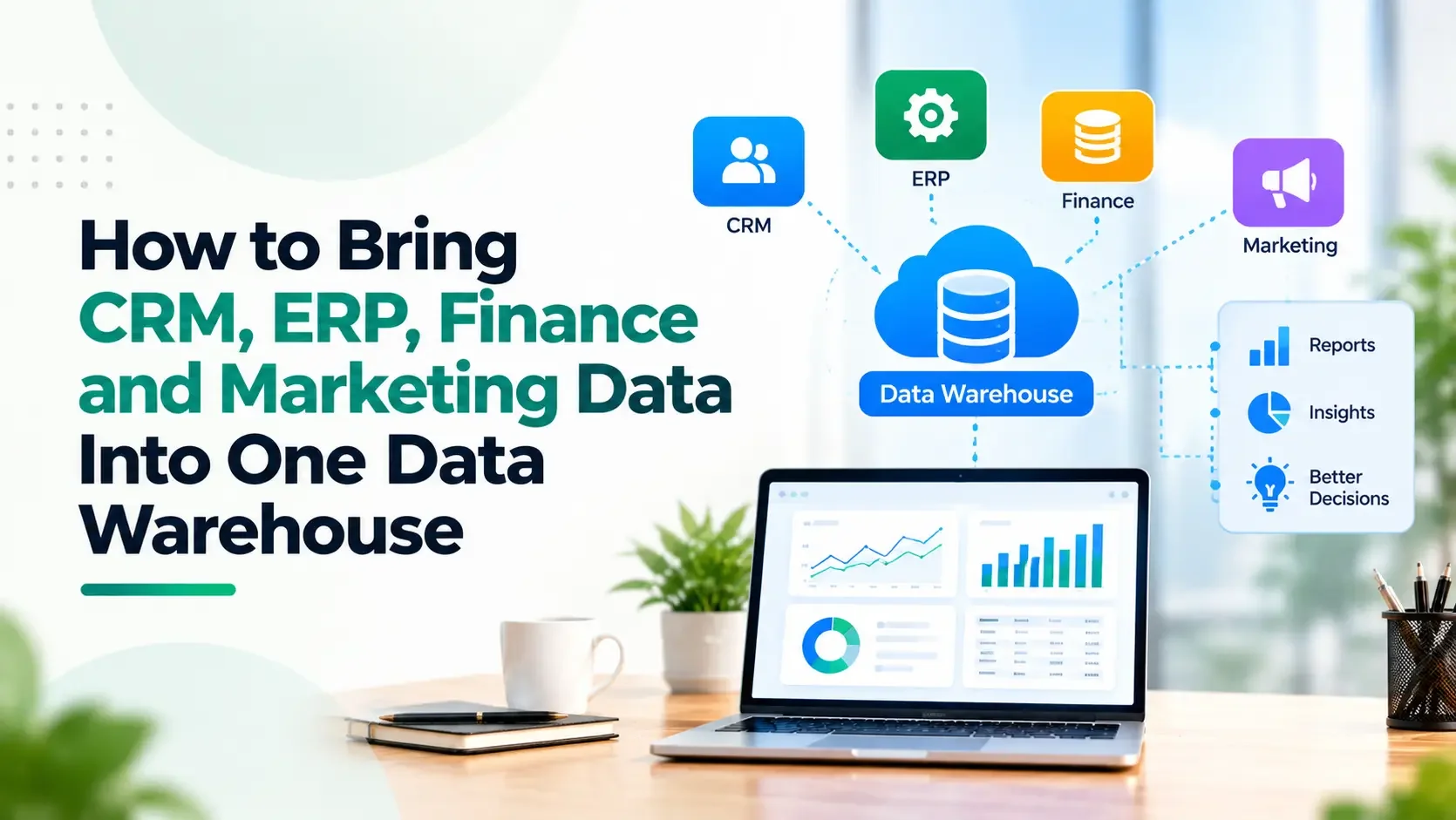
If your sales, finance, operations and marketing teams all use different software, you have probably noticed a pattern. Every tool has its own numbers, every report needs manual effort, and every meeting starts with a debate about whose figures are correct. A data warehouse is designed to end that confusion. This simple explainer covers the basics, and for a deeper look you can read this complete data warehouse guide for CRM, ERP, finance and marketing data.
What exactly is a data warehouse?
Think of it as a well organised library for your business information. Your CRM, ERP, accounting software and marketing platforms keep doing their daily jobs. The warehouse collects data from all of them, cleans it, arranges it neatly and stores it in one place, so anyone who needs answers can find them without chasing five different files.
How is it different from connecting my CRM and ERP?
Connecting two systems helps a process run smoothly. For example, when a deal closes, the order details can flow into the ERP automatically. That saves typing and reduces mistakes.
A warehouse has a bigger purpose. It lets you study information from many systems together, over time, without slowing down the tools your team uses every day. In short, integration moves the work while a warehouse explains the business.
What problems does it actually solve?
The biggest one is conflicting numbers. When the CRM and the finance team report different revenue, leaders lose time and confidence. A warehouse fixes this by agreeing on one definition for each metric and one trusted source for each type of data.
It also saves effort. Instead of someone spending days merging spreadsheets, reports update from one reliable foundation. And it opens the door to questions that were nearly impossible before, such as which marketing campaign led to the most profitable customers, or how stock shortages affect sales.
Which data should go into it first?
Do not try to connect everything at once. Start with the questions that matter most to your leadership. If the main question is about marketing return, you will need campaign data, CRM leads, and finance payments. If the main concern is delivery and demand, you will need orders, inventory and sales pipeline. Begin with the systems needed to answer those questions and expand later.
Why does data cleaning matter so much?
Because combining messy data only creates a bigger mess. The same customer may appear under three slightly different names. Product titles may not match across systems. Dates may follow different formats, and some records may be missing IDs entirely.
A good warehouse applies clear rules to fix these issues before anyone builds a report. Without that step, even the best looking dashboard will mislead you.
Why is history so valuable?
Most business tools show only the current picture. If a deal value drops from 20 lakh to 12 lakh, your CRM simply shows 12 lakh. A warehouse can keep earlier snapshots, so you can see when the change happened, which team was involved and whether it happens often. This makes forecasting and trend analysis much stronger.
Can marketing data really connect to revenue?
Yes, and this is one of the most exciting benefits. Marketing tools show clicks and leads, the CRM shows opportunities and deals, and finance shows invoices and payments. Once everything sits together, you can follow a customer from the first ad click to the final payment. Then you can judge campaigns by the revenue they create rather than by how cheap their leads were.
What about dashboards?
Dashboards are the visible part, but the warehouse is the foundation. If the foundation is shaky, the dashboard will show confusing numbers no matter how polished it looks. When the data underneath is clean and agreed upon, dashboards become simple to build and easy to trust.
Does every business need one?
No. If you use only a couple of tools and your reports are simple, you may not need a warehouse yet. But if your team spends hours merging files, departments report different numbers, or you cannot track spend all the way to revenue, it is time to seriously consider one. It also becomes important when you want to use AI or advanced analytics, because both need clean, well governed data to work properly.
How should you begin?
Keep the first step small. Choose a few important business questions, decide which system owns each piece of data, bring in only the sources you need, and build from there. A focused start shows results quickly and makes it easier to get support for the next phase.
Your CRM should stay excellent at managing customers, your ERP at running operations, and your finance tool at keeping accurate books. The warehouse simply sits across all of them and gives your business one clear, trusted view.