Sign up with Google
 Sign in with Zoho

Traffic management in Indian cities has become increasingly technology-driven. Busy intersections, commercial zones, residential areas, and public roads are monitored through surveillance cameras and regular traffic enforcement. As a result, two of the most frequently issued penalties today are the red light challan and the no parking challan.
Although these violations may seem minor, they can lead to financial penalties, inconvenience, and repeated compliance issues if ignored. Understanding why these challans are issued and how to deal with them responsibly can help motorists avoid unnecessary trouble while contributing to safer roads.
Why These Two Challans Are So Common
Every day, thousands of drivers pass through traffic signals and park their vehicles in busy urban areas. Even a brief lapse in attention can result in a violation.
Traffic authorities actively monitor:
- Major road intersections
- Market areas
- Shopping complexes
- Bus stops
- Hospital zones
- School areas
- Emergency access routes
- High-density traffic corridors
Since these locations experience heavy vehicle movement, strict enforcement helps maintain order and improve road safety.
Understanding a Red Light Challan
A red light challan is issued when a driver fails to stop after a traffic signal turns red. Modern traffic signals often use automated cameras that capture vehicle movements when a signal is violated.
Common situations that result in a red light challan include:
- Crossing the stop line after the signal turns red.
- Driving through an intersection despite the red signal.
- Accelerating to beat a changing traffic light.
- Ignoring pedestrian crossing signals where applicable.
Traffic signals are designed to regulate vehicle movement safely. Ignoring them increases the risk of collisions involving vehicles, pedestrians, and cyclists.
What Leads to a No Parking Challan?
Parking violations are another major reason for traffic penalties in cities with limited parking infrastructure.
Drivers may receive a no parking challan for:
- Parking in designated no-parking zones.
- Blocking entrances or exits.
- Parking near traffic intersections.
- Occupying pedestrian pathways.
- Parking close to fire hydrants or emergency routes.
- Obstructing public transport access.
- Leaving vehicles in restricted commercial areas.
Many no-parking zones are clearly marked with traffic signs, making it important for drivers to observe local parking regulations before leaving their vehicles.
How Technology Has Changed Traffic Enforcement
Traffic policing has evolved significantly over the years. Manual enforcement is now supported by intelligent monitoring systems that improve the accuracy of violation detection.
Authorities use various technologies such as:
- CCTV surveillance
- Automatic Number Plate Recognition (ANPR)
- Smart traffic signal cameras
- Mobile enforcement devices
- Digital challan systems
These technologies help record violations more efficiently while creating digital records that can be verified later by vehicle owners.
What Should You Do After Receiving a Challan?
Receiving a challan does not necessarily mean a lengthy administrative process. The first step is to carefully review the details.
Check the following information:
- Vehicle registration number
- Date of violation
- Time of incident
- Location
- Type of offence
- Payment status
If the challan is valid, resolving it promptly helps avoid unnecessary delays or additional complications.
If you believe the challan has been issued incorrectly, collect supporting information and consider the available legal options before taking further action.
Developing Better Driving Habits
Avoiding traffic challans is easier when drivers consistently follow basic road discipline.
Simple practices include:
- Slow down when approaching intersections.
- Stop completely behind the stop line.
- Observe traffic signal changes carefully.
- Look for parking restriction signs before leaving your vehicle.
- Use authorized parking spaces whenever possible.
- Plan extra travel time to avoid rushing through signals.
- Stay alert in unfamiliar areas.
These habits not only reduce the risk of penalties but also improve overall road safety.
Legal Assistance for Traffic Disputes
While many challans involve straightforward payments, certain situations may require professional legal guidance.
Examples include:
- Challenging an incorrect red light challan.
- Disputing a no parking penalty.
- Documentation-related issues.
- Traffic court proceedings.
- Commercial vehicle compliance matters.
- Multiple pending traffic violations.
Lawyered connects vehicle owners with experienced legal professionals who provide guidance on traffic regulations, challan disputes, legal documentation, and compliance procedures. Seeking timely legal advice can help individuals and businesses resolve complicated traffic-related matters more effectively.
Simplifying Challan Payments with ChallanPay
Once a challan has been verified, completing the payment promptly is an important step toward maintaining compliance.
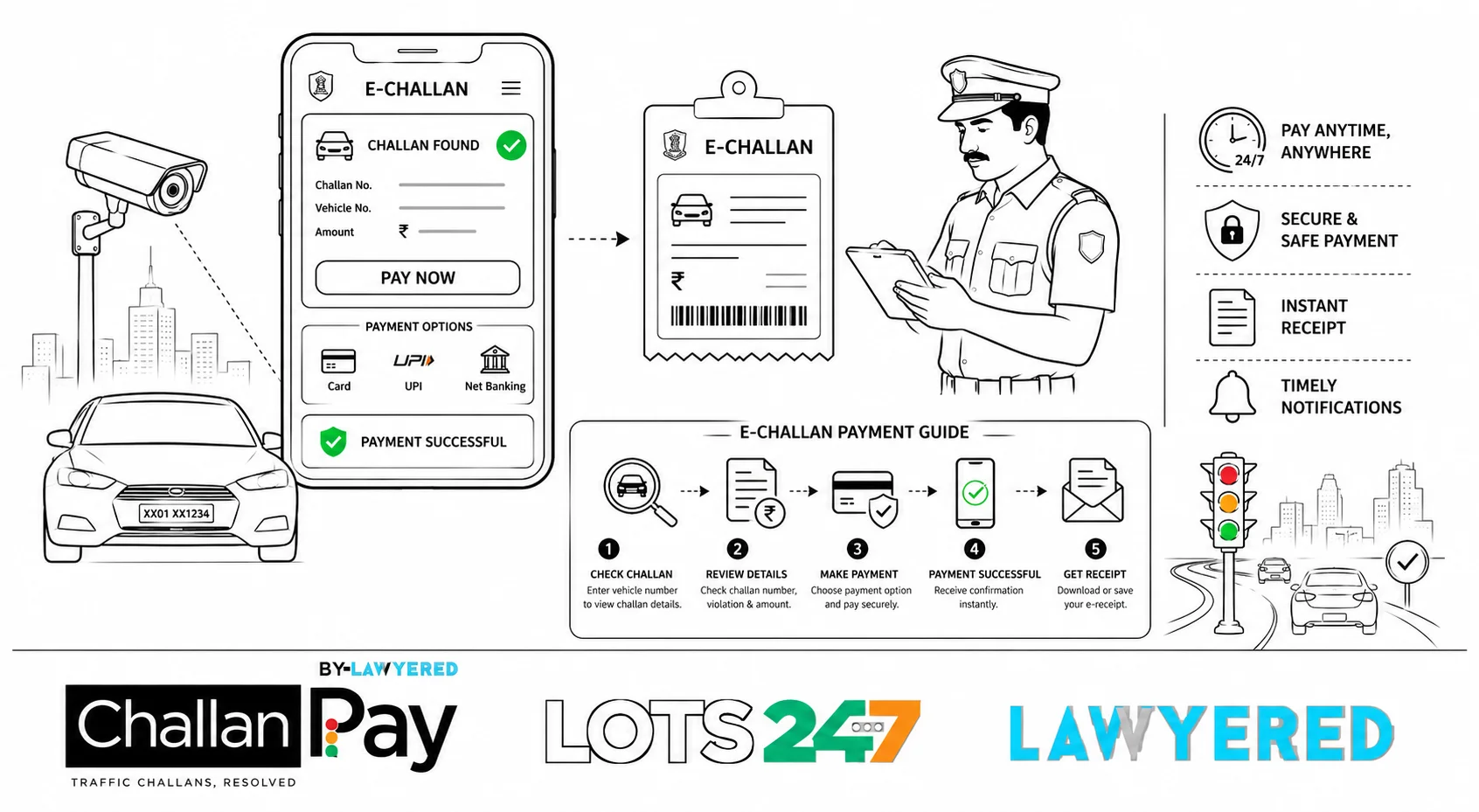
ChallanPay offers a convenient platform where users can check pending traffic challans and complete online payments through a secure and user-friendly process. Whether managing a single vehicle or an entire fleet, digital payment solutions help reduce paperwork and simplify traffic fine management.
Timely settlement also helps maintain accurate vehicle records and prevents the accumulation of unpaid penalties.
Stay Informed with LOTS247 Sarathi
Traffic regulations, parking policies, and enforcement methods continue to evolve with new technologies and urban mobility initiatives. Staying informed helps drivers understand changing requirements and avoid repeat violations.
LOTS247 Sarathi provides valuable updates on traffic rules, road safety, transport regulations, digital governance, and compliance awareness. By keeping track of the latest developments, motorists can make informed decisions and promote safer driving practices.
Conclusion
Red light challans and no parking challans are among the most common traffic penalties issued across India, but they are also among the easiest to prevent. Careful attention at traffic signals, responsible parking decisions, and awareness of local regulations can significantly reduce the likelihood of receiving these challans.
When a violation does occur, responding promptly is the best course of action. Whether you need legal guidance through Lawyered, an efficient platform for managing traffic challans with ChallanPay, or reliable traffic awareness resources from LOTS247 Sarathi, trusted digital solutions can make compliance simpler. Responsible driving, timely challan settlement, and continuous awareness remain the foundation of safer roads for everyone.