Sign up with Google
 Sign in with Zoho

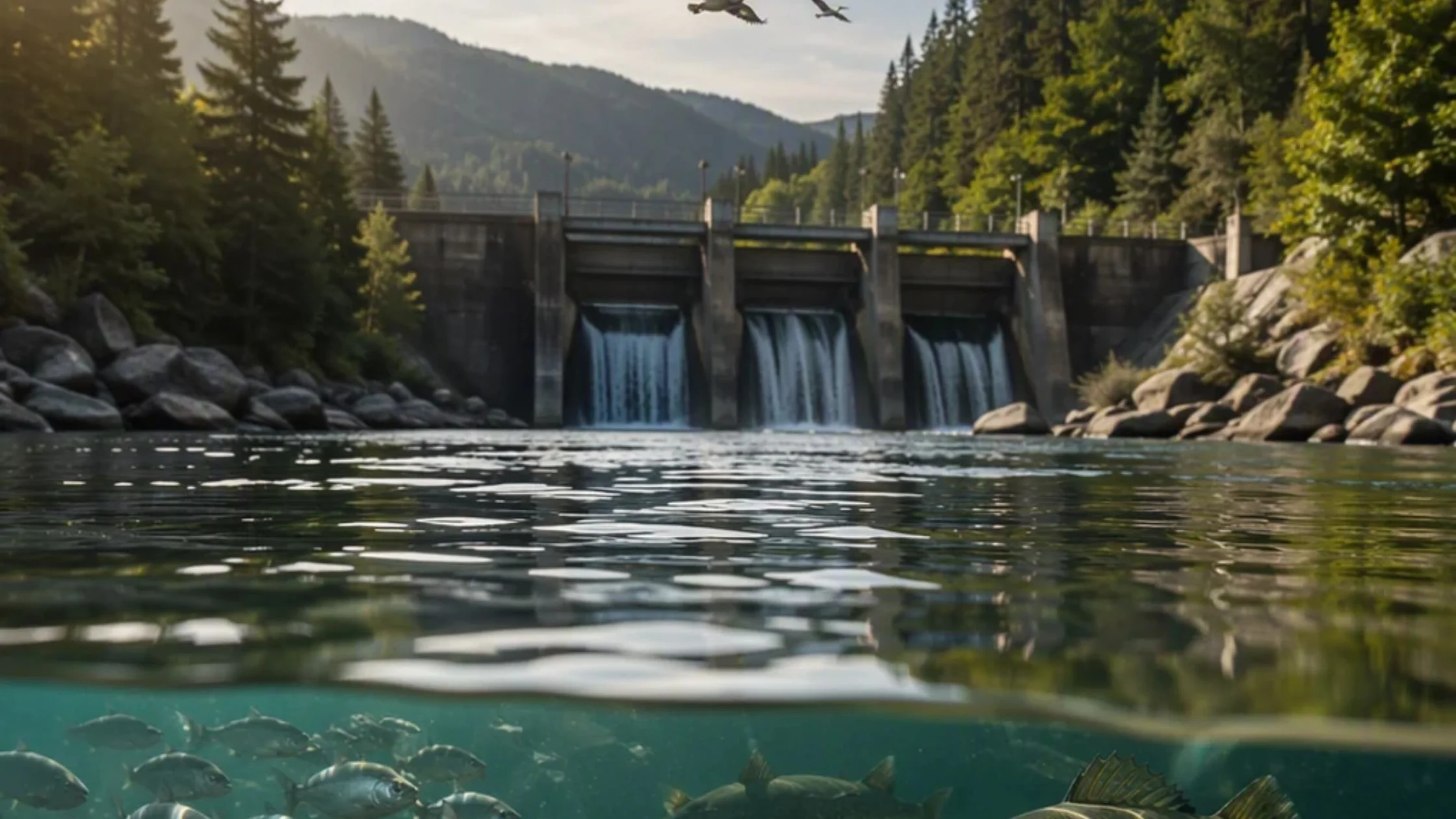
Fish passage structures fail their purpose most often not because of what happens inside them, but because of what happens before fish ever reach the entry. The most sophisticated passage system in the world has a throughput of zero if the fish migrating below the dam can't locate where it begins.
At Whooshh Innovations, we've built fish guidance tools into the entry architecture of our passage systems from the beginning because we understand that entry efficiency is where the passage efficiency problem most commonly originates.
The biology of upstream migration is worth understanding here. Adult salmon and steelhead orient to water flow. They seek the strongest upstream current they can detect and follow it toward its source. This is the mechanism that guides them from saltwater to their natal stream across hundreds of miles of open river. It's also the mechanism that either delivers them to a passage entry or leads them to a dead-end current that keeps them circling below a dam.
A passage entry positioned in the main current with adequate attraction flow will find fish. One positioned out of the migration corridor, drawing from the headpond at low volume, may be functionally invisible to fish that are navigating by flow cues at the tailrace below the dam.
What Makes the ASPFishway Different From a Conventional Ladder Entry?
The ASPFishway is the adjustable entry component of the PassagePortal systems. It draws from tailrace water rather than headpond water, which means the attraction current it creates is temperature-consistent with the water fish are actively holding in below the dam. It's positioned within the natural migration corridor by design, not bolted to a dam face in the most structurally convenient location.
The adjustable depth, angle, and flow volume mean that the entry can be repositioned during the season as water levels change and fish behavioral patterns shift with temperature and flow conditions. In summer, when water levels drop and thermal stratification creates depth-dependent temperature gradients, the ASPFishway can be adjusted to meet fish where they're holding rather than expecting fish to navigate to a fixed point that may no longer align with their behavioral range.
That adjustability is a meaningful operational difference from a conventional ladder entry, which is fixed in position and flow volume regardless of what conditions are doing to fish behavior around it.
Why Is Summer the Season That Tests Guidance Systems Most?
Summer low-flow conditions are the hardest environment for fish guidance to work in. Reduced river discharge means weaker attraction currents across the board. Fish congregating below a barrier in warm, slow-moving water are in a physiologically stressed state that makes migration energy expenditure more costly. Every minute spent searching for a passage entry is a minute of energy depletion that reduces the fish's probability of reaching spawning habitat in viable condition.
Research in Pacific Northwest river systems consistently documents that energy reserves at arrival on spawning grounds are a significant predictor of reproductive success. The fish that spend the least time and energy navigating to and through a passage structure arrive in the best condition. Entry efficiency, how quickly fish find the passage entry, is directly connected to that outcome.
How Does Guidance Connect to the Full Passage System?
Guidance and transport need to be designed as a system, not as independent components. Here's what the complete Whooshh passage platform delivers from entry to exit:
- Attraction flow from the ASPFishway using tailrace water positioned in the natural migration corridor
- Adjustable depth and volume to accommodate seasonal water level and temperature changes
- Volitional entry where fish swim in on their own, without netting or external motivation
- FishL Recognition imaging using three cameras and nine images per fish for real-time species classification
- GateKeeper sorting gate that routes native species upstream and diverts invasive species downstream
- MigratorTube transport at 25 feet per second in a misted, pressurized tube with no fish handling from entry to exit
- Automated passage records for every fish, uploaded to cloud storage in near-real time
Every element of that sequence is connected. The best imaging and sorting system provides no benefit if fish never reach the entry. The best entry positioning provides no benefit if the transport and sorting system fails to handle volume at peak migration events. Whooshh designs these components to function as an integrated platform, not as interchangeable parts from different product categories.
What Should Operators Assess About Their Current Entry Design?
The diagnostic question is simple: are fish finding the entry, and how quickly? If counts at a passage structure are lower than expected based on population models and upstream habitat quality, entry efficiency is the first place to look. Are fish congregating below the structure but not entering? Are approach and retreat behaviors visible in monitoring footage?
Visit Whooshh Innovations and the fish passage expertise page for a full overview of guidance and passage options.
The published blog A More Natural Way Forward covers the design philosophy behind how Whooshh approaches the entry problem. Contact the team for a site-specific entry efficiency conversation.




.webp)