Sign up with Google
 Sign in with Zoho

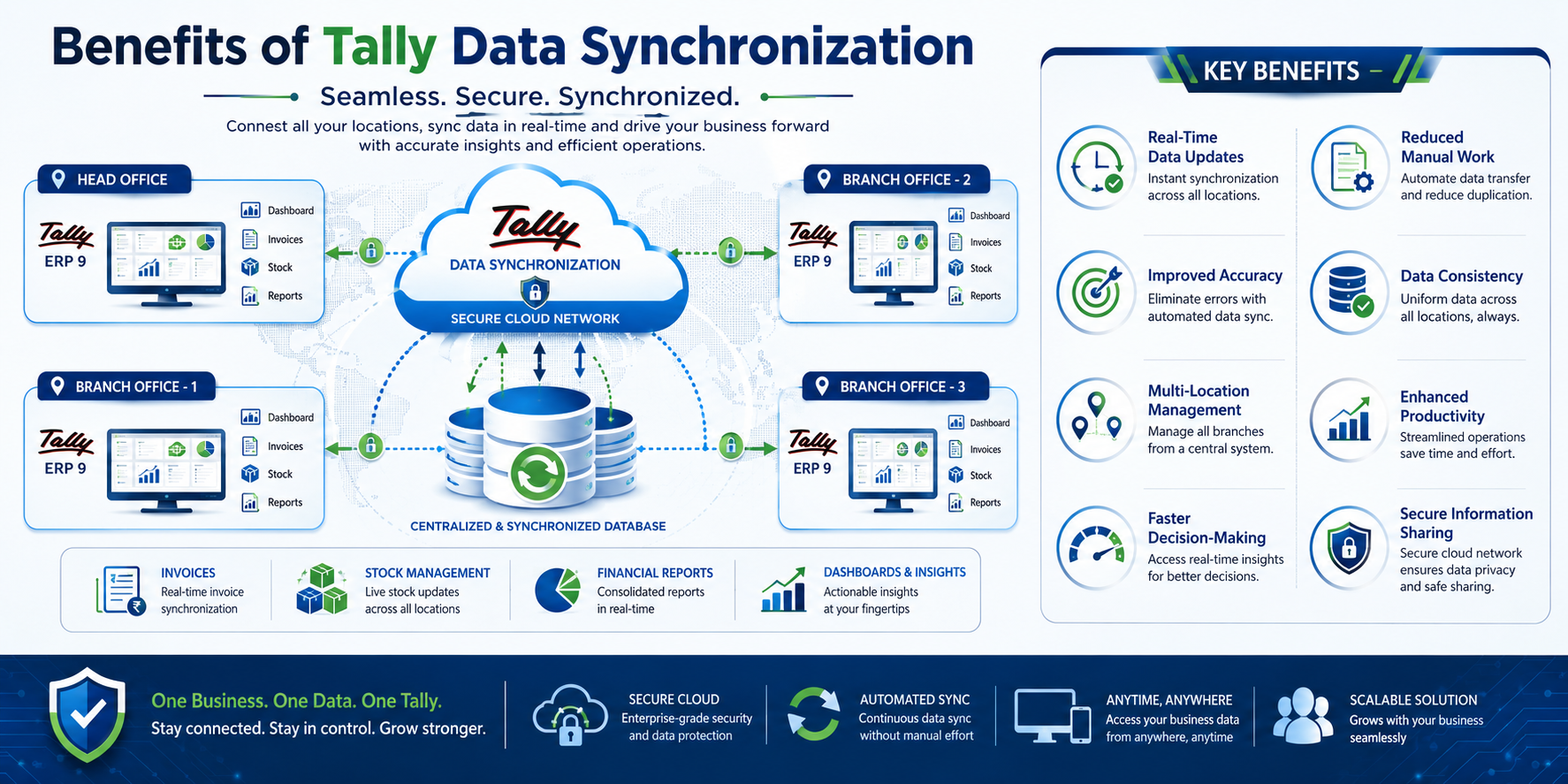
In today's fast-paced business environment, organisations operating from multiple locations require seamless access to accurate financial information. Maintaining separate accounting records across branches can lead to inconsistencies, duplicate entries, and delays in decision-making. This is where Tally Data Synchronization becomes an invaluable feature for businesses using Tally Prime.
Whether you manage retail outlets, distribution centres, manufacturing units, or service branches, synchronising your accounting data ensures that every location remains updated with the latest financial information. As a trusted Tally 3 Star Partner, Vishwnet India helps businesses implement efficient synchronisation solutions that improve productivity and operational control.
What Is Tally Data Synchronization?
Tally Data Synchronization is a feature in Tally Prime that enables the exchange of accounting data between different offices or branches. It allows organisations to transfer selected information from one Tally company to another while maintaining consistency across locations.
This functionality is particularly useful for businesses with a head office and multiple branches that need to consolidate financial data without manually entering transactions repeatedly.
With synchronisation, businesses can ensure that important information such as ledgers, stock items, vouchers, and other master records remain updated throughout the organisation.
Benefits of Tally Data Synchronization
Improved Accuracy Across Locations
Manual transfer of accounting information often results in data duplication and human error. Synchronisation minimises these risks by automatically updating relevant records between branches and the head office.
Accurate data enables businesses to prepare reliable reports and make informed decisions.
Enhanced Operational Efficiency
Businesses operating in different geographical locations can save considerable time by eliminating repetitive data entry tasks. Employees can focus on more strategic activities rather than spending hours consolidating records.
This improved efficiency contributes directly to increased productivity.
Better Decision-Making
Access to up-to-date financial information allows management teams to analyse performance quickly. They can monitor branch-wise sales, inventory movements, and outstanding receivables without waiting for manual reports.
Timely information supports faster and more effective business decisions.
Seamless Branch Management
For organisations with multiple offices, synchronisation provides better control over operations. Head offices can receive updated information from branches while ensuring standardisation in accounting practices.
This level of visibility is essential for growing enterprises.
Cost Savings
Reducing manual intervention not only saves time but also lowers administrative costs. Businesses can optimise resources while improving the overall quality of financial management.
The Process of Tally Data Synchronization
Understanding the synchronisation process helps businesses implement it effectively within their operations.
Step 1: Configure Synchronisation Settings
The first step involves enabling synchronisation features within Tally Prime. Appropriate configurations must be established at both the source and destination locations.
Businesses should determine which data needs to be shared and define the direction of synchronisation.
Step 2: Create Synchronisation Rules
Specific rules can be established to identify the type of information that should be exchanged. This may include accounting vouchers, inventory details, master records, or selected business transactions.
Proper configuration ensures that only relevant information is transferred.
Step 3: Initiate Data Exchange
Once settings are complete, the synchronisation process can be initiated. Tally facilitates the transfer of designated records between connected offices.
The system automatically updates the destination company with new or modified information.
Step 4: Verify Synchronised Data
After synchronisation, businesses should review the transferred information to confirm its completeness and accuracy.
Regular verification helps maintain confidence in the integrity of accounting records.
Best Practices for Effective Tally Data Synchronization
Implementing the right practices can maximise the benefits of synchronisation while reducing potential issues.
Maintain Consistent Naming Conventions
Standardising ledger names, stock groups, and other master records across all locations prevents conflicts during data exchange.
Consistency simplifies management and improves reporting accuracy.
Schedule Synchronisation Regularly
Businesses should establish a routine synchronisation schedule based on operational requirements. Some organisations may require daily updates, while others may prefer weekly synchronisation.
Regular updates ensure that decision-makers always have access to current information.
Perform Periodic Data Backups
Although synchronisation enhances efficiency, maintaining data backups remains essential. Regular backups protect businesses against unexpected technical issues or accidental data loss.
A reliable backup strategy contributes to business continuity.
Train Users Appropriately
Employees responsible for managing synchronisation should understand the process thoroughly. Proper training reduces errors and ensures smooth implementation.
Working with an experienced Tally Partner Delhi can provide the necessary guidance and support.
Monitor Synchronisation Logs
Reviewing synchronisation activities allows businesses to identify and resolve discrepancies promptly. Monitoring helps maintain system reliability and operational confidence.
Why Choose Vishwnet India?
Selecting the right implementation partner is just as important as choosing the right software solution. Vishwnet India has established itself as a dependable Tally 3 Star Partner, delivering customised Tally solutions to businesses across industries.
As a recognised Tally Partner Delhi, Vishwnet India assists organisations with software licensing, implementation, training, support, and advanced business solutions designed around Tally Prime.
Their expertise ensures that businesses can leverage Tally Data Synchronization effectively while maintaining accuracy, efficiency, and compliance.
Conclusion
Modern businesses require real-time access to reliable financial information to remain competitive. Tally Data Synchronization addresses the challenges associated with managing multiple locations by enabling seamless data exchange, reducing manual effort, and improving operational visibility.
When implemented correctly within Tally Prime, synchronisation becomes a powerful tool for enhancing productivity and supporting informed decision-making. By partnering with experienced professionals such as Vishwnet India, organisations can unlock the full potential of their Tally investment and build a stronger foundation for sustainable growth.
Whether you are expanding into new markets or seeking greater control over branch operations, adopting effective synchronisation practices can transform the way your business manages accounting information.