Sign up with Google
 Sign in with Zoho

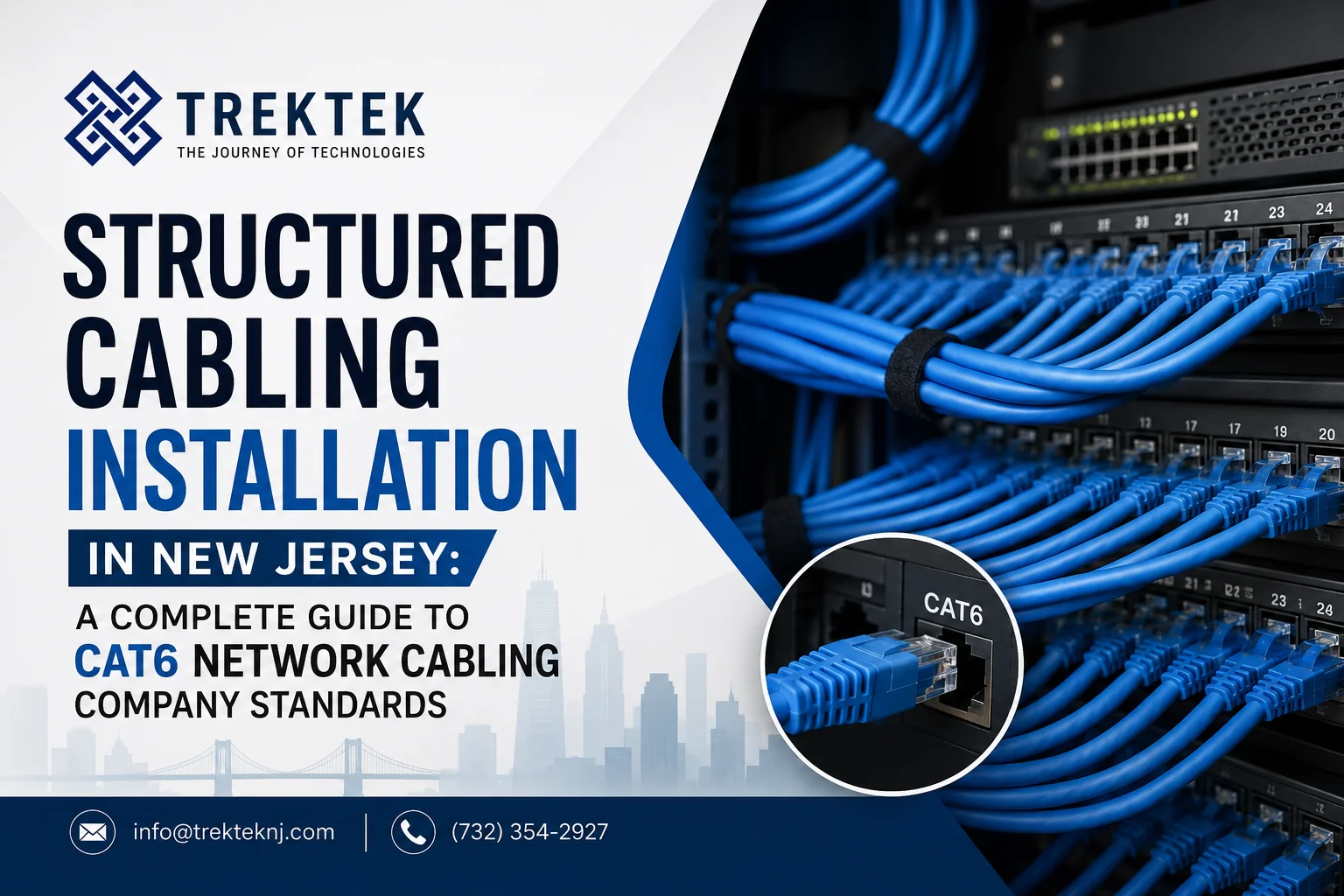
Every business network, no matter how advanced the software or how fast the internet plan, ultimately depends on physical cabling. Servers, workstations, phones, cameras, and WiFi access points all connect back to a wired infrastructure that most people never see and rarely think about. That infrastructure is called structured cabling, and getting it right is one of the most overlooked decisions a growing business makes.
For companies across New Jersey, from small offices in Union County to warehouses in Middlesex County, structured cabling and networking determines whether a network runs smoothly for the next decade or becomes a constant source of downtime and repair calls. This guide breaks down what structured cabling actually involves, the standards a proper network cabling company should follow, and what businesses should look for before hiring a contractor.
What Is Structured Cabling
Structured cabling is a standardized system of cables, connectors, and hardware designed to support voice, data, and video communication throughout a building. Instead of running individual, unlabeled cables every time a new device is added, a structured cabling system organizes everything around a central patch panel, labeled cable runs, and a properly configured equipment rack.
This approach turns a network into something predictable and serviceable. Any technician, not just the one who originally installed it, can look at the rack, trace a labeled port, and understand exactly how the system is built. That kind of documentation and organization is the difference between an infrastructure cabling setup that supports a business for years and one that becomes a tangled liability within a few months.
Why Cat6 Has Become the Standard
Most modern structured cabling projects in New Jersey are built around Cat6 or Cat6A cable, and for good reason. These cable types support higher bandwidth and faster data transfer than older Cat5e wiring, which struggles to keep up with today's demands from cloud software, video conferencing, and connected security systems.
Cat6 cabling is generally suited for standard office environments and shorter cable runs, while Cat6A performs better over longer distances and in buildings with higher interference, such as facilities near heavy electrical equipment. A qualified structured cabling contractor should assess the physical layout of a space, including ceiling type, cable pathways, and distance to the server rack, before recommending which standard fits the project. Businesses in areas like Plainfield often find this walkthrough step catches issues a phone quote would miss entirely.
The Core Elements of a Structured Cabling System
A properly built cabling system typically includes several components working together as one cohesive network cabling solution.
Horizontal and backbone cabling. Horizontal cabling connects individual workstations or devices to a local patch panel, while backbone cabling connects those patch panels back to the main equipment room or data center.
Patch panels and cross-connects. These provide a central point where cables terminate, making it possible to reroute or troubleshoot connections without disturbing the cabling itself.
Equipment racks and cabinets. A dedicated rack houses switches, routers, and firewalls in an organized, secured location rather than scattered across a building.
Labeling and documentation. Every cable run should be clearly labeled and mapped. Without this, a cabling system becomes difficult to service, no matter how well it was originally installed.
Facilities for the placement of cable. This includes conduit, cable trays, and pathways built into the structure of the building itself, planned in advance so that cabling can be added or modified later without tearing into walls or ceilings.
Structured Cabling Installation Standards to Look For
Not every network cabling company follows the same process, and the quality gap between contractors can be significant. Businesses evaluating a structured cabling contractor in NJ should look for a few specific practices.
A pre-installation walkthrough. A reliable contractor visits the site before providing a quote, checking cable paths, ceiling type, rack location, and device count. This step ensures the design fits the actual space instead of a generic assumption.
Adherence to TIA/EIA standards. Industry-recognized cabling standards govern everything from cable bend radius to labeling conventions. A contractor following these standards produces work that is easier to maintain and more likely to perform reliably over time.
Testing and certification. After installation, every cable run should be tested for performance, not just checked for a physical connection. This confirms the system meets the speed and reliability the business is paying for.
Scalability built into the design. Good structured cabling installation accounts for future growth, leaving room for additional workstations, cameras, or access points without requiring a full rewiring project down the line.
Structured Cabling vs. Ad Hoc Wiring
Many older buildings and small businesses in New Jersey are still running on wiring that was added piecemeal over the years, one cable at a time, as new devices were introduced. This is sometimes called ad hoc or unstructured wiring, and it tends to create a handful of predictable problems.
Troubleshooting becomes slow, since there is no documentation showing what connects where. Adding new equipment often requires running new cable rather than using existing infrastructure. Network performance can suffer as older cabling struggles to support modern bandwidth demands. And perhaps most importantly, the lack of organization makes it harder to secure the network, since it is difficult to monitor exactly what is connected at any given time.
Structured cabling solves each of these issues by design. It is not simply a matter of running higher quality cable. It is a fundamentally different, more disciplined approach to how a network is built.
Choosing a Structured Cabling Company in NJ
Businesses searching for structured cabling services in NJ should treat the selection process the same way they would treat any major infrastructure decision. A few questions worth asking any potential contractor:
Does the company provide a written assessment after the initial site walkthrough, or just a rough estimate? Will the cabling be tested and certified after installation, with documentation provided? How does the contractor handle labeling, and can they provide a network map at the end of the project? What warranty or ongoing support is offered if an issue arises after installation?
A structured cabling contractor that can answer these clearly, and that takes the time to understand the specific needs of a business rather than applying a one size fits all approach, is generally a stronger long-term partner than one offering the lowest price with the least detail. This holds true whether the project is in a dense commercial corridor or a smaller town like Fanwood, where local knowledge of building types and permitting can speed up the process.
Frequently Asked Questions
What is structured cabling installation? Structured cabling installation is the process of designing and installing an organized system of cables, patch panels, and hardware that supports a building's data, voice, and video network, following industry standards for reliability and future scalability.
Why is Cat6 used for business cabling systems? Cat6 cabling supports higher bandwidth and faster data transfer than older cabling standards, making it better suited to handle modern business demands like cloud software, video conferencing, and connected security systems.
How is structured cabling different from regular wiring? Structured cabling follows a planned, standardized layout with labeled connections and centralized patch panels, while regular or ad hoc wiring is typically added device by device without documentation, making it harder to manage and scale.
How long does a structured cabling installation take? The timeline depends on the size of the building, the number of devices, and the complexity of the layout. A proper walkthrough beforehand allows a contractor to give an accurate estimate for the specific project.
Does structured cabling improve network security? Yes. A well documented, organized cabling system makes it easier to monitor connected devices and identify unauthorized access points, which is harder to manage in a network built on unstructured, undocumented wiring.
Final Thoughts
Structured cabling is not a glamorous part of running a business, but it is one of the most consequential. A network built on a disorganized, undocumented foundation will eventually become a source of downtime, security risk, and rising repair costs. A network built on a properly designed structured cabling system, following recognized installation standards, tends to simply work, year after year, as the business grows around it.
For businesses across New Jersey planning a new build, an office expansion, or an overdue upgrade to outdated wiring, working with an experienced structured cabling provider ensures the infrastructure is designed correctly from the start. Companies that understand the specific commercial and residential demands of their local markets can design a cabling system that supports both current operations and whatever growth comes next.