Sign up with Google
 Sign in with Zoho
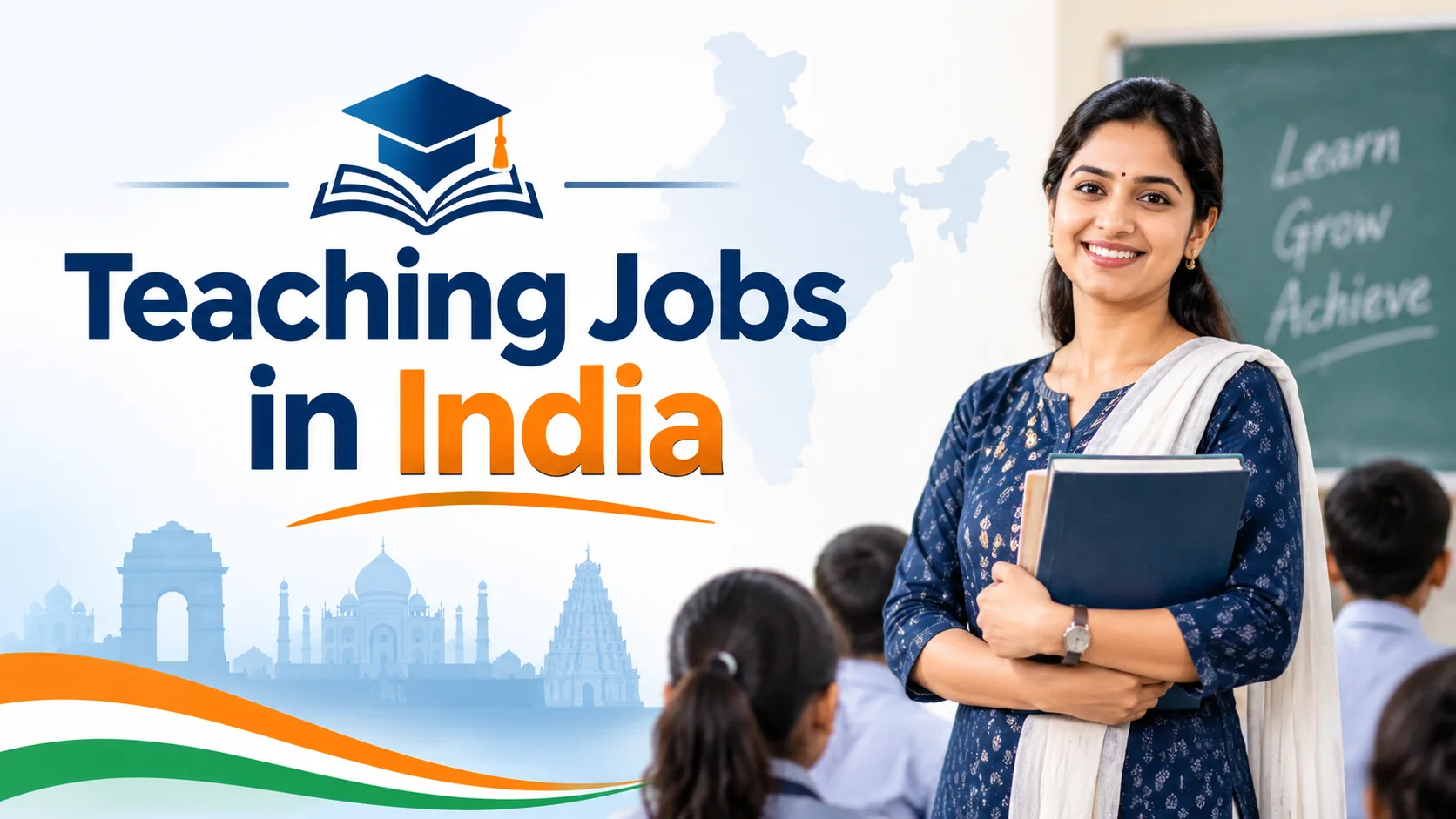
Teaching has long been one of India’s most respected professions, and it continues to offer stable, meaningful, and diverse career paths. With a growing population, expanding private education, and new policies like the National Education Policy (NEP) 2020, demand for qualified educators is strong across the country.
Types of Teaching Jobs
Primary Teacher (Classes 1-5): Focuses on foundational learning in language, maths, and environmental studies. Patience and creativity are key.
Trained Graduate Teacher (TGT): Teaches classes 6-10 in a specific subject such as science, social studies, or English.
Post Graduate Teacher (PGT): Handles classes 11-12 and requires a master’s degree in the subject along with a B.Ed.
College Lecturer and Professor: Teaches at the undergraduate and postgraduate level in universities and colleges.
Other Roles: Special educators, online tutors, coaching institute faculty, and early childhood educators are also growing fields.
Eligibility and Qualifications
Requirements vary by level:
- Primary: Senior secondary plus a Diploma in Elementary Education (D.El.Ed) or B.El.Ed.
- TGT/PGT: Bachelor’s or master’s degree in the relevant subject plus a Bachelor of Education (B.Ed).
- College level: A master’s degree with NET (National Eligibility Test) qualification or a PhD, as per UGC norms.
Important Exams
Most government teaching jobs require clearing eligibility tests:
- CTET (Central Teacher Eligibility Test): Required for central government schools such as KVS and NVS.
- State TET: Conducted by individual states, such as REET in Rajasthan, for state school jobs.
- KVS/NVS/DSSSB Exams: Recruitment exams for specific school systems.
- UGC NET/SET: Required for college and university teaching.
Government vs. Private Jobs
Government positions offer job security, pensions or retirement benefits, regular increments, and paid leave. Competition is intense, but the pay scales under the Pay Commission are attractive. Private schools may offer faster hiring and flexibility, though salaries vary widely depending on the institution’s reputation and location. International and top-tier private schools often pay considerably higher.
Salary Overview
A primary teacher in a government school can expect roughly ₹35,000 to ₹50,000 monthly, while TGTs and PGTs earn more, often ₹45,000 to ₹80,000 or above. Private school salaries range from ₹15,000 to over ₹60,000 depending on experience and the institution. College professors can earn significantly more with seniority.
Tips to Build Your Career
- Choose your subject and level early, then pursue the right degree.
- Prepare consistently for TET and recruitment exams.
- Develop digital teaching skills, as hybrid learning is now common.
- Gain classroom experience through internships or private tutoring.
- Keep upgrading skills through workshops and certifications.
Conclusion
Teaching in India offers a rewarding mix of stability, respect, and the chance to shape future generations. With the right qualifications, exam preparation, and a passion for learning, you can build a successful and fulfilling career in education.





.webp)