Sign up with Google
 Sign in with Zoho

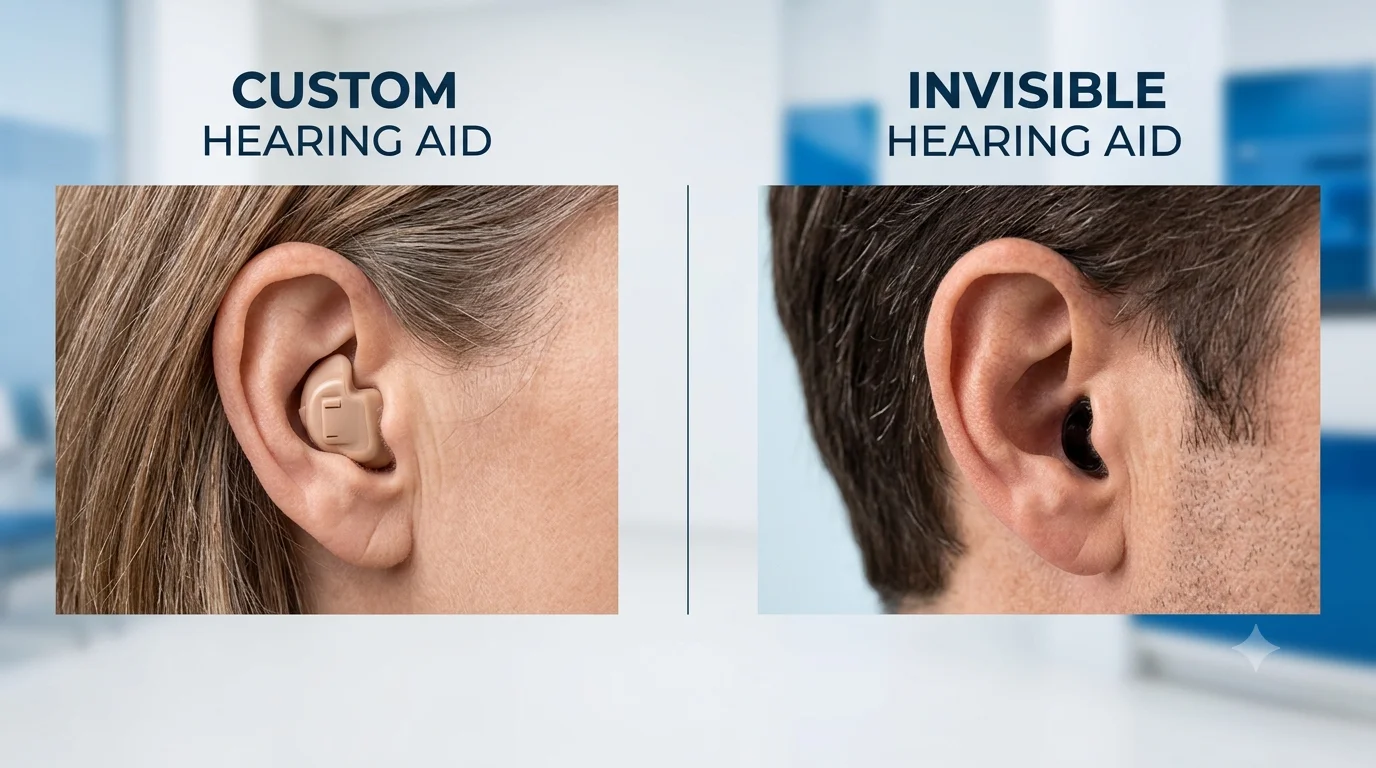
Choosing a hearing aid no longer means selecting a large, highly visible device. Today’s hearing technology offers discreet solutions designed to suit different hearing needs, lifestyles, and personal preferences. Two popular options are custom hearing aids and invisible hearing aids, both of which provide a more subtle alternative to traditional styles. Custom hearing aids are individually designed to match the unique shape of your ear, offering a personalized fit and comfortable everyday use. Invisible hearing aids, on the other hand, are made to sit deep inside the ear canal, making them extremely difficult for others to notice. While both options focus on discretion, they differ in areas such as comfort, hearing performance, battery life, maintenance, connectivity, and suitability for different levels of hearing loss. The right choice depends on more than simply how visible the device is—it should also match your daily activities, communication needs, dexterity, and expectations from hearing technology. In this guide, we compare custom and invisible hearing aids to help you understand their key differences and decide which discreet option may fit your life best.
"Discreet" doesn't mean just one thing when it comes to hearing aids. Custom-fit devices range from nearly invisible in-canal models to slim receiver-in-canal styles, each offering a different balance of visibility, comfort, and power. If you're shopping for a low-profile hearing solution, here's how to think through the options.
Understanding "Custom-Fit" Hearing Aids
Custom hearing aids are built from an impression or digital scan of your individual ear canal. This means the shell of the device is unique to you, offering a more secure and comfortable fit compared to off-the-shelf domes. Custom devices include CIC, ITC, and ITE styles — each sitting at a different depth and level of visibility within the ear.
Where Invisible Hearing Aids Fit In
Invisible-in-Canal (IIC) hearing aids take the custom-fit concept to its smallest, most discreet extreme. Positioned deep in the second bend of the ear canal, they're virtually undetectable during everyday conversation. The trade-off is a smaller battery and reduced room for advanced wireless features — factors worth discussing with your audiologist before committing.
Matching Discretion to Your Hearing Needs
A common mistake is choosing a hearing aid style based purely on how invisible it looks, without considering whether it can actually deliver enough amplification for your specific hearing loss. Someone with moderate to severe hearing loss, for instance, may find that ultra-small invisible styles don't provide the power they need, making a slightly larger but still discreet option more appropriate.
This is exactly why professional fitting matters more than marketing claims. A detailed comparison of styles, brands, and pricing — like this guide to invisible hearing aid options in 2026 — can help you walk into your consultation with realistic expectations about what's achievable for your hearing profile.
Maintenance Considerations
Because custom and invisible hearing aids sit deeper in the ear canal, they're more exposed to earwax and moisture than behind-the-ear models. Regular cleaning and periodic professional servicing are essential to keep them performing well over time.
The Bottom Line
Custom and invisible hearing aids both prioritize discretion, but they're not interchangeable. The right choice comes down to your hearing loss severity, ear anatomy, and how much you value advanced features like Bluetooth streaming versus maximum cosmetic subtlety. A qualified audiologist can help you find the sweet spot between the two.




.webp)