Sign up with Google
 Sign in with Zoho

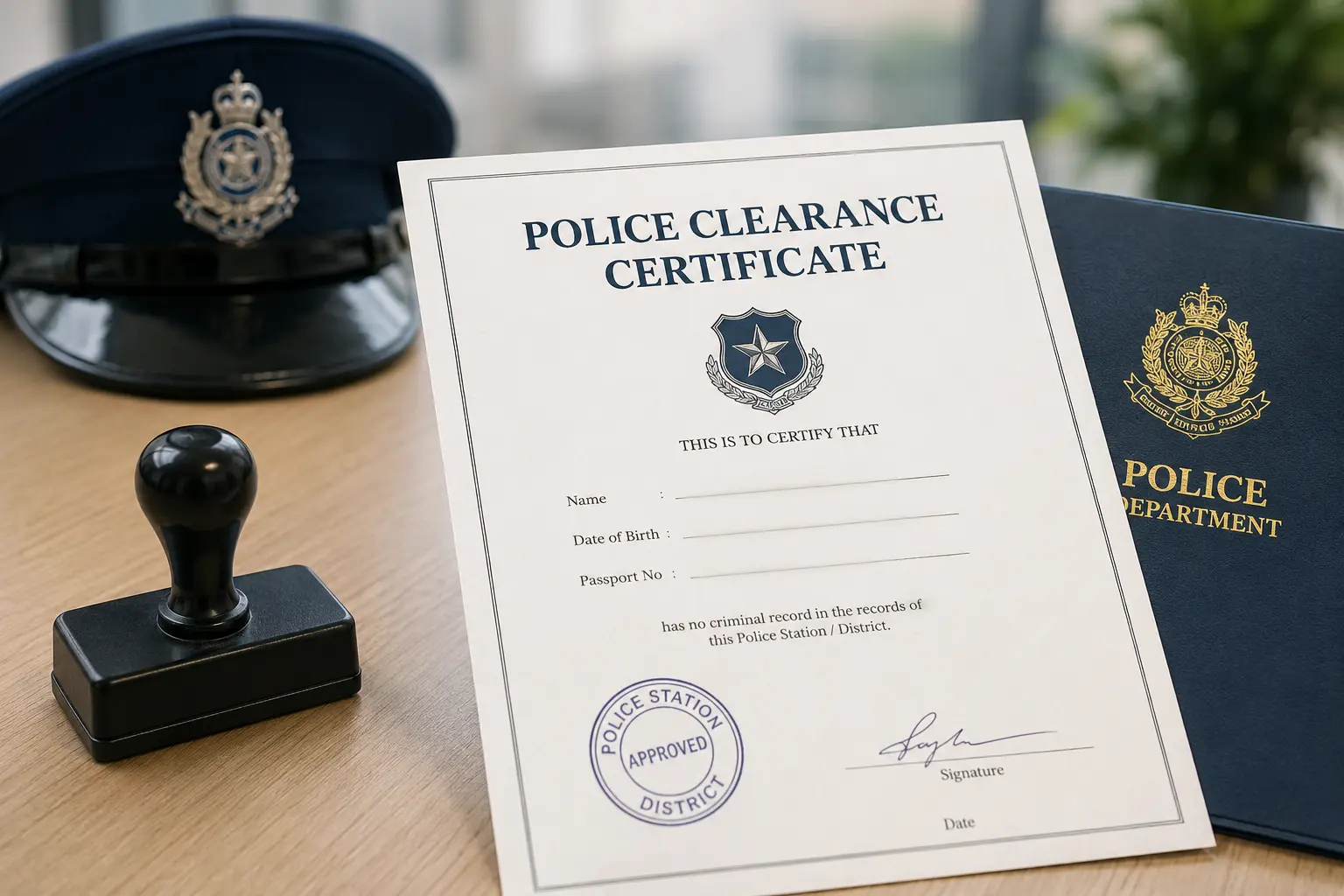
In the Philippine job market, submitting a list of government-issued IDs is standard practice. However, one document carries significant weight in proving your moral character and legal standing: the PNP Clearance. While many applicants view it as just another requirement, employers often prioritize it because it serves as a direct line of defense against corporate risk.
Here is a detailed breakdown of why the PNP Clearance is important during the job application process.
1. It Validates the Absence of Criminal Records (Specifically Blotter Cases)
The most critical function of the PNP Clearance is that it reveals records from the Police Blotter and filed complaints at the local police station level.
- Distinction from NBI Clearance: The NBI Clearance covers national court records and cases filed in the Department of Justice (DOJ). The PNP Clearance covers local police records, including ongoing investigations, blottered complaints that haven't reached court, and even barangay-level disputes that escalated to the police.
- Employer's Perspective: A candidate might pass the NBI check (if a case hasn't been elevated to the fiscal/court level) but fail the PNP check due to an unresolved local complaint. Employers require both to close the "criminal record loophole."
2. It Serves as a "Good Moral Character" Certificate
Unlike a diploma, which proves technical skill, a PNP Clearance proves trustworthiness.
- Security-Sensitive Roles: For jobs in banking, cash handling, security services, logistics (trucking/delivery), and child care (teaching, pediatric nursing), a clean PNP Clearance is non-negotiable.
- Pre-Employment Screening: Employers use this document to filter out individuals with pending criminal complaints (e.g., physical injury, qualified theft, estafa/swindling) that would make them a liability.
3. It Identifies "Hit" Records for Further Investigation
When you apply for a PNP Clearance, the system prints a result:
- "No Record" – Ideal for hiring.
- "With Record" (Hit) – This does not automatically disqualify you. It alerts the employer that you have a pending or past case. The employer can then ask for a Court Clearance or Certificate of Discharge to determine if the case was dismissed or if you are acquitted.
- Why this matters: It prevents the nightmare scenario of hiring someone with a pending warrant of arrest that the candidate "forgot" to mention.
4. It is Required by Law for Specific Industries
Certain laws mandate a PNP Clearance as a prerequisite for employment.
- BPO/IT-BPM Industry: Due to data privacy laws (RA 10173) and client security requirements, call centers and tech companies often demand a PNP Clearance to prevent data theft.
- Banking & Finance: The Bangko Sentral ng Pilipinas (BSP) requires banks to perform background checks, including police clearances, for employees handling cash and client assets.
- Government & LGU Jobs: Civil Service Commission (CSC) regulations require PNP Clearance as part of the "complete personnel file" to ensure no pending administrative or criminal case exists.
5. It Proves You are a "Current" Resident
The PNP Clearance is location-specific. It is usually issued by the police station covering your current residential address.
- Verification of Address: When an employer sees a PNP Clearance from Barangay San Antonio, Makati, they can reasonably assume you live or lived there. This is useful for field-based roles (sales, collections, auditing) where geographic honesty is required.
- Preventing "Taga-saan Ka?" Fraud: It reduces the risk of candidates using fake addresses to qualify for location-based hiring quotas.
6. It Expedites the Post-Hiring Process
Some companies will issue a Provisional Employment letter contingent on the submission of a PNP Clearance within 30 days. If you already have a valid clearance (valid for 6 months to 1 year), you can start work immediately.
- Time Saver: Without it, your onboarding may be delayed. A missing PNP Clearance is a common reason for "unable to start on day one" notes in HR files.
7. It Discovers Identity Theft Early
Occasionally, an applicant applies for a PNP Clearance and discovers that another person has used their name in a police blotter (e.g., for estafa or reckless driving).
- Job Protection: Securing a PNP Clearance before job hunting allows you to visit the PNP Clearance Division to file an "Affidavit of Denial" to clear your name. Discovering this after a job offer is rescinded is far more painful.
Comparison Table: PNP vs. NBI Clearance for Jobs
Final Advice for Job Seekers
Do not wait for the job offer to get your PNP Clearance.
- Get it early: The PNP Clearance process now includes online appointment scheduling and biometrics at selected stations, but it can still take 1–3 days.
- Check the expiration: If your clearance expires during the interview process, the HR department will reject it.
- Be honest about "Hits": If your clearance says "With Record," disclose the resolved issue (e.g., "This is from a 2019 estafa case that was dismissed") before the background check. Proactive honesty often saves the job offer.
Conclusion: In a country where trust is the highest currency in employment, the PNP Clearance is the tangible proof that you are legally safe to hire. It protects both the employee from false accusations and the employer from negligent hiring lawsuits. Never skip it.