Sign up with Google
 Sign in with Zoho

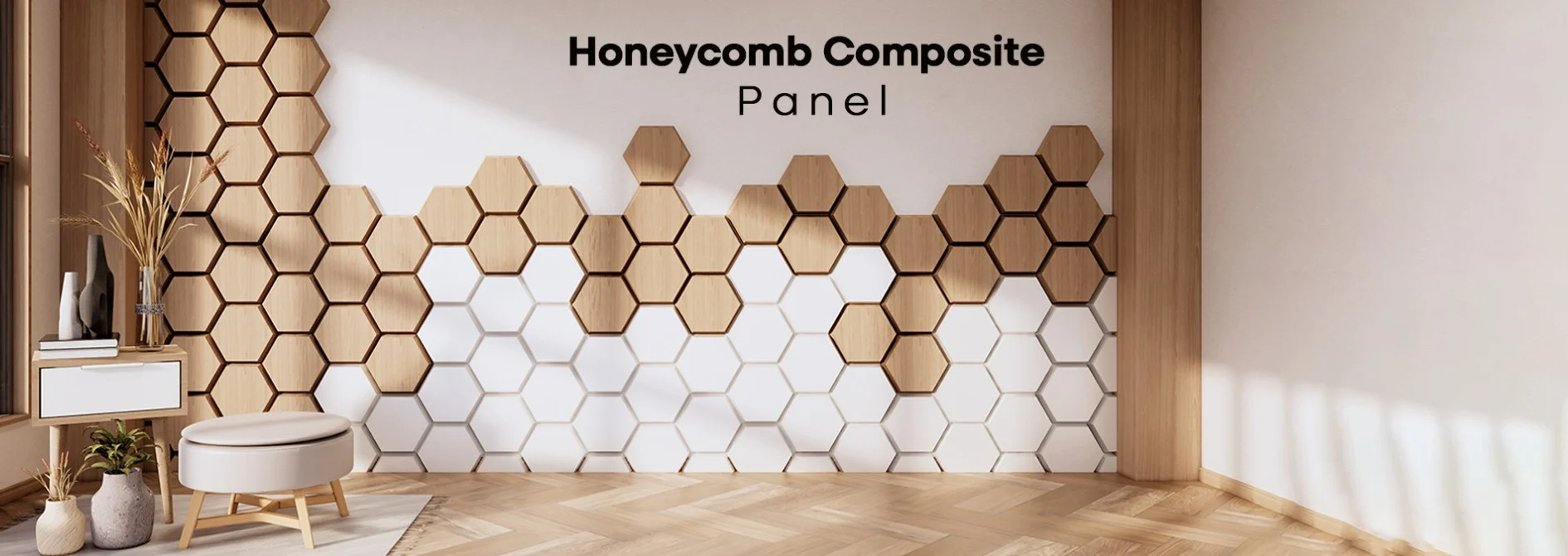
Modern building and architectural design need more and more materials that may provide strength, durability, flexibility and efficiency without the addition of superfluous weight. As buildings become more inventive and performance driven, traditional materials are being augmented with modern composite solutions that provide enhanced structural and aesthetic possibilities. One such material that has attracted much interest in the field of architecture, interiors, transportation, industrial use and other is honeycomb composite panels.
Honeycomb Composite Panels are constructed sandwich constructions that are meant to deliver excellent rigidity and strength at a relatively low weight. They are typically constructed with two thin, stiff outer skins linked to a light honeycomb core. The core is a sequence of linked cells, similar to the geometric structure of a honeycomb. This arrangement offers for a good compromise between strength and weight of the panel. Honeycomb composite panels are excellent for situations where weight reduction is crucial without sacrificing stiffness due to the combined lightweight construction and structural performance.
Honeycomb Composite Panel Design and Construction
The performance of Honeycomb Composite Panels is directly tied to their layered structure. The outer skins offer the visible surface and provide much to the strength and rigidity of the panel. Between these skins is the honeycomb core, which offers light internal support.
They may be created from several kinds of face materials and core materials according to the performance needs of a certain project. Honeycomb composite panels may be used to architectural wall systems, ceilings, partitions, transportation interiors, industrial structures, furniture and for unique installations. In many instances, honeycomb composite panels are a cost-effective alternative to heavier building materials. Knowledge of their construction, advantages, applications and selection criteria may allow architects, designers, engineers and contractors to decide where these panels can bring the most value.
The face sheets are glued to the core using a suitable adhesive system. The quality of this bonding process is crucial for the performance of the panel as an integrated structure. Good bonding allows the load to be transmitted effectively between the face sheets and the core. The manufacturing methods might also differ depending on the panel’s application.
Panels for architectural facades may have specialised surface treatments and weather-resistance capabilities, while interior panels may focus more on look, acoustic properties, or simplicity of production. It is the mix of core and skins that gives honeycomb composite panels their unique performance. The rigidity of the panels is not achieved by thick material, but through the structural design.