Sign up with Google
 Sign in with Zoho

Most people pick their glasses the same way they pick a paint color: they stare at too many options, feel overwhelmed, and eventually just grab something that seems fine.
Then six months later they're squinting at their phone wondering why their prescription glasses don't feel quite right.
The frame was fine. The prescription was accurate. But nobody walked them through how the two work together, and that gap is where most eyewear regret lives.
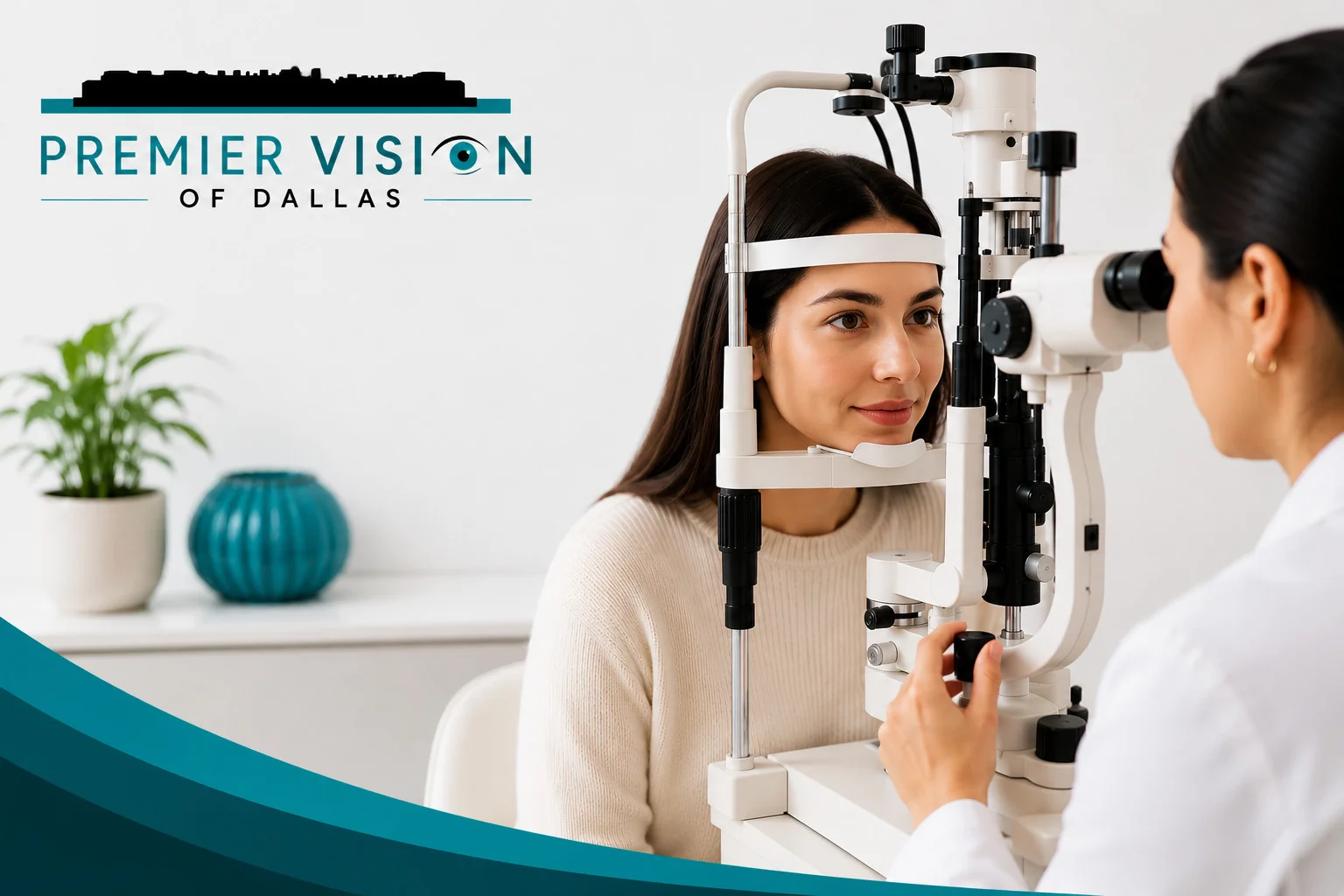
Here's what we walk patients through at Premier Vision of Dallas before they ever touch a frame.
Start With Your Prescription, Not the Display
Your prescription isn't just a number. It tells us which lens types will work for your eyes and which won't. A high minus prescription, for example, produces thicker lenses in certain frame shapes. A strong add power for reading affects which progressive lens design will be comfortable for you.
Prescription eyeglasses near me searches turn up a lot of options, but the frame you love on the display might not work with the lenses your eyes need. That's not a dealbreaker. It's a conversation worth having before you commit.
At a full-service practice, the optician reviews your prescription alongside your frame choice and flags anything worth knowing before the order goes in.
Frame Shape Follows Face Shape, But Not Rigidly
The classic advice is to match frame shape to face shape. Round faces do well with angular frames. Square faces balance out with rounder or oval shapes. That guidance is a starting point, not a rule.
What matters more is fit. A frame that sits too low on your nose puts the optical center of the lens in the wrong position for your eye. A frame that's too wide creates peripheral distortion. These aren't cosmetic problems. They affect how clearly and comfortably you see.
We fit frames to faces, not to trend charts.
Lens Material and Coatings Are Not Optional Add-Ons
This is the part most buyers underestimate. The lens itself does more work than the frame.
Polycarbonate lenses are impact-resistant and lighter than standard plastic. They're the right call for kids, active adults, and anyone with a higher prescription. High-index lenses are thinner and lighter at strong prescriptions, which matters both for comfort and aesthetics.
Anti-reflective coating isn't an upsell. It reduces glare from screens, headlights, and overhead lighting, which means your eyes work less to see clearly throughout the day. If you spend time at a computer or drive at night, it's worth including.
Blue light filtering is worth discussing if screen fatigue is something you notice regularly. It won't fix a vision problem, but it can reduce the eye strain that builds up over a long workday.
Progressive vs. Single Vision: Know Before You Choose
If you're over 40 and your prescription includes a reading correction, you'll be choosing between single vision readers, bifocals, or progressive lenses.
Progressives have no visible line and allow you to see clearly at distance, intermediate, and near ranges through different zones of the same lens. They take a short adjustment period but most patients adapt within a week or two.
The quality of the progressive design matters significantly. A budget progressive and a premium progressive look identical in the frame. They don't feel identical after a full day of wear.
"Dr. Allen has excellent bedside manner. I can tell that she loves what she does and that she loves people. What a great combination for an eye doctor. I look forward to going to my eye appointments annually and I have been coming back for over 5 years."
That kind of relationship with your eye doctor is exactly what makes prescription glasses decisions easier. When someone knows your eyes, your lifestyle, and your history, the recommendations get specific fast.
The Fitting Appointment Is Part of the Process
Once your prescription glasses are ready, the fitting appointment is where everything gets dialed in. Nose pads adjusted. Temple length checked. Optical center verified against your pupillary distance.
A frame that fits your face but hasn't been properly fitted to your measurements is still going to feel off. This step takes ten minutes and makes a real difference in daily comfort.
Find the Right Prescription Eyeglasses Near You
Premier Vision of Dallas offers a full-service optical in Addison, TX, with personalized lens recommendations and frame fitting for patients throughout North Dallas and the greater DFW area. Dr. Karen Allen writes your prescription and our team helps you build the right pair around it.
Call (214) 206-3380 or visit premiervisionofdallas.com/services/comprehensive-eye-care/ to schedule. The right glasses start with the right exam.