Sign up with Google
 Sign in with Zoho

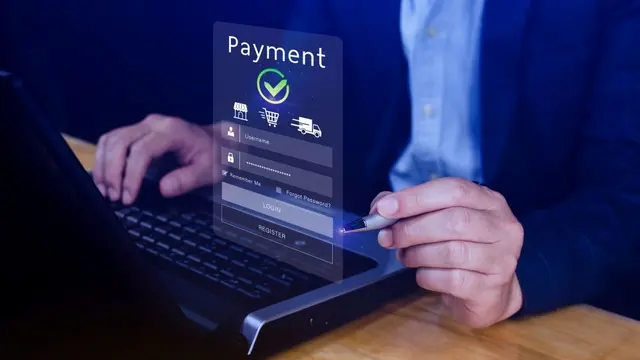
Reconciliation issues don’t come from missing tools. They come from data that doesn’t sync.
Payments come in from gateways. Settlements come from banks. Data sits in ERPs. Somewhere in between, things stop matching. That gap is where time gets wasted—and risk builds up.
This is exactly why payment reconciliation software has become essential for enterprises. Not as a “nice-to-have” tool, but as core infrastructure for financial accuracy.
The Real Problem Isn’t Volume. It’s Fragmentation.
Most people assume reconciliation becomes difficult because of scale. That’s only half true.
The bigger issue is fragmentation.
A typical enterprise today deals with:
- Multiple payment providers
- Different settlement cycles
- Disconnected billing systems
- Cross-border transactions
Even with moderate transaction volume, this creates chaos. Data arrives in different formats. Timelines don’t align. Manual checks become unreliable.
This is where many businesses start exploring the top payment reconciliation platforms for enterprises—not just for automation, but for control.
What Good Reconciliation Software Actually Solves
Let’s cut through the noise. The goal isn’t just matching transactions.
A good system solves three deeper problems:
1. It creates a single financial view
Instead of chasing data across systems, everything becomes centralized.
2. It removes dependency on manual checks
Rules and logic replace repetitive human work.
3. It reduces uncertainty
You know what matched, what didn’t, and why.
That shift—from uncertainty to clarity—is where the real value lies.
Why Enterprises Move Beyond Basic Tools
At smaller scale, basic tools or spreadsheets seem manageable. But they fail quietly as complexity increases.
Common signs:
- Reconciliation takes days instead of hours
- Teams rely on workarounds instead of systems
- Errors are discovered late, not early
- Reporting is always slightly delayed
This is usually the turning point where companies start evaluating the best payment reconciliation platforms for businesses.
Not because they want new software—but because existing processes stop working.
How Enterprise Systems Handle Scale Differently
A common question is how do enterprise platforms handle payout reconciliation at scale?
The answer isn’t just “automation.” It’s structured automation.
Enterprise-grade systems:
- Break large datasets into logical layers
- Apply rule-based matching with fallback logic
- Continuously learn from past mismatches
- Prioritize exceptions instead of reviewing everything
In simple terms, they don’t just process more data. They process it smarter.
What to Look for (Beyond Feature Lists)
Most comparisons focus on features. That’s not enough.
A practical best enterprise payment reconciliation software comparison should focus on how the system behaves in real scenarios.
Ask questions like:
- How does it handle partial matches?
- Can it adapt to changing payment flows?
- How quickly can teams investigate exceptions?
- Does it reduce dependency on manual exports?
These details matter more than long feature lists.
The Role of Billing in Reconciliation Accuracy
One overlooked factor is billing quality.
If billing data is inconsistent, reconciliation will always struggle—no matter how advanced the tool is.
This is why modern businesses invest in billing systems that reduce reconciliation errors and delays.
When billing and payments are aligned:
- Matching becomes faster
- Discrepancies drop significantly
- Reporting improves automatically
Reconciliation works best when upstream systems are clean.
Not All Tools Are Built for Enterprises
There are plenty of payment reconciliation tools in the market. But most are built for mid-sized use cases.
Large businesses need something different.
The top payment reconciliation tools for large businesses typically offer:
- Deep integrations across financial systems
- Flexible rule engines
- Strong exception management workflows
- High data processing capacity
More importantly, they reduce reliance on manual intervention at scale.
What the Market Is Moving Toward
Looking ahead, the direction is clear.
The best enterprise payment reconciliation software 2026 will not just automate matching. It will:
- Predict mismatches before they happen
- Auto-resolve common exceptions
- Provide real-time financial visibility
- Integrate deeply with analytics systems
Reconciliation will shift from a “back-office task” to a real-time operational layer.
Learning from Real-World Usage
Reading enterprise payment reconciliation software reviews can be useful—but only if you look beyond ratings.
What matters is:
- How quickly teams adapted to the system
- Whether manual workload actually reduced
- How well the tool handled edge cases
In practice, success depends less on features and more on how well the system fits your workflows.
Final Thoughts
Reconciliation is often treated as a routine finance task. In reality, it’s a control mechanism.
When done right, it improves visibility, reduces risk, and speeds up decision-making.
When done poorly, it creates hidden gaps that only show up during audits or financial stress.
That’s why payment reconciliation software is no longer optional for enterprises operating at scale. It’s part of building a reliable financial foundation.
If you’re evaluating solutions and want a system designed for real-world complexity—not just ideal scenarios—consider exploring what Optimus Fintech offers. Their platform focuses on handling high-volume reconciliation with clarity, automation, and precision.