Sign up with Google
 Sign in with Zoho

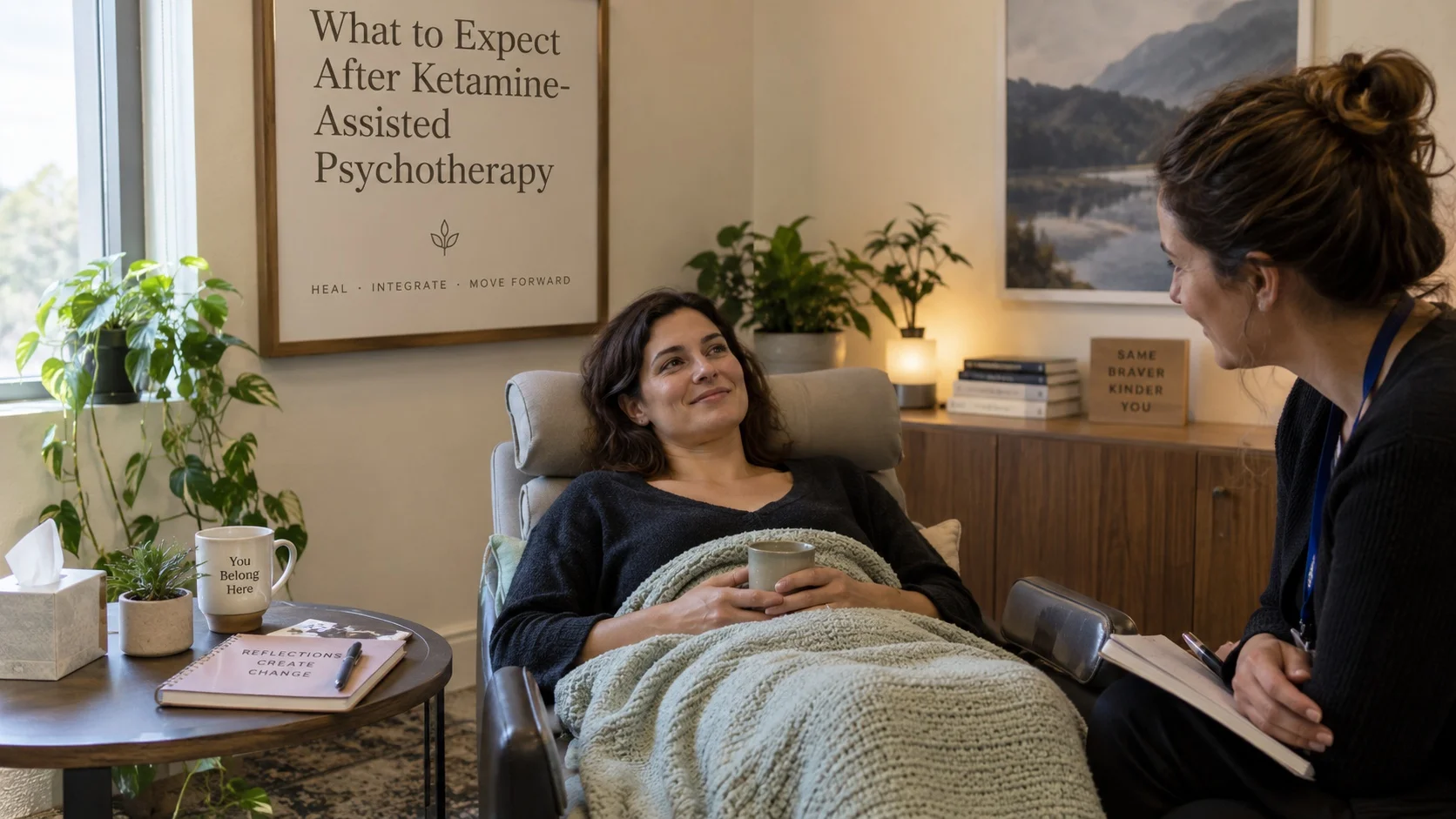
Finishing a ketamine-assisted psychotherapy session does not necessarily mean the experience is over. For some people, the hours and days afterward are when they start thinking about what came up during the session and how it connects with their everyday life.
So, what should you expect after ketamine-assisted psychotherapy? There is no single answer. You might feel a noticeable change in your mood fairly quickly, or you might not notice much at first. Sometimes, the experience only starts to make more sense after you have had time to rest and think about it.
The important thing is not to expect a dramatic change immediately.
What Happens Right After KAP?
You may need some time to feel completely normal again after a ketamine session. Temporary effects can include dizziness, sedation, changes in perception, or dissociation.
Because of this, your provider will usually give you instructions about getting home and what activities to avoid. For example, NeuroGlow's ketamine therapy guide explains that patients should arrange a ride home rather than drive themselves after treatment.
Once you are home, keeping things simple is usually helpful. You can rest, drink fluids, eat something light if appropriate, and give yourself some quiet time. There is no need to immediately get back to a busy schedule.
How Might You Feel After a Session?
The emotional side of KAP can be less predictable than the physical recovery.
Some people feel relaxed or lighter after a session. Others feel tired and want to be alone for a while. You may also find yourself thinking about a memory, conversation, emotion, or idea that came up during treatment.
You could feel:
- Calm or relieved
- Tired
- More emotionally open
- Thoughtful or reflective
- Sensitive for a short time
- Unsure about what you experienced
You may not feel any major emotional difference at all. That does not automatically mean the session was unsuccessful. Not every useful therapeutic experience feels dramatic.
Why Is Integration Important?
This is where the psychotherapy part becomes particularly relevant. Integration is essentially the process of making sense of your experience and connecting it with your life outside the treatment room.
Maybe you noticed a pattern in the way you respond to stress. Maybe an old memory came up that you want to discuss further. Or perhaps you simply realized that a thought you have been carrying for years does not feel quite as powerful as it used to.
You do not have to figure everything out on your own.
Writing down a few thoughts after the session can be useful, especially if you have a follow-up therapy session coming up. You can note what stood out, how you felt, or anything you want to revisit later.
NeuroGlow's ketamine-assisted psychotherapy approach includes preparation, the ketamine experience, and integration so that patients have an opportunity to work with what comes up during treatment.
What Should You Do Over the Next Few Days?
Your provider's instructions should come first because aftercare can depend on your individual treatment.
Beyond that, there is usually no need to overcomplicate things.
Take it easy. Give your body and mind some time to settle.
Write things down. If something from the session stays on your mind, make a note of it rather than trying to immediately work out exactly what it means.
Keep your therapy appointments. A follow-up conversation can help you put the experience into context.
Get back to your routine gradually. Sleep, meals, normal responsibilities, and time with people you trust can help you reconnect with everyday life.
If writing helps you process your thoughts, you could also use a platform such as GuestCountry to share or organize personal experiences in written form. However, personal writing should not be treated as a replacement for working through difficult experiences with a qualified mental health professional.
Can the Effects Last?
This is one area where it is important to keep expectations realistic.
Research on ketamine-assisted psychotherapy is still developing. A 2023 systematic review looked at 19 studies involving 1,006 participants and found generally positive results, but the studies used different ketamine protocols and different forms of psychotherapy. The researchers noted that larger and better-controlled studies are still needed.
A 2026 systematic review looked at 72 studies and found that only 11 were randomized controlled trials. The authors noted that there is still not enough evidence to clearly determine how much additional benefit psychotherapy provides when combined with ketamine.
That does not mean KAP cannot be helpful. It means that people's responses can vary, and researchers are still working to understand which treatment approaches work best for which patients.
When Should You Contact Your Provider?
If you have symptoms that are severe, concerning, or do not settle as expected, contact your treatment provider. Do the same if you notice significant changes in your mood, sleep, anxiety, or behavior after treatment.
Your provider knows your treatment history and can help determine whether what you are experiencing is part of the expected recovery process or needs further attention.
The Days After KAP Matter Too
Knowing what to expect after ketamine-assisted psychotherapy can make the experience feel less uncertain. You may feel different right away, notice changes gradually, or simply need time before you know what to make of the session.
There is no need to force a meaning onto the experience. Give yourself some time, talk about it with your therapist, and pay attention to changes that continue to show up in the days afterward.
KAP is still an evolving area of mental health treatment. For that reason, realistic expectations and ongoing communication with your treatment team are just as important as the session itself.
This article is for educational purposes only and does not replace medical or mental health advice from a qualified professional.









.webp)