Sign up with Google
 Sign in with Zoho
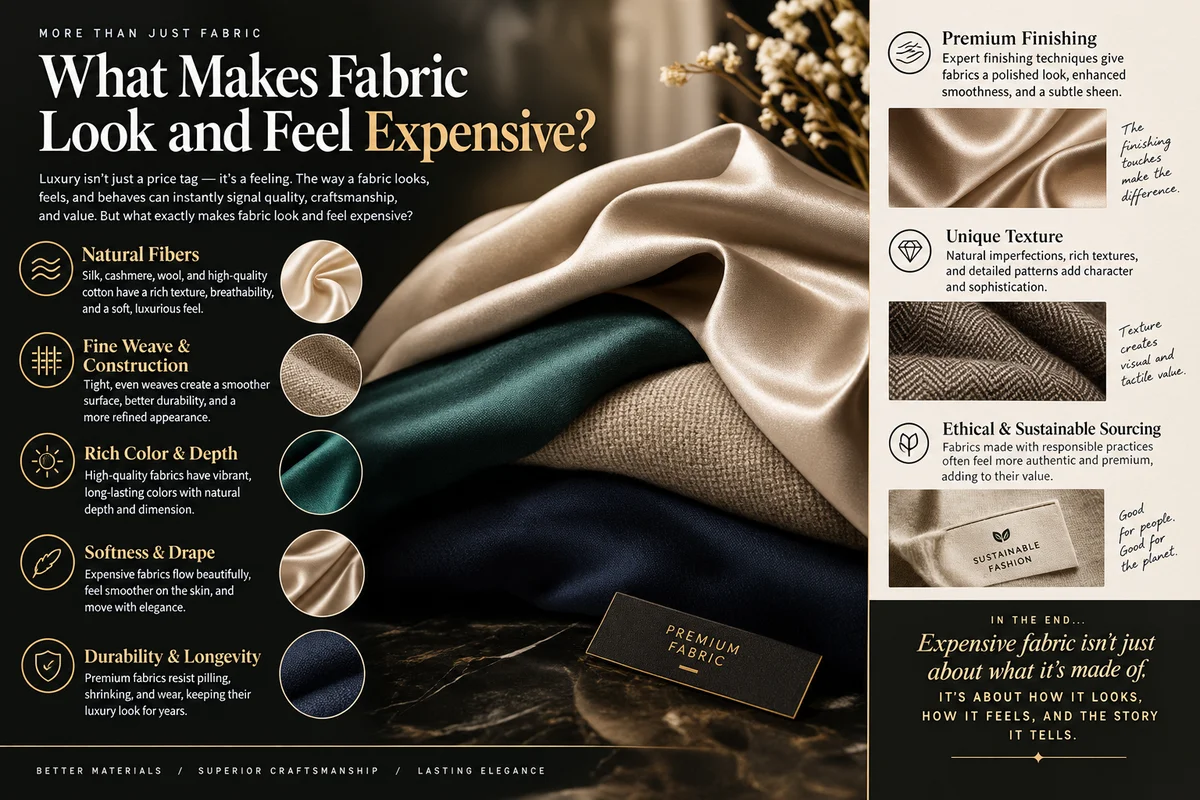
What Makes a Fabric Look and Feel Expensive? A Guide to Fabric Quality
The difference between ordinary and premium fabric is often noticeable before you even know what you are looking at. A high-quality fabric tends to have a more refined surface, balanced drape, consistent color, and a comfortable hand feel. But these qualities do not come from price alone. They are the result of careful choices in fiber, yarn, construction, weaving, and finishing.
Understanding fabric quality makes it easier to recognize what makes fabric look expensive and choose materials that perform well after repeated wear and washing.
What Determines Fabric Quality?
Fibre Quality and Fibre Characteristics
The starting point of any fabric is its fiber. Natural fibers such as cotton, linen, wool, and silk can vary considerably in length, strength, fineness, and consistency. Synthetic and regenerated fibers also have different characteristics that influence softness, strength, moisture management, and appearance.
Fiber quality affects how a material feels, wears, absorbs dyes, and responds to finishing. However, there is no single “best” fiber. The right choice depends on the intended garment and the performance required.
Yarn Quality and Uniformity
Fibers are spun into yarns, and yarn quality has a direct impact on the finished textile. More consistent yarns generally create a smoother, more uniform fabric surface, while irregular yarns can contribute to uneven texture or unwanted visual variation.
Yarn twist, strength, fineness, and consistency can all influence fabric texture, durability, and appearance.
Fabric Construction and Density
The way yarns are arranged determines much of a fabric's character. Weave structure, yarn spacing, and density affect weight, strength, opacity, drape, and surface appearance.
A well-constructed fabric should feel cohesive rather than loose or unstable. Importantly, higher density is not automatically better; construction should match the purpose of the material.
6 Signs of High-Quality Fabric
Consistent Surface and Texture
A premium fabric normally has a controlled and consistent surface. Look for even color, regular texture, and an absence of unexplained thin spots, excessive fuzz, or weaving defects.
Balanced Drape and Recovery
Fabric drape describes how material falls and moves around the body. Quality fabric should have a drape appropriate to its fiber and construction rather than simply being extremely soft or heavy.
Recovery also matters, particularly for garments that need to retain their shape after movement.
Appropriate Weight and Density
Fabric weight should suit the garment. A lightweight fabric can be high quality for a blouse, while a heavier material may be appropriate for outerwear.
Density also contributes to durability and appearance, but weight alone should never be treated as proof of quality.
Strong Colourfastness
Good colorfastness helps fabric retain its appearance when exposed to washing, rubbing, light, or other conditions. A beautiful color has limited value if it quickly fades or transfers during normal use.
Resistance to Pilling and Abrasion
Pilling occurs when fibers form small balls on the fabric surface through friction. Resistance depends on fiber characteristics, yarn and fabric construction, blends, and finishing. ASTM notes that pilling is a complex property influenced by several of these factors rather than one characteristic alone.
Controlled Shrinkage and Dimensional Stability
A quality garment should remain reasonably stable after appropriate care. Dimensional stability is important because excessive shrinkage, stretching, or distortion can change the garment's fit and appearance. Textile testing can evaluate how fabrics respond to environmental changes and laundering conditions.
How Different Fibres Affect Fabric Quality
Cotton
Cotton can provide softness, breathability, and comfort. Its quality varies according to fiber characteristics, spinning, weaving, and finishing. Well-made cotton can feel smooth and substantial without becoming unnecessarily heavy.
Linen
Linen is valued for its natural texture, breathability, and distinctive appearance. Its tendency to crease is part of its character, so premium linen should be judged by its fiber quality and construction rather than by whether it stays perfectly smooth.
Wool
Wool offers warmth, resilience, and natural drape. Fiber fineness and yarn construction strongly influence softness and comfort. Fine wool can create an exceptionally refined feel when properly woven and finished.
Silk
Silk is known for its smooth hand, natural luster, and elegant drape. Fiber quality, yarn structure, weave, and finishing all influence whether silk feels luxurious or merely looks shiny.
Viscose and Modal
Viscose and modal can provide softness, fluid drape, and attractive surface qualities. Their performance varies by fiber processing and fabric construction, so the fiber name alone does not guarantee premium quality.
How Weave and Construction Affect Fabric Performance
Plain Weave
Plain weave uses a straightforward over-and-under structure. It can produce fabrics that are stable, versatile, and durable, making it common in shirts, dresses, and lightweight textiles.
Twill Weave
Twill creates a diagonal surface pattern and can provide a combination of durability and attractive drape. Denim and many suiting fabrics use variations of twill construction.
Satin Weave
Satin constructions emphasize longer yarn floats, creating a smooth surface and characteristic luster. They can produce an expensive-looking appearance but may require more careful handling because surface structure affects durability.
Fabric Density and Thread Count
Thread count can provide useful information, but it should not be treated as a universal measure of quality. Yarn size, fiber quality, construction, and finishing all matter. A fabric with an impressive thread-count number can still perform poorly if other aspects of construction are weak.
The Role of Fabric Finishing in Premium Feel
Mechanical Finishing
Mechanical processes can alter the surface, softness, luster, or dimensional behavior of fabric. Brushing, pressing, calendaring, and related processes can create distinctive textures and appearances.
Chemical and Functional Finishing
Chemical finishes may improve properties such as softness, wrinkle resistance, water repellency, or dimensional stability. The effect depends on the specific treatment and how it interacts with the fabric.
Temporary Softness vs Long-Term Quality
One of the easiest mistakes is assuming that extremely soft fabric must be high quality. Finishing can create an immediate luxurious sensation, but long-term quality depends on the underlying fiber, yarn, construction, and durability as well.
How to Check Fabric Quality Before Buying
Assess Hand Feel and Drape
Hold the fabric and move it through your fingers. Does it feel balanced and appropriate for its intended use? Place it over your hand or another surface to observe how naturally it falls.
Inspect Surface and Construction
Examine the material under good lighting. Look for uneven weaving, loose threads, inconsistent texture, excessive fuzz, or visible defects.
Check Fibre Composition
Read the fiber-content label instead of relying solely on touch. Fiber composition provides important information about expected comfort, care, durability, and appearance.
Consider Intended Garment Use
Quality should always be judged against purpose. A lightweight summer shirt requires different characteristics from a structured coat or a formal evening garment.
Does a Higher Fabric Price Mean Better Quality?
Raw Material vs Finishing Costs
Premium fibers, specialized yarns, complex weaving, dyeing, and finishing can increase production costs. However, a higher production cost does not automatically make every characteristic better.
Brand Premium vs Actual Fabric Performance
Some garments cost more because of branding, design, retail positioning, or craftsmanship. These factors can be valuable, but they should not be confused with fabric quality itself.
Choosing Quality Based on Garment Purpose
The best approach is to pay for characteristics that matter to the garment. For everyday clothing, durability and easy care may be more important than exceptional softness. For tailoring, drape and recovery may matter more.
Fabric Quality Checklist
Before buying, check:
- Fiber composition and fiber characteristics
- Yarn consistency
- Fabric weave and construction
- Surface uniformity
- Appropriate fabric weight
- Drape and recovery
- Colorfastness
- Pilling resistance
- Abrasion resistance
- Shrinkage and dimensional stability
- Finishing quality
- Suitability for the intended garment
FAQs
What makes a fabric high quality?
High-quality fabric generally combines suitable fiber characteristics, consistent yarns, appropriate construction, good surface appearance, reliable color, and performance that matches its intended use.
How can you tell if fabric is good quality?
Check its hand feel, drape, surface consistency, construction, fiber composition, and expected performance. For professional production, laboratory testing can provide more objective information.
Does heavier fabric mean better quality?
No. Fabric weight should match the intended use. A lightweight fabric can be exceptionally well made, while a heavy fabric can still have poor construction.
What makes fabric look and feel expensive?
A combination of refined texture, balanced drape, consistent color, appropriate density, clean construction, and effective finishing often creates a premium appearance and feel.
How does fibre content affect fabric quality?
Fiber content influences softness, strength, breathability, drape, moisture behavior, care requirements, and durability. The best fiber depends on the garment's purpose.
Is thread count a reliable measure of fabric quality?
Thread count can describe construction density, but it is not a complete quality measurement. Fiber quality, yarn characteristics, weave, finishing, and performance should also be considered.
What is the most important factor when choosing quality fabric?
There is no single factor. The most important consideration is whether the fabric's fiber, construction, weight, drape, durability, and finish are appropriate for the intended garment.
Ultimately, fabric quality is about performance as much as appearance. A material may look luxurious when it is new, but truly good fabric continues to feel, fit, and perform well over time. Learning to evaluate fiber, yarn, weave, finishing, and durability gives you a much more reliable way to identify premium fabric than relying on price or appearance alone.
For more guidance on choosing and working with quality fabrics, explore Maaidesign.