Sign up with Google
 Sign in with Zoho
.webp)
What does business expansion usually mean? It means finding office space, signing a lease, setting up infrastructure and building a local presence before operations can begin. That model still works for many companies, but it is no longer the only practical route.
As remote and hybrid work become more common, businesses are also exploring flexible workspace models that let them establish a presence without a conventional office.
This is where virtual workspaces are becoming a key part of modern expansion strategies.
Expansion Without a Full-Time Office
Entering a new city does not always require a large team or a permanent office from day one. A virtual office space can give a business a professional address and access to business support while employees continue working remotely or from different locations.
For companies that are testing a new market, these virtual office spaces can be very useful. Instead of investing in premises before understanding local demand, they can establish an operational presence first and expand their physical footprint as their business requirements grow.
For example, a company entering Bengaluru may want a recognised business address, mail management and occasional access to physical workspace, while its core team remains distributed across different cities.
The Rise of Flexible Office Spaces
If we take an example of a state like Bengaluru, which positions itself as a major technology and business hub, it makes it an important market for companies looking to establish or strengthen their presence in South India.
However, not every organisation needs a traditional office with permanent desks for its entire workforce.
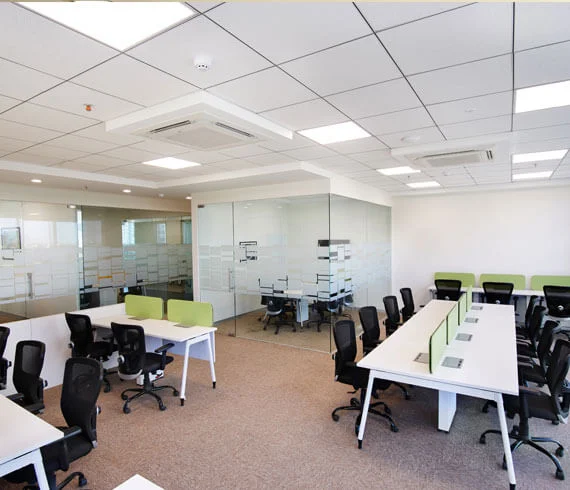
A co-working space in Bangalore can provide an alternative for businesses with hybrid teams, consultants, startups and professionals who need a professional place to work without taking on the responsibilities associated with setting up an independent office.
The appeal is not simply about reducing space.
It is about matching workspace requirements with actual working patterns.
A smaller team may need desks on certain days, while a growing company may gradually require private offices or larger facilities.
Yes, The Physical Spaces Still Matter
Remote work has changed how teams operate, but physical meetings have not disappeared. Client presentations, interviews, training sessions and internal discussions- all these still require a suitable professional environment.
This makes business meeting rooms an important part of the flexible workspace ecosystem.
Businesses can use meeting facilities when needed rather than maintaining dedicated conference rooms that may remain unused for long periods.
Providers such as DBS Workspace, for instance, has a meeting and conference room facilities alongside shared and virtual office solutions.
A More Flexible Route to Growth
The biggest shift is perhaps the way businesses now think about physical presence.
An office does not necessarily have to be the starting point of expansion. It can become one component of a broader workplace strategy.
A business might begin with a virtual address, use meeting rooms when required, provide employees with shared workspace when they are in the city and eventually move into a dedicated office as the local team grows.
This approach can also support companies that operate across multiple cities.
Established names like DBS Workspace, have their network which currently covers Bengaluru, Chennai, Hyderabad, Kolkata, Mumbai and New Delhi, giving businesses the option of accessing workspace infrastructure in several major commercial locations.
The Workplace Is Becoming More Modular
The idea of having one office for every employee, every day, is gradually giving way to more modular arrangements. Teams can work remotely, meet clients in professional spaces, collaborate from shared offices and use dedicated premises when their scale justifies it.
For businesses, this means expansion can become less dependent on fixed real-estate commitments. For employees, it can mean greater flexibility in where they work. And for companies exploring new markets, it creates an opportunity to establish a credible presence while keeping workspace requirements aligned with actual business needs.
Virtual and flexible workspaces, therefore, are not necessarily replacing conventional offices. Instead, they are adding another layer to the way modern businesses think about location, presence and growth.