Sign up with Google
 Sign in with Zoho

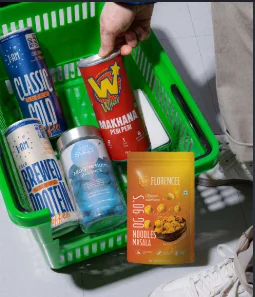
In fast-moving consumer categories, packaging is often the first real interaction between a customer and a brand.
A shopper may only spend a few seconds looking at a product before deciding whether it feels relevant. On ecommerce and quick-commerce platforms, that decision can happen even faster because products appear as small thumbnails beside dozens of alternatives.
That is why strong FMCG branding should begin before the visual design stage.
Businesses investing in FMCG Brand Strategy and Design need to think about positioning, customer expectations, packaging hierarchy and brand recognition as parts of one connected system.
Start With Brand Positioning
Before designing a package, a business should be clear about what it wants consumers to remember.
Two products in the same category can target very different audiences.
For example, one beverage brand may focus on health and everyday wellness, while another may position itself around bold flavours, fun and social occasions.
Even if both sell similar products, their packaging should communicate completely different personalities.
Clear positioning gives design a purpose. Without it, brands can end up with packaging that looks attractive but says very little about why the product is different.
Packaging Needs a Clear Hierarchy
FMCG packaging usually has a lot to communicate.
It may need to show:
- the brand name
- product name
- flavour or variant
- key benefit
- important claims
- quantity
- supporting information
The problem starts when everything is given the same visual importance.
A good package guides the customer’s attention. The most important information should be easy to notice first, while secondary details should support the buying decision.
This makes the packaging easier to understand and less overwhelming.
Recognition Comes From Consistency
Strong brands are usually easy to recognise, even before consumers read every word on the pack.
That recognition often comes from repeated visual elements such as typography, colour combinations, logo placement, illustrations, patterns and packaging structure.
These elements do not need to look exactly the same everywhere, but they should feel connected.
A customer may see the brand in a supermarket, on Instagram, on an ecommerce platform or through an advertisement.
If each touchpoint feels unrelated, the brand becomes harder to remember.
Consistency helps build familiarity over time.
Digital Shelves Need Different Thinking
Packaging that works well in a physical store may not perform equally well online.
On a mobile screen, details become much smaller.
This means brands should test packaging at realistic thumbnail sizes.
A few simple questions can help:
Can the brand name still be recognised?
Can customers easily tell one variant from another?
Does the product still stand out beside competing products?
Are the most important messages still visible?
These checks are becoming increasingly important as more consumers discover and compare FMCG products online.
Build for Future Product Expansion
Many FMCG businesses start with only one or two products.
If the brand grows, it may introduce new flavours, pack sizes or completely new categories.
A flexible brand system makes that expansion much easier.
For example, different flavours may use different colours, while typography, logo placement and the overall packaging structure remain consistent.
This gives each product its own identity while still making it obvious that the products belong to the same brand family.
Without a clear system, every new launch can start looking like a separate brand.
Avoid Following Every Category Trend
Design trends can influence entire product categories.
Once one successful brand introduces a certain style, other brands often begin using similar colours, typography or layouts.
That can quickly lead to sameness.
Instead of asking only what looks popular, brands should focus on what makes their own positioning different.
A better question is:
What should consumers remember about this brand after seeing it once?
That answer should influence the design far more than short-term trends.
Branding Is More Than Appearance
Good FMCG branding is not simply about making a product look attractive.
A strong brand system can help:
- communicate positioning more clearly
- improve recognition
- organise growing product ranges
- create consistency across different channels
- support future marketing and product launches
Packaging works best when it is connected to the wider brand strategy rather than treated as a separate design task.
Final Thoughts
FMCG markets are crowded, and consumers have more choices than ever.
Strong branding helps products communicate quickly and remain recognisable across physical stores, ecommerce platforms and other digital touchpoints.
The most effective approach combines brand strategy, visual identity and packaging into one clear and scalable system.
When all of these elements work together, the brand becomes easier to understand, easier to recognise and better prepared for future growth